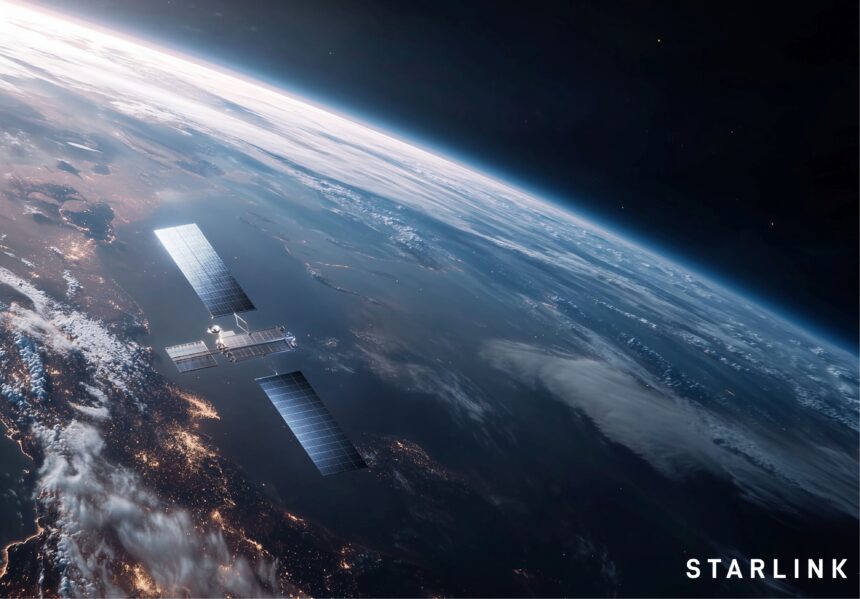
Starlink Direct to Cell lets ordinary smartphones connect directly to satellites when no cell tower is in range. The satellites act as cell towers in orbit, using spectrum licensed to mobile carriers so phones can connect without any special hardware. SpaceX now refers to the service as Starlink Mobile, and customers access it through participating carriers.
How a Phone Talks to a Satellite
A normal cell tower sits a few kilometres away and stays in one place. A Direct to Cell satellite orbits a few hundred kilometres overhead, moving at tens of thousands of kilometres per hour. This creates three main challenges, including frequency shifts as the satellite moves, added latency from the longer transmission distance, and the limitations of a phone’s small antenna and low-power transmitter, which were never designed for satellite communication.
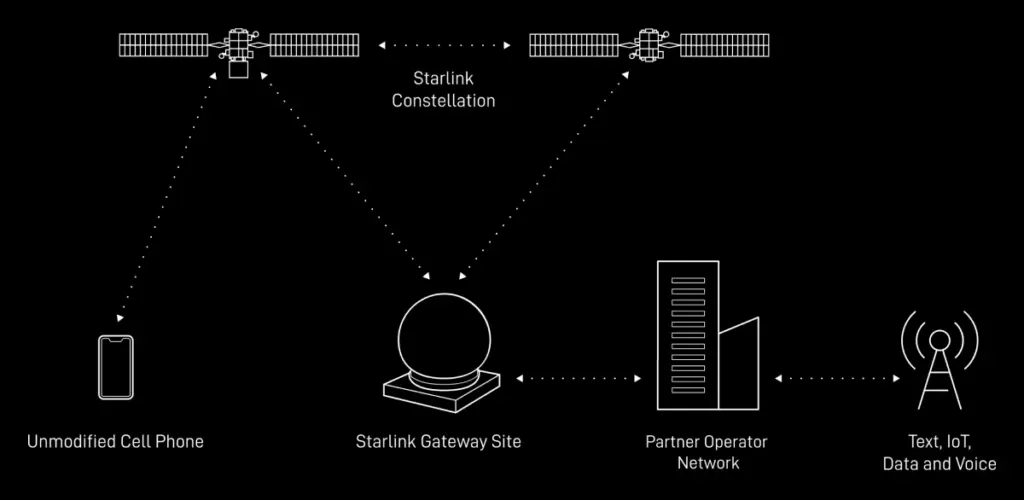
SpaceX addresses these challenges with satellites equipped with large phased-array antennas, custom chips, and software that shapes and steers their beams. The Starlink Mobile V1s orbit about 360 kilometers above the ground, compared with around 500 kilometers for regular Starlink satellites, reducing the distance signals must travel between a phone and a satellite.
Mobile carriers provide LTE spectrum in the 1.6–2.7 GHz range, allowing Starlink to connect to their networks much like a roaming partner. Phones do not need new hardware, although some may require a software update. A participating mobile carrier is also required to access the service.
The first Direct to Cell satellites launched in January 2024, and the first test text messages were sent less than a week later. By mid-2025, SpaceX had more than 650 satellites in orbit and declared its first-generation constellation complete.
What It Can Do Today
Direct to Cell launched with text messaging as its primary capability. The FCC approved the service in the United States in November 2024, with commercial service beginning shortly thereafter. In the second half of 2025, the service expanded to support data for a selection of apps optimized for limited bandwidth. SpaceX says more than 30 apps and over 100 phone models are supported worldwide.
In the United States, T-Mobile offers the service as T-Satellite. Supported features include text and picture messaging, location sharing, text-to-911 and apps such as WhatsApp, including voice chat, Google Maps, AccuWeather, AllTrails and X. T-Satellite is included with T-Mobile’s Experience Beyond and Better Value plans. Other eligible customers can add it for US$10 per month, including those with service from other carriers. T-Mobile says the service works with most smartphones released in the past four years. Coverage includes the continental United States, Hawaii, Puerto Rico and parts of southern Alaska. T-Mobile customers can also use the service in Starlink Mobile partner countries such as Canada, New Zealand and Japan.
The apps available depend on the carrier, which may restrict satellite data to selected services to accommodate limited bandwidth. In markets where broader internet access is available, such as Kazakhstan, Beeline lists speeds of up to 2 Mbps. That is enough for messaging, maps and weather updates, but it falls short of the speeds needed for conventional video streaming or unrestricted web browsing.
There are still significant limitations. Phones need a clear view of the sky, meaning the service may not work indoors or where buildings, trees or terrain obstruct the signal. Messages can take longer to arrive, and phones must hand off between satellites as they pass overhead. Carriers such as T-Mobile also warn that some apps may not work or may behave differently.
Where You Can Get It
In its 2025 progress report, SpaceX said Direct to Cell was available through 27 mobile network partners, reaching more than 400 million people across 22 countries on six continents. Outside the United States, some of the carriers offering the service include:
- Canada: Rogers offers Rogers Satellite. Text messaging and text-to-911 entered a free beta in July 2025, followed by paid service with apps such as WhatsApp, Google Maps and CalTopo on Dec. 9, 2025.
- New Zealand: One NZ was among the first two carriers to launch the service, alongside T-Mobile.
- Africa: Airtel now supports Starlink Direct-to-Cell across 10 countries in Central Africa after launching Starlink mobile in the Democratic Repulbic of Congo.
- Japan: KDDI offers au Starlink Direct. KDDI customers can roam onto the service in the United States, and the carrier said in April 2026 that it planned to expand access to Canada, the Philippines and New Zealand during the year. NTT Docomo also added Starlink support in 2026.
- Kazakhstan: Beeline opened commercial service in late September 2026 for Android phones, initially offering it free during a promotional period.
Availability varies by carrier, with each carrier setting its own pricing, supported devices and app compatibility, so a feature available through Rogers may not be available through T-Mobile. In Canada, Rogers says satellite data usage counts toward a customer’s regular data allowance.
Why It Helps in Emergencies
Direct to Cell has demonstrated its value during natural disasters. Following Hurricanes Helene and Milton in 2024, the FCC granted SpaceX special authorization to activate the service early with T-Mobile. Wireless Emergency Alerts were subsequently delivered to phones within satellite coverage. During the January 2025 Los Angeles wildfires, SpaceX said more than 400,000 people connected to the service, sending over 250,000 text messages and receiving more than 150 emergency alerts. In August 2026, Rogers made its satellite service available to all Rogers wireless customers in British Columbia during wildfires in the province.
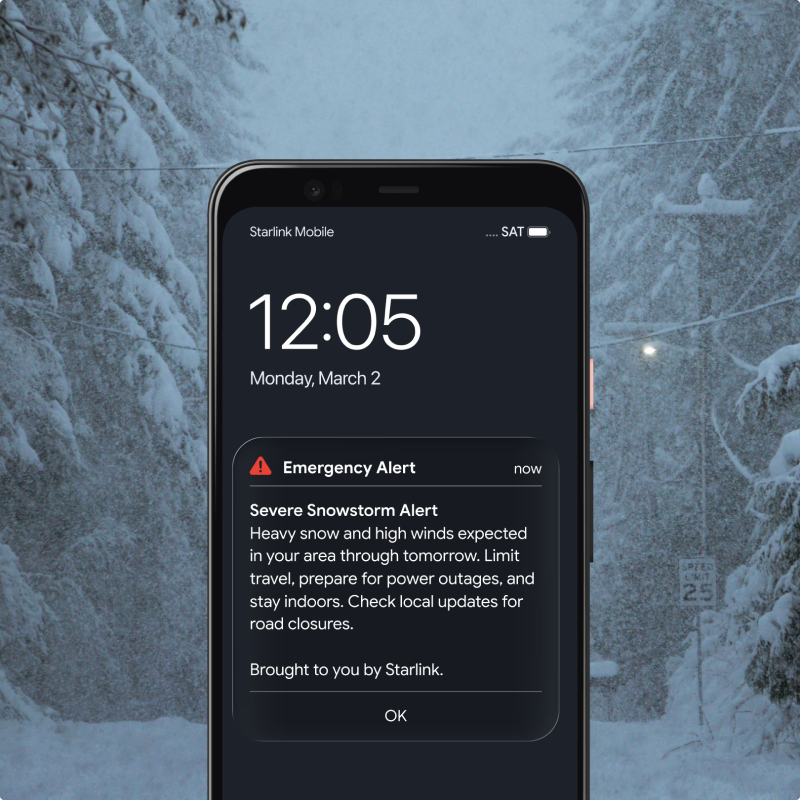
The benefit extends beyond emergencies. When cell towers are damaged or lose power during natural disasters, or when people travel beyond the reach of terrestrial networks, satellite connectivity can help them stay in contact. With SMS support, users can reach family, share their location or request help when conventional coverage is unavailable.
What Comes Next
The first-generation network relies on spectrum licensed to mobile carriers, limiting its capacity and the services it can support. SpaceX is working to expand its spectrum holdings. In September 2025, it agreed to acquire 50 MHz of S-band spectrum in the United States from EchoStar, along with global Mobile Satellite Service licences. In November 2025, it added 15 MHz of AWS spectrum in the 1695–1710 MHz band.
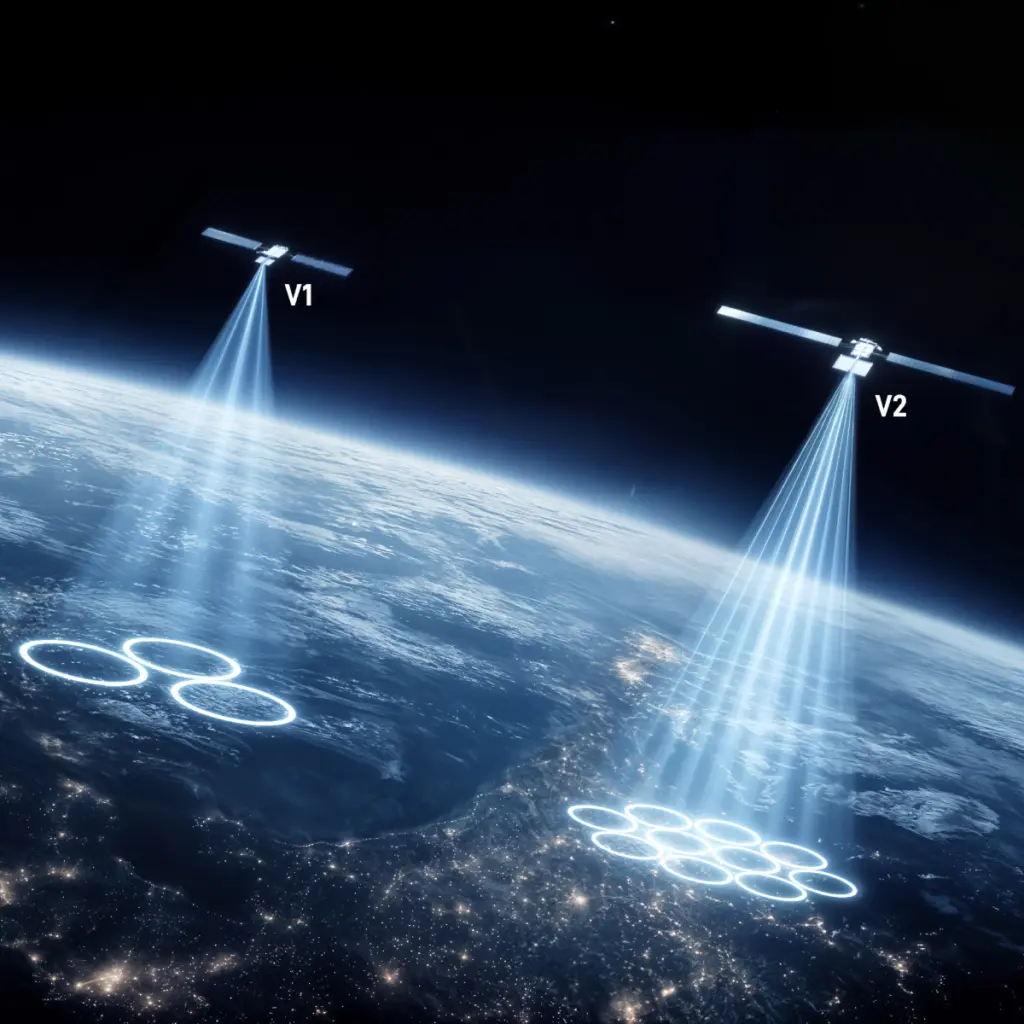
On Oct. 6, 2026, the FCC authorized a separate constellation of 15,000 satellites designed for direct-to-phone connectivity. SpaceX must have half the constellation launched and operating by Oct. 7, 2032, with the full constellation due by Oct. 7, 2035. Commercial use of the EchoStar spectrum remains subject to the completion of that transaction.
SpaceX says its next-generation satellites will provide more than 100 times the capacity of the first-generation network. The company expects the additional capacity to enable what it describes as full 5G service, comparable to terrestrial networks in most locations, including video calls and streaming.