Falcon Heavy can lift more than a Falcon 9, yet it barely flies. As SpaceX prepares the next Falcon Heavy for the National Reconnaissance Office’s NROL-97 mission from Launch Complex 39A, currently planned no earlier than 1-2 October 2026, a clip from an ex SpaceX employee explains why Falcon Heavy rarely ever launches.
A lot of the scarcity for Falcon Heavy is related to its operations and economics, rather than its capability. Falcon Heavy is rare with the cost of three cores, potentially longer pad time than Falcon 9, and a customer mix that is mostly just NASA and the government.
SpaceX employee #13 @_Eric_Romo reveals why we don't see many Falcon Heavy launches:
"Falcon Heavy is extremely expensive, in part because it's three Falcon 9s strapped together."
"SpaceX has been clear they would prefer not to fly that vehicle."
"And it makes sense—every time… pic.twitter.com/fO0DdxySf7
— sourcery (@sourceryy) September 27, 2026Three Cores, One Pad
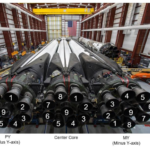
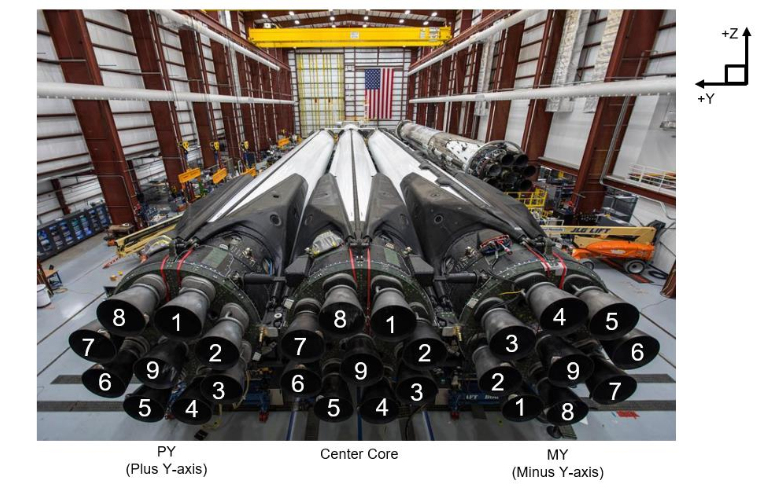
Falcon Heavy is essentially three Falcon 9 cores, with a strengthened center core and two side boosters. That architecture gives the vehicle the additional lift needed for payloads Falcon 9 cannot carry alone, but it also means more hardware and longer launch operations compared to a standard Falcon 9.
Falcon Heavy launches exclusively from LC-39A on the east coast. Ars Technica noted in December 2023 that reconfiguring the pad between Falcon Heavy and Falcon 9 “usually takes a couple of weeks.” That adds operational overhead and prevents the pad from being used for standard Falcon 9 launches during the transition.
A second report in May 2026 noted that LC-39A is largely out of regular Falcon 9 rotation, with the pad instead being used for occasional Falcon Heavy missions and Starship work. That makes the opportunity cost of a Heavy launch different from when 39A regularly supported both vehicles, but the three-core architecture and additional preparation still make Falcon Heavy more involved than Falcon 9.
The Cadence Gap Is Not Subtle
The flight counts show just how different the two vehicles are in SpaceX’s launch operation. Falcon Heavy has flown around thirteen times since its February 2018 debut, compared with hundreds of Falcon 9 missions since then. As Falcon 9’s capabilities have increased, the number of payloads requiring Falcon Heavy has also declined.
In 2025, SpaceX flew no Falcon Heavy missions while launching 165 Falcon 9 missions. In 2026, before NROL-97, Falcon Heavy has flown twice: ViaSat-3 F3 on 29 April and NASA’s Nancy Grace Roman Space Telescope on 30 August.
These missions also highlight one of Falcon Heavy’s limitations. Its center core is often expended on missions requiring the vehicle’s full performance, reducing the number of flights that booster can potentially support compared with a Falcon 9 booster. SpaceX has demonstrated Falcon 9 boosters flying more than two dozen times, making the economics of reusing those cores particularly important.
Prefer Not To Fly — And Tried To Cancel
Romo puts the economics more directly:
“Falcon Heavy is extremely expensive, in part because it’s three Falcon 9s strapped together.” …
“SpaceX has been clear they would prefer not to fly that vehicle.” …
“So when you look at how much time it takes to launch one Falcon Heavy and how many Falcon 9s they could have launched during that time, it’s actually economically better for them to launch Falcon 9s.”
Musk has previously been more specific about the program’s history. Following Falcon Heavy’s first flight, he told reporters that SpaceX had tried to cancel the program three times because it was “way harder than we thought,” as GeekWire reported in February 2018.
On 30 August 2026, the day Falcon Heavy launched the Roman Space Telescope, Musk also said Heavy still has contractual obligations extending to around 2030, while expressing hope that many of those missions could eventually move to Starship.
Falcon Heavy has contractual obligations that extend to ~2030.
Hopefully, many of those flights can be moved to Starship.
— Elon Musk (@elonmusk) August 30, 2026Who Still Needs Falcon Heavy?
Romo’s comments also point towards the lack of commercial interest for Falcon Heavy. Space Force and NASA continue to have missions that require Falcon Heavy’s additional lift, while commercial Heavy launches are relatively uncommon.
Falcon Heavy has flown one commercial ViaSat mission and one NASA science mission, with the upcoming NROL-97 launch adding another government customer. Next Spaceflight lists the flight itinerary to include side-booster recovery attempts and an expendable center core for NROL-97.
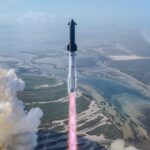
Falcon Heavy therefore occupies an unusual position in SpaceX’s fleet. While offering significantly more lift than Falcon 9, the three-core requirement, additional preparation, and lack of commercial missions capable of justifying its extra capacity make Falcon Heavy a less attractive option. At the same time, SpaceX is developing Starship as a much larger and potentially more capable launch system.
For now, government and NASA contracts continue to keep Falcon Heavy flying. But with Musk pointing to Starship as a potential replacement for Heavy missions after its remaining contractual obligations, the vehicle’s future depends on how quickly those missions can transition to Starship.