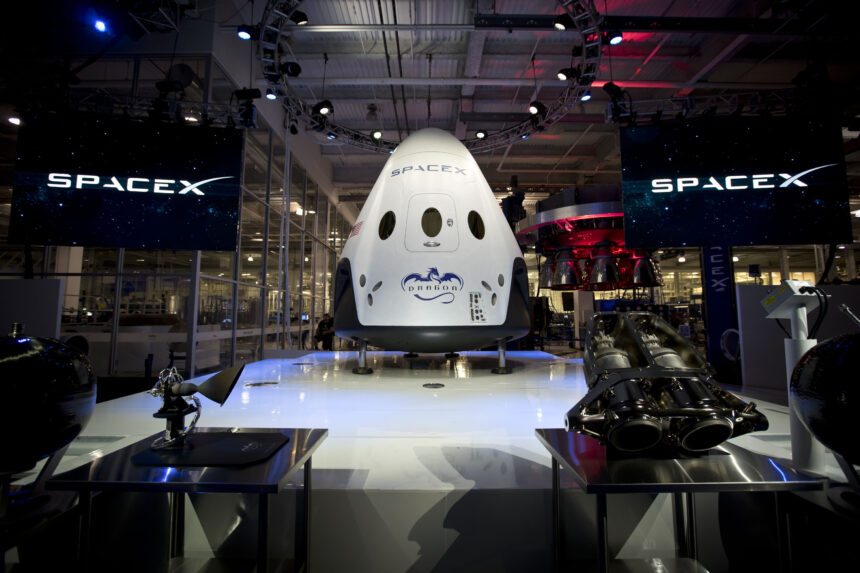
The Dragon spacecraft is SpaceX’s workhorse spacecraft, responsible for transporting cargo, scientific experiments, and astronauts to and from the International Space Station (ISS). Since its debut in 2010, Dragon has become one of the most important spacecraft in modern spaceflight, restoring America’s ability to launch astronauts from domestic soil while dramatically reducing the cost of routine access to orbit.
Following the retirement of NASA’s Space Shuttle fleet in 2011, the United States relied exclusively on Russia’s Soyuz spacecraft to transport astronauts to the ISS. SpaceX helped end that dependence by delivering cargo with Dragon 1, and later by launching astronauts aboard Crew Dragon. Today, SpaceX fulfills NASA’s Commercial Crew and Commercial Resupply Services (CRS) contracts with both Crew Dragon and Cargo Dragon respectively.
Development and History
Dragon was originally developed under NASA’s Commercial Orbital Transportation Services (COTS) program, an initiative designed to encourage private companies to develop spacecraft capable of servicing the International Space Station.
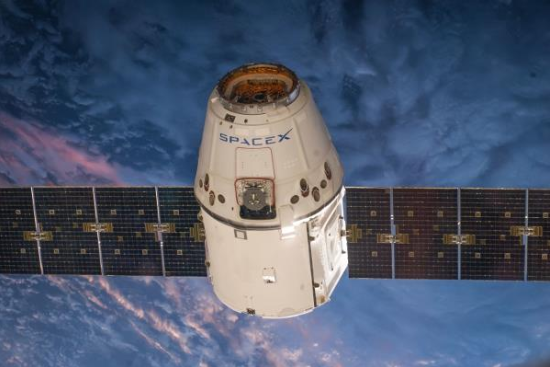
Developed alongside the Falcon 9 rocket, Dragon successfully completed its first orbital mission with Falcon 9 in December 2010, becoming the first privately developed spacecraft to safely return from orbit. Less than two years later, it achieved another historic milestone by becoming the first commercial spacecraft to rendezvous with and deliver cargo to the ISS. Dragon 1 would go on to fly 2 demonstration flights and 20 operational cargo resupply missions under NASA’s Commercial Resupply Services (CRS) contract.
Built on Dragon 1’s success, SpaceX developed a second generation spacecraft known as Dragon 2. Unlike its predecessor, Dragon 2 was designed from the outset to support both cargo and human spaceflight, leading to the introduction of the Crew Dragon and Cargo Dragon variants that continue flying today.
Spacecraft Design
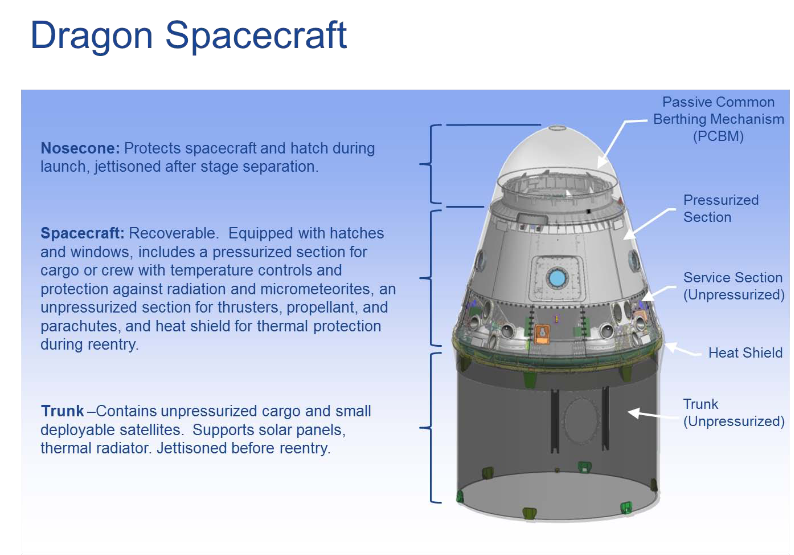
Dragon 1 consists of three primary components, the reusable pressurized capsule, an expendable trunk and nosecone section. The capsule itself also contains an unpressurized service section below the pressurized area and above the heat shield. Both Dragon 1 and Cargo dragon capsules exclusively house pressurized cargo, while Crew Dragon was designed for crewed spaceflight only. The capsule contains the spacecraft’s avionics, propulsion system, docking hardware, and recovery equipment.
Attached beneath the capsule is the trunk, an unpressurized section capable of carrying large external payloads such as scientific experiments and ISS hardware. The trunk also supports the spacecraft’s solar arrays and additional thermal control systems before being discarded prior to reentry.
Dragon 1 used an expendable nosecone that was jettisoned during ascent, exposing the berthing mechanism to save mass. It would then be captured by the ISS using Canadarm 2, and then manually berthed. Dragon 2 improved on that element and featured a hinged cover nosecone alongside the new NASA Docking System, where it could dock to the ISS autonomously. This significantly simplified operations while allowing the spacecraft to dock under its own power with minimal crew involvement.
Propulsion and Safety
Dragon relies on Draco thrusters for nearly all maneuvering. These pressure fed hypergolic engines are responsible for attitude control, orbital adjustments, rendezvous with the ISS, departure burns, and the deorbit burn that begins the spacecraft’s return to Earth.
Dragon 1 used 18 Draco thrusters, while Dragon 2 employs 16 Draco thrusters alongside a completely new launch escape system, bypassing the need for traditional escape towers. Utilizing the addition of 8 SuperDraco engines producing 73kN (16,400 lbf) integrated directly into the capsule, Crew Dragon allows launch escape capability should the Falcon 9 launch fail.
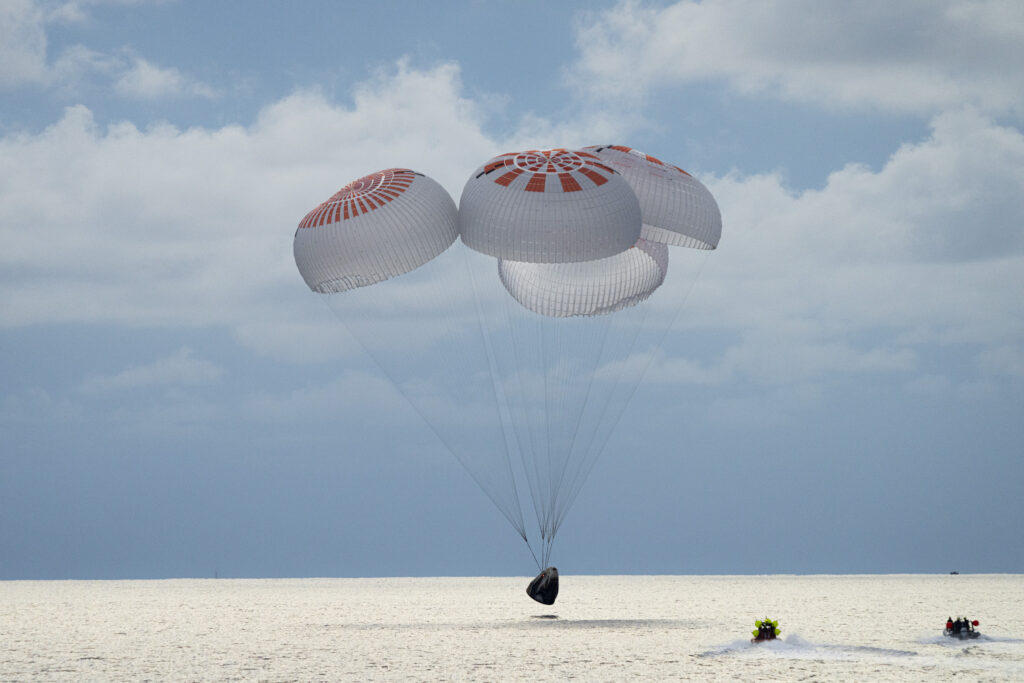
For reentry, Dragon is protected by SpaceX’s proprietary PICA-X heat shield, an evolution of NASA’s original PICA material optimized for repeated use. After completing its deorbit burn, the spacecraft deploys two drogue parachutes followed by four main parachutes, allowing for a controlled splashdown in the ocean. The parachute system was designed with redundancy, enabling the spacecraft to land safely even in the event of a parachute failure.
Missions and Operations
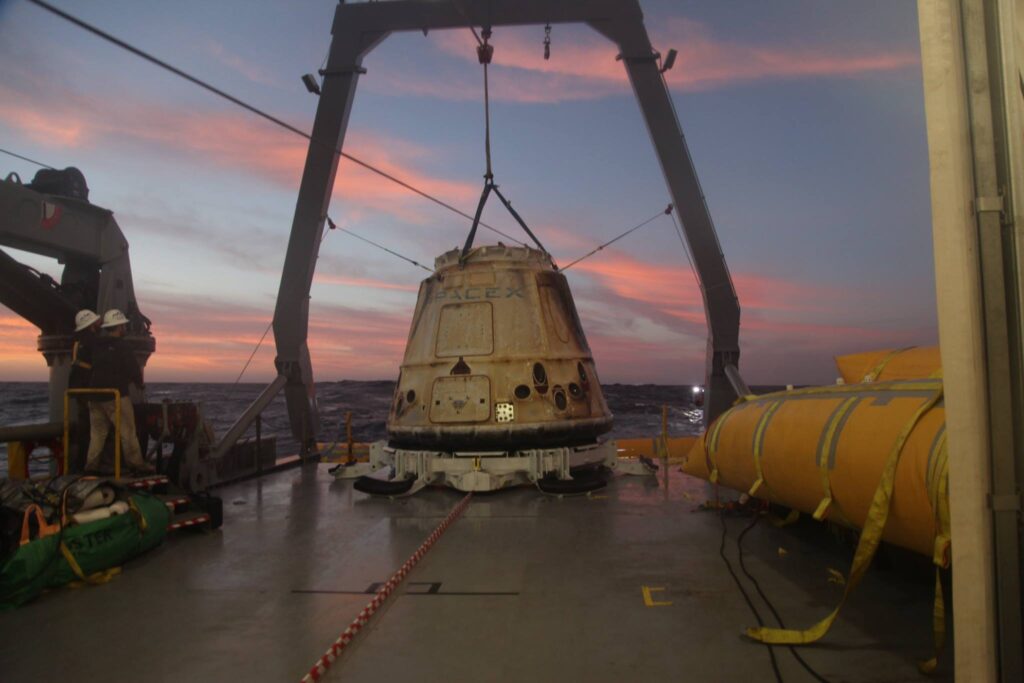
Dragon has become one of the most frequently flown spacecraft in orbit, supporting a wide range of government and commercial missions. Dragon 1 completed 21 successful missions before retiring in 2020, returning thousands of kilograms of scientific experiments, hardware, and cargo from the ISS.
Today, Cargo Dragon continues to deliver supplies, replacement equipment, and research payloads to the station while also returning valuable experiments to Earth. Crew Dragon has expanded SpaceX’s role even further. In addition to routinely transporting NASA astronauts to and from the ISS, the spacecraft has enabled an entirely new market for commercial human spaceflight. Private missions such as Inspiration4, Axiom Space’s ISS expeditions, and Polaris Dawn have demonstrated that Dragon is capable of supporting scientific research, commercial activities, and privately funded orbital missions beyond traditional government programs.
Impact on Spaceflight
Dragon became the first commercial spacecraft to regularly service the ISS and later restored America’s independent human spaceflight capability after nearly a decade of reliance on Soyuz.
The spacecraft has also proven SpaceX’s philosophy of reusability. Both Crew Dragon and Cargo Dragon capsules are refurbished and flown on multiple missions, reducing operational costs while increasing launch cadence. This experience has provided valuable lessons in spacecraft recovery, refurbishment, and rapid reuse that continue to influence SpaceX’s future programs.
Conclusion
More than a decade after its first flight, Dragon remains a cornerstone of SpaceX’s launch operations and one of the world’s most capable orbital spacecraft. Whether transporting astronauts, delivering cargo, or enabling private missions, the spacecraft has transformed access to low Earth orbit and established a new standard for commercial spaceflight.
While SpaceX’s long-term ambitions now center on Starship and missions beyond Earth orbit, Dragon continues to play an indispensable role supporting the International Space Station and ensuring reliable access to space for NASA, commercial partners, and private explorers alike.



![Falcon 9 to Launch SDA Tranche 1 Transport Layer A [Scrubbed]](https://thegridfin.com/wp-content/uploads/2026/07/SpaceX_SLC_4E_01-150x150.jpg)