SpaceX has agreed to buy the nationwide Grain 800 MHz spectrum portfolio, up to 14 MHz of paired low-band spectrum, and plans to use it from both cell towers and satellites for Starlink Mobile. The deal, signed Oct. 8, still needs FCC approval and other customary closing conditions. Neither company has disclosed the price or a closing date.
Until now, Starlink Mobile has relied on satellite bands and spectrum borrowed from carrier partners. Grain’s licences would give SpaceX its own nationwide ground spectrum in the U.S. for the first time.
Towers and Satellites on the Same Licences
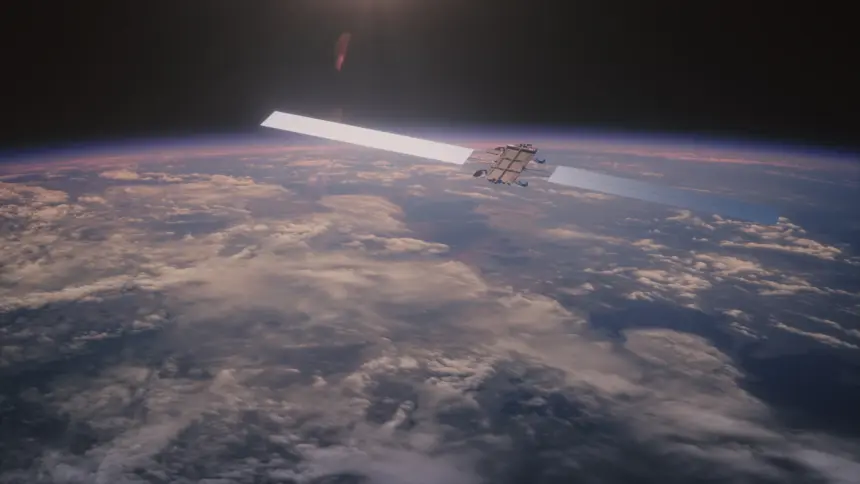
SpaceX plans a terrestrial network of radios feeding sectorized antennas on towers and rooftops, plus satellite service on the same 800 MHz frequencies. In the FCC filing, SpaceX and Grain describe the result as “a first-of-its-kind cutting-edge hybrid mobile network” that can deliver ground broadband, satellite service, or both, to ordinary phones.
Low-band spectrum is the coverage layer of a mobile network. It travels far, holds up against terrain and clutter, and gets through walls well, so SpaceX is pitching it for rural areas, cities and indoor use alike.
By leveraging the world’s largest and only satellite-to-mobile constellation combined with a portfolio of nationwide 800 MHz licenses of up to 14 megahertz of paired, low-band spectrum, Starlink Mobile can ensure all Americans have access to high-speed mobile broadband no matter where they go.
SpaceX, FCC transfer application, Oct. 8, 2026
SpaceX is also asking the FCC’s Space Bureau to add the 800 MHz frequencies to the Supplemental Coverage from Space authority for its new Starlink Mobile constellation. That is the 15,000-satellite direct-to-device system the FCC approved on Oct. 6, a grant that covers 2 GHz and other bands.
How the Deal Is Structured
The licences sit in two companies, Prism License Co. 1 and Prism License Co. 2, held by NewLevel IV, L.P., which a Grain-controlled entity owns. Under the Oct. 8 purchase agreement, they move to Starlink Spectrum Holdings, LLC, a wholly owned SpaceX subsidiary that does business as Starlink Mobile.
The companies filed a transfer-of-control application under Section 310(d) and asked the FCC to grant it on an expedited basis. On competition, SpaceX says it would hold at most 89 MHz in any local market after the deal, with no more than 14 MHz below 1 GHz. The FCC’s spectrum screen kicks in at 385 MHz.
From Nextel to T-Mobile to Grain
Nextel built these 800 MHz holdings into a near-national footprint for 2G voice, and they later passed to T-Mobile. The FCC approved T-Mobile’s sale of the portfolio to Grain in July 2026, and the sale closed on Aug. 11 for $2.9 billion in cash plus Grain’s 600 MHz licences.
That FCC approval left the buildout rules technology-neutral. Each licence area can be built out with terrestrial service or satellite direct-to-device service, or can switch paths later. On the ground, the benchmarks call for 5/5 MHz LTE reaching 33% of the population or 25% of the area in each licence by July 1, 2029, rising to 66% or 50% by July 1, 2034. The satellite path has its own signal, availability and uplink targets due Nov. 30, 2029, Nov. 30, 2031 and Nov. 30, 2036, modelled on the SpaceX/EchoStar order.
This agreement with SpaceX brings that capability to bear at extraordinary scale, with the potential to change where and how Americans connect.
David Grain, founder and CEO, Grain Management
Where Starlink Mobile Stands
SpaceX got operating authority for Starlink Mobile in November 2024, opened a public beta in February 2025 and launched commercial service in July 2025. Starlink overall had more than 11,000 satellites and more than 12 million customers in over 170 countries as of mid-2026. SpaceX says its next-generation Starlink Mobile constellation will have more than 100 times the capacity of the first-generation system.
Carriers Feel It
AT&T, Verizon and T-Mobile shares fell sharply after the deal was announced on Oct. 8, while SpaceX shares rose. On SpaceX’s Aug. 4 earnings call, president Gwynne Shotwell said she expects Starlink to “acquire quite a few of their customers because I think our service will be better.”
SpaceX has not said when 800 MHz service would reach customers, what it would cost, or which phones will support the band.





![Falcon 9 to Launch SDA Tranche 1 Transport Layer A [Scrubbed]](https://thegridfin.com/wp-content/uploads/2026/07/SpaceX_SLC_4E_01-150x150.jpg)