The Grid FinThe Grid FinThe Grid Fin
  • Rockets
  • Starlink
  • xAI
  • Tech and Patents
Search
Reading: Google’s First Orbital AI Chip Test Flies on SpaceX Transporter-18
Share
Font ResizerAa
The Grid FinThe Grid Fin
Font ResizerAa
  • Home
  • Rockets
  • Starlink
  • xAI
  • Tech & Patents
Search
  • Rockets
  • Starlink
  • xAI
  • Tech and Patents
Follow US
The Grid Fin > Rockets > Falcon 9 > Google’s First Orbital AI Chip Test Flies on SpaceX Transporter-18
Falcon 9RocketsTech & Patents

Google’s First Orbital AI Chip Test Flies on SpaceX Transporter-18

By
Karan Singh - Owner | Editor
Published: 30 September 2026
4 Min Read
Google’s First Orbital AI Chip Test Flies on SpaceX Transporter-18
SHARE

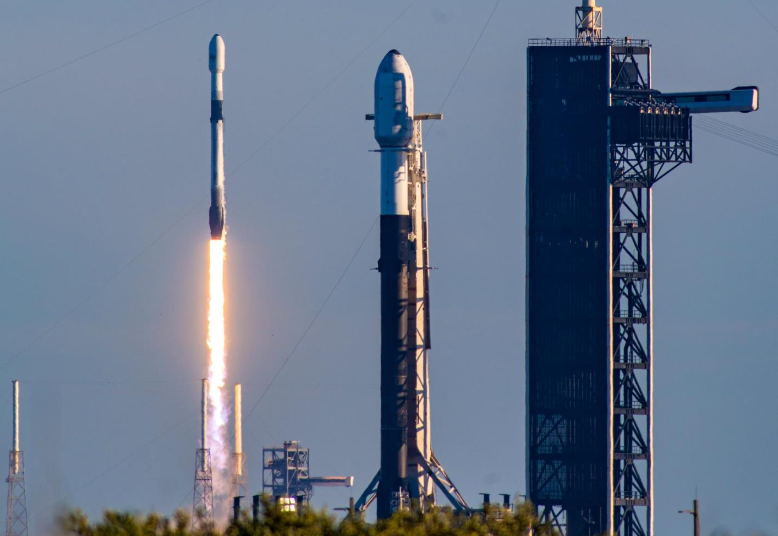
Google confirmed on 24 September 2026 that Project Suncatcher will fly its first in-orbit test of Tensor Processing Units on a prototype satellite built with Planet Labs. Project Suncatcher will catch a ride on SpaceX’s Transporter-18, a dedicated sun-synchronous rideshare flight from pad SLC-4E at Vandenberg Space Force Base.

Contents
  • What Suncatcher Is Testing
  • Project Suncatcher
  • Next Milestone Is 2027

The goal of this flight is hardware survival and testing in low Earth orbit. That includes testing how the load handles the stress of launch, radiation in space, and cooling capabilities of the vacuum. This isn’t quite yet an operational orbital datacenter, and we’re still many months away from SpaceX’s own Starmind or Google or Amazon’s equivalent constellations.

Transporter-18 is scheduled for Thursday, 1 October 2026, with liftoff around 18:18 GMT and a window open through 19:16 GMT, based on open-source trackers. Exact T-0 and webcast information will follow as usual closer to the actual launch day.

What Suncatcher Is Testing

After years of research, Project Suncatcher is scheduled to embark on its first test in orbit, launching a prototype satellite to evaluate how Google Tensor Processing Units (TPUs) perform in space.

Travis Beals, Google’s senior director for Paradigms of Intelligence, framed the Transporter-18 ride as a partnership with Planet Labs to gather in-orbit data on how the TPUs handle flight stress and the radiation and thermal extremes of space. A low-Earth-orbit climb lasts about 10 minutes, with the spacecraft seeing sustained loads up to about 10 G. Individual parts, including the TPU chips, can see forces up to about 50 to 100 Gs, based on Google’s own vibration testing simulations in the labs.

On radiation, Google noted that the Trillium TPUs held up in proton-beam testing at UC Davis’s Crocker Nuclear Laboratory while running AI workloads and can survive a total ionizing dose greater than a five-year LEO mission.

Cooling in a vacuum can be a challenge, and with no airflow to dump heat to, the team is using heat pipes and radiators to bleed waste heat. Learning how that holds up in-orbit is one of the key goals for Project Suncatcher.

Project Suncatcher

The four Trillium TPUs are sitting inside a fridge-sized compute bus, with about 1 kW of solar power to run the whole satellite package. Planet Labs expects operations to measure in the months to about one year, with AI compute workloads happening in 15 minute bursts. These high-intensity bursts will fully thermally soak the radiators, and some time needs to be spent before another workload can be run to radiate off waste heat.

Next Milestone Is 2027

This first launch is about seeing what works, identifying points of failure, and applying those findings to future missions.

Beals’s stated next step is a two-satellite high-bandwidth laser interconnect flight targeted for 2027. Google itself hasn’t planned any specific dates or time estimates for when their own commercial orbital datacenters will begin flying, but instead notes that there will be several years of R&D ahead of it.

SWISS flies its first Starlink aircraft
Starlink V3 Explained: More Capacity, Beams and Bandwidth
SpaceX Unveils Starbase, Louisiana for High-Cadence Starship
SpaceX Begins Starship’s Journey Home
This Week in Grok: Grok Bot Gets 3x Faster, Reads X Chat; Voice 3.0 Tops Index
TAGGED:Falcon 9GoogleLaunchSpaceXTransporter
Share This Article
Facebook Copy Link Print
Share
ByKaran Singh
Owner | Editor
Follow:
Hey, I'm Karan! I'm the owner and editor of The Grid Fin, which focuses on SpaceX, Starlink, and xAI. I've previously been the lead writer over at NotATeslaApp and RivianWave, and write professionally elsewhere as well. I also run The Stator, an EV-focused weekly news recap available on YouTube and X.
Previous Article Why SpaceX Doesn't Like Launching Falcon Heavy Why SpaceX Doesn’t Like Launching Falcon Heavy
Next Article SpaceX Wins Starlink Router Beam Patent; Array Self-Cal App Publishes SpaceX Wins Starlink Router Beam Patent; Array Self-Cal App Publishes

Latest Articles

Starship Ship 42 caught in the tower arms at Starbase on Flight 15, shown on the official webcast at T+22:32:43
This Week in SpaceX: Starship Caught, $74 Billion for AI Campuses
Rockets General News Starlink Starship
Grok Bot Connect Apps screen on a Mac, listing Messages, Calendar, Contacts, Notes, Location, Reminders and Mail
This Week in Grok: Grok Bot Joins Meetings, Mac Gets Apple Apps
Grok xAI
Official graphic introducing Grok Bot 1.0, with colorful Bot shapes around the title
Grok Bot 1.0 Brings Shared Bots Into Team Chats and Meetings
xAI Grok
The Starbase sign on a long production building at SpaceX's Boca Chica, Texas, site, with fuel tanks and cranes behind it
SpaceX Plans More Than $74 Billion for Two Supercompute Campuses
xAI Tech & Patents

Popular This Week

  • Grok Bot Connect Apps screen on a Mac, listing Messages, Calendar, Contacts, Notes, Location, Reminders and Mail

    This Week in Grok: Grok Bot Joins Meetings, Mac Gets Apple Apps

    15 November 20262 views
  • Starship Ship 42 caught in the tower arms at Starbase on Flight 15, shown on the official webcast at T+22:32:43

    This Week in SpaceX: Starship Caught, $74 Billion for AI Campuses

    15 November 20260 views
  • Official graphic introducing Grok Bot 1.0, with colorful Bot shapes around the title

    Grok Bot 1.0 Brings Shared Bots Into Team Chats and Meetings

    14 November 20260 views
  • The Starbase sign on a long production building at SpaceX's Boca Chica, Texas, site, with fuel tanks and cranes behind it

    SpaceX Plans More Than $74 Billion for Two Supercompute Campuses

    13 November 20260 views
  • Starship and Super Heavy lift off from Starbase on Flight 14 amid billowing exhaust clouds

    SpaceX Releases ‘Go For Orbit’ Film Ahead of Starship Flight 15

    12 November 20260 views

You Might also Like

NASA concept of operations graphic for the SpaceX Starship lunar lander
RocketsGeneral NewsStarlinkStarship

This Week in SpaceX: Starship to Push Orion, Booster 22 Fires

Karan Singh
7 Min Read
SpaceX Secures FCC International Carrier Authority for Starlink Mobile
StarlinkTech & Patents

SpaceX Secures FCC International Carrier Authority for Starlink Mobile

Karan Singh
3 Min Read
Starlink Tests $185 Personal Maritime Plan for Small Boats
Starlink

Starlink Tests $185 Personal Maritime Plan for Small Boats

Karan Singh
3 Min Read

Independent news and analysis covering SpaceX, Starlink, xAI, rockets, artificial intelligence, and the technologies shaping what comes next.

About Us

  • Contact Us
  • How to Buy Starlink | Referral Code
  • Terms of Service
    • Advertise
    • Privacy Policy
    • Editorial Standards
    • Disclaimer
    • Affiliate and Referral Disclosure
  • About

Categories

  • Rockets
  • Starlink
  • xAI
  • Tech and Patents

More Categories

  • Falcon 9
  • Falcon Heavy
  • Starship
  • Super Heavy Booster
  • Software Updates
  • Grok
Follow US
© The Grid Fin, 2026