NVIDIA and SpaceXAI are bringing NVIDIA’s latest Vera CPU and Vera Rubin architecture into both terrestrial and planned orbital AI infrastructure. SpaceXAI says it will deploy Vera CPUs for agentic workloads and expand the infrastructure behind Grok on Vera Rubin as its computing capacity moves toward the gigawatt scale.
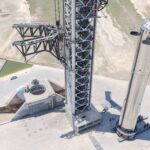
NVIDIA describes the first-generation Starmind satellite as being based on an optimized Vera Rubin NVL72 system. These are some of the most concrete details we’ve heard so far about the Starmind constellation, which SpaceX plans to deploy using Starship in the future.
The Orbital Target
In a statement on X, Elon Musk said SpaceX and NVIDIA have designed a space-optimized Vera Rubin NVL72 system for launch to orbit in Q4 2027, with significant scale planned for 2028. That gives us the clearest timing for a public launch of Starmind to date, but it still sounds like an aspirational goal, especially given that Starship isn’t quite flight ready yet, with IFT-14 around the corner.
NVIDIA’s announcement describes the planned first-generation Starmind satellite as an orbital extension of the same compute architecture SpaceXAI intends to use on Earth. The key is a common hardware and software foundation. The Vera CPUs handle the orchestration, code execution, data processing and simulation, while GPUs remain focused on training and model inference.
Orbit makes that architecture more challenging to implement. Power, heat rejection, communications bandwidth, radiation in space, reliability, and integration all become tighter constraints than they would be on Earth.
NVIDIA says that the NVL72 will be adapted to meet those requirements, but we’ve yet to see any actual details surface on just what a Starmind satellite will be able to do quite yet.
NVIDIA’s Vera Rubin
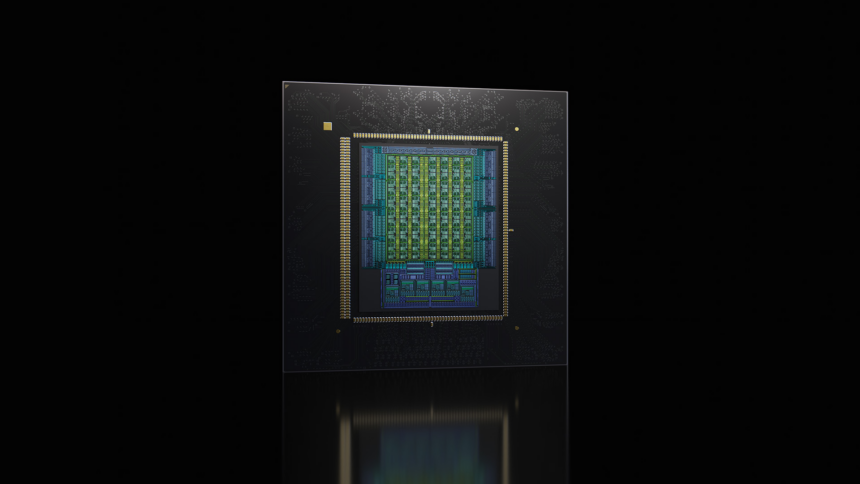
Vera is NVIDIA’s Arm-based datacenter CPU, designed to take on the CPU-heavy work surrounding AI models. NVIDIA calls it the first CPU built for AI agents and says its 88 custom Olympus cores, Spatial Multithreading, and LPDDR5X memory can deliver up to 1.2 TB/s of memory bandwidth.
The company also claims up to 1.8 times faster task completion than x86 CPUs across agentic AI tasks, reinforcement learning, and data-processing workloads. Vera Rubin is the broader platform around that CPU. It combines Vera with Rubin GPUs, NVLink interconnects, Spectrum-X Ethernet, BlueField data-processing hardware, and NVIDIA’s software stack.
For SpaceXAI, this is less about dropping a single faster chip into an existing server and more about using one co-designed system to keep expensive GPUs at max utilization while agents take actions between model calls.
That could matter as Grok becomes more agentic. Tool use, code execution, simulations, and the movement of data can leave GPUs waiting on CPU work. SpaceXAI president Mike Nicolls said Vera’s CPU performance and memory bandwidth should allow more orchestration and processing while keeping GPUs focused on the jobs they do best, translating into more useful work from each watt of compute.
Scaling Up Numbers, Scaling Down Size
The most interesting part of the announcement is the attempt to carry datacentre AI architecture into space without treating an orbital system like a conventional server rack.
NVIDIA says the NVL72 design will be optimized for orbit, but it has not explained which components will change or published figures for the resulting size, mass, cost, or performance. Starship offers far more payload volume and mass than existing systems, yet every kilogram, watt, and square metre of radiator still competes with the rest of the satellite.
For now, the concrete development is in the chip architecture. Vera and Vera Rubin will become key components driving the development of Grok on Earth, while Starmind is slated for orbit in late 2027. Reaching that significant scale milestone described by Musk is going to another big leap for SpaceXAI.