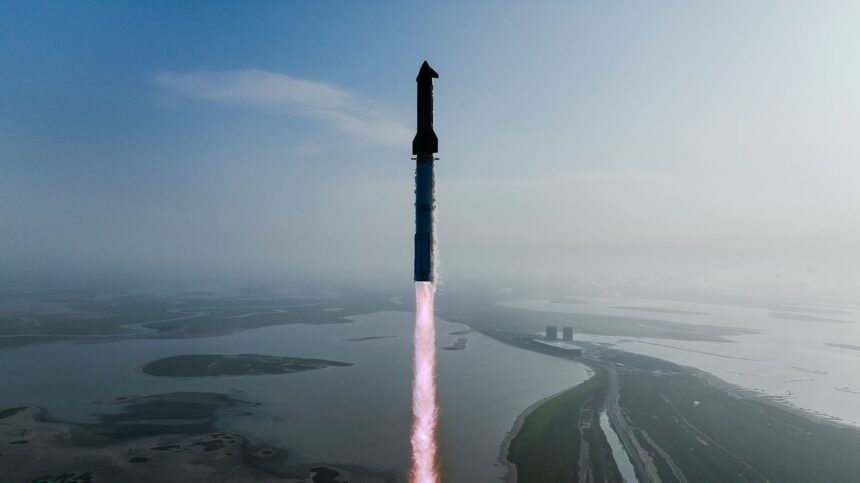
The next major Starship test, IFT-14, is being targeted for the end of August 2026, and it marks a set of major milestones for the development of Starship V3.
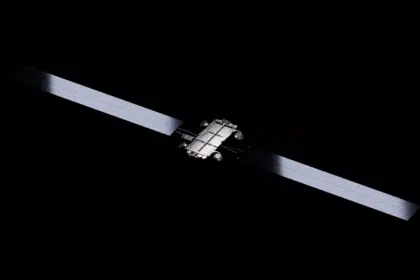
Unlike previous Starship tests, IFT-14 is expected to move beyond purely R&D hardware and will be the first flight that deploys Starlink V3 satellites to a stable orbit. This would combine a full-scale test flight alongside a commercial milestone for the Starlink program.
IFT-13 previously carried 20 Starlink V3 satellites and deployed them in a suborbital trajectory as part of a test mission. This served as an opportunity to conduct initial testing on the new V3 satellites, before they re-entered on a planned trajectory. IFT-14 is expected to place the V3s in a stable orbit for ongoing use.
Starship’s First Tower Catch
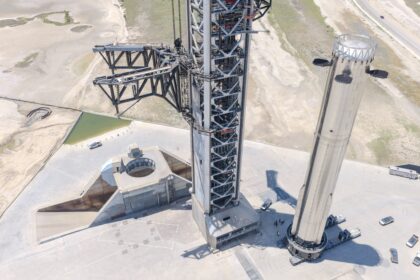
Following the successful catches of Super Heavy Booster on IFT-5 and IFT-7, SpaceX is now aiming to catch Starship for the very first time during IFT-14. Rather than splashing down in the ocean, SpaceX plans to have Starship return directly to Starbase, in the waiting arms of Mechazilla.
A successful catch would allow SpaceX to potentially keep the ship at the launch site and stack it onto Super Heavy Booster, enabling a real-world test for rapid reusability with minimal ground handling of the ship.
Catching Starship is an even harder achievement than catching Super Heavy Booster, since Starship needs to come back in at orbital reentry speeds, while Super Heavy comes back in at suborbital speeds.
Super Heavy Booster Recovery Testing
IFT-14 will also provide another opportunity to demonstrate Super Heavy’s recovery capabilities.
During IFT-13, Super Heavy’s boostback burn ended early, which prevented a controlled reentry and splashdown. While the booster completed much of its intended flight profile, the landing attempt highlighted the ongoing challenges with precisely controlling such heavy objects on reentry.
Starlink V3 Deploys with Starship
While demonstrating the first catch of Starship is an important milestone, the first operational deployment of Starlink V3 might be even more significant. The V3 satellites are being developed around Starship’s larger payload capacity, allowing SpaceX to deploy more capable spacecraft than those designed for Falcon 9 or Falcon Heavy.
The Road to Operational Starship
IFT-14 is still fundamentally a test flight, but its objectives represent an important shift for the Starship program.
SpaceX is no longer simply testing whether Starship V3 can fly. The company is now testing whether the vehicle can perform useful missions while being rapidly reused. A successful orbital deployment, combined with a Starship recovery, would represent another major step toward that goal.
Starship still has significant development ahead, but IFT-14 could demonstrate that the vehicle is beginning to transition from an experimental spacecraft into a reusable launch system capable of supporting SpaceX’s long term plans.






![Falcon 9 to Launch SDA Tranche 1 Transport Layer A [Scrubbed]](https://thegridfin.com/wp-content/uploads/2026/07/SpaceX_SLC_4E_01-150x150.jpg)