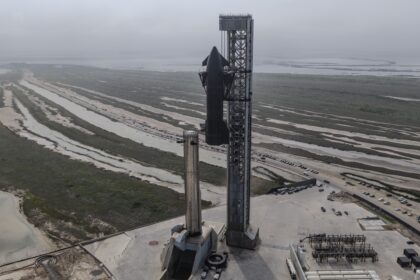
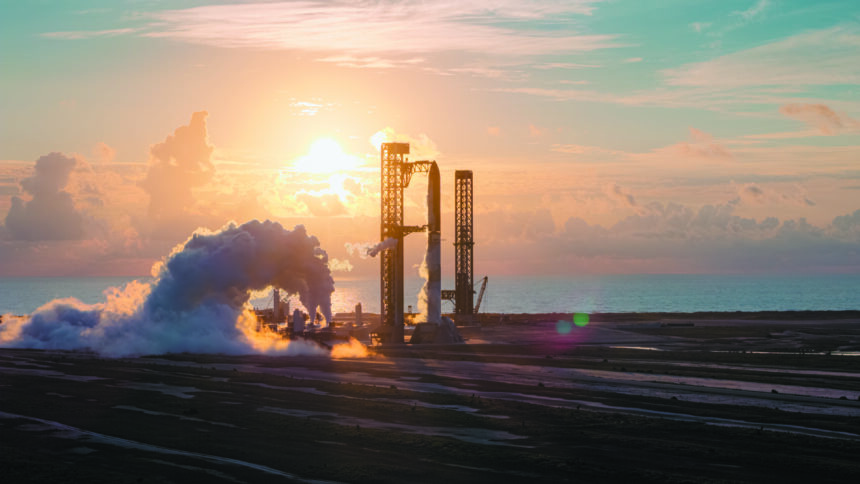
The FAA has started an environmental review of SpaceX’s plan to fly up to 456 Starship launches a year from Starbase, Texas. A notice of intent to prepare a Programmatic Environmental Impact Statement goes on public inspection Oct. 13 and will be published in the Federal Register on Oct. 14, 2026.
Publication opens a public scoping period that runs to Nov. 30. Nothing has been approved quite yet, and SpaceX’s current limit stays in place while the review runs. In addition, this current plan review does not look at SpaceX’s future plans for its Starbase Louisiana expansion.
Where the Cap Stands Today
SpaceX is authorized to fly up to 25 Starship–Super Heavy launches a year from the Boca Chica Launch Site, with up to 50 landings: 25 of the ship and 25 of the booster. That limit comes from the FAA’s 2025 tiered environmental assessment for increased cadence at Boca Chica.
The 456-launch ceiling under study is about 18 times that cap, by our calculation (456 ÷ 25 = 18.24).
The Two Phases Under Review
The FAA will study the increase in two steps:
- Phase 1: up to 100 launches and 200 landings a year (100 Starship, 100 Super Heavy), on any day and at any time.
- Phase 2: up to 456 launches from Starbase and 912 landings there a year, counting landings from flights that launch elsewhere. Launches could happen at any hour but only Monday to Friday.
The FAA describes Phase 2 as a mature program “launching more than 100 times annually” that “would be implemented within several years.” Any increase beyond those limits would need a new environmental review.
The notice explains the jump with SpaceX’s reuse goal:
As the vehicle continues to mature and reliability improves, launch and landing rates are expected to increase. Starship and Super Heavy are designed to require minimal post-flight refurbishment.
FAA Notice of Intent
Where Boosters and Ships Would Come Down
The review also covers more places for vehicles to land or be expended. Super Heavy would land back at the launch site, soft-land in the Gulf of America, or be expended in flight. Starship would land at the launch site, soft-land in the Gulf or the open ocean, or be expended in the open ocean. Each step of a mission is covered in our explainer on how a Starship flight works.
Launches would head out on azimuths between 40° and 115°. Starship landing approaches would fall between 155° and 185° and between 240° and 340°. For the analysis, the FAA assumes half of launches and landings happen by day (7 a.m. to 10 p.m.) and half at night.
What the FAA Will Study
The statement will weigh effects on air quality, fish, wildlife and plants, coastal resources, hazardous materials, historic and cultural sites, land use, noise, socioeconomics and children’s health and safety, visual effects, and water resources including wetlands. Alongside it, the FAA is running historic-preservation consultations and endangered-species consultations with the U.S. Fish and Wildlife Service and the National Marine Fisheries Service.
The only alternative is No Action, under which SpaceX keeps flying at the cadence the 2025 assessment allows. The FAA ruled out other sites because Starbase already has the infrastructure. A draft statement will come out later for public comment. The FAA has not given a date for the draft or a final decision.
How to Comment
Comments on what the review should cover are due Nov. 30, 2026, through regulations.gov docket FAA-2026-12808 or by mail. The FAA is also holding five scoping meetings, all in Central time:
- Tuesday, Nov. 17: 1–3 p.m. and 5:30–7:30 p.m., Texas Southmost College, Jacob Brown Auditorium, 600 International Blvd., Brownsville.
- Wednesday, Nov. 18: 5:30–7:30 p.m., online. The link and call-in number will be posted on the FAA project page. Comments typed in the chat do not go on the record.
- Thursday, Nov. 19: 1–3 p.m. and 5:30–7:30 p.m., Port Isabel Event & Cultural Center, 309 Railroad St., Port Isabel.
Spoken comments get English–Spanish translation, and the presentation will be posted in both languages by Nov. 10. Other accommodation requests are due Nov. 2 at [email protected].