
The United States Patent and Trademark Office has granted SpaceX a wireless-router beam patent on 15 September 2026, while a separate application covering over-the-air phased-array self-calibration was published on 17 September 2026. Officially assigned to Space Exploration Technologies Corp., the two filings target different aspects of Starlink ground hardware and could improve hardware efficiency.
The granted patent describes how a router can use a wide, low-gain zone to find and associate with client devices before switching to tighter, higher-gain beams directed toward individual devices. The published application describes how a phased-array panel can measure and correct its own phase and gain errors through over-the-air measurements without relying on an external factory fixture.
How The Router Beam System Works
The USPTO granted US12738645B2, titled “System and method of providing a wireless router,” on 15 September 2026. The inventors are Joshua S. Salazar, Ignacy Chorazewicz, and Brandon Toy. The application (18/223,464) was filed on 18 July 2023 and previously published as US20240030601A1. The grant contains 22 claims and 16 drawing sheets covering steerable and switched antenna systems.
The USPTO PDF is available here, with a mirror of the patent text available here.
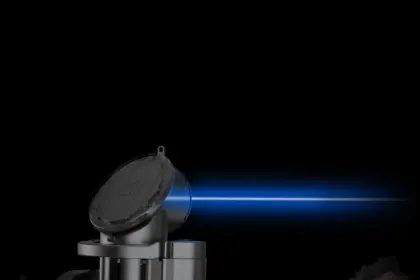
The patent describes a two-stage approach to router beam management. First, the wireless router broadcasts a low-gain planar zone that allows nearby client devices to discover and associate with the network. After association, the router switches to a high-gain mode and directs a beamformed signal toward each connected device.
The hardware described in the patent includes a vertical array with roughly 12–22 dBi of gain, an omnidirectional antenna, a switch between the two modes, and beamforming hardware such as analog phase shifters.
In practical terms, the approach could allow a router to concentrate its available RF (Radio Frequency) energy toward connected devices instead of continuously broadcasting with the same wide pattern. The patent does not identify a specific Starlink router generation, so it is uncertain whether this technology is present in current hardware or the upcoming Router 4.
Why Router Beamforming Matters
A standard Starlink home setup uses an outdoor antenna to communicate with the Starlink network and a separate router to provide Wi-Fi throughout the home. Because the dish is typically installed outside, the router is not always positioned in the center of the building.
The patent’s low-gain association zone provides a broad footprint for devices that are still discovering and connecting to the network. Once a device is associated, the router can switch to a narrower beam aimed at that specific client.
Beamforming can improve signal strength and connection stability by concentrating transmission toward a known client rather than spreading it uniformly across the available coverage area. The vertical array described in the patent provides the higher-gain portion of the system, while the omnidirectional antenna handles the initial discovery and association process. In particular, the 12–22 dBi gain range could enable a concentrated beam comparable to that of outdoor directional antennas.
This hardware could allow a router to improve coverage and throughput without simply increasing transmit power. The most significant improvement could be better network performance at the edge of the coverage range, where traditional networking methods would see a fairly large drop in performance. Beyond that, the hardware uses the array to direct more of its available power toward where it is needed.
Over-The-Air Array Calibration
Separately, the USPTO published (but did not grant) US20260280118A1, titled “Over-the-air self calibration for phased array antennas,” on 17 September 2026. This is a PGPub (Pre-Grant Publication), meaning it is an application publication rather than an issued patent.
Primary copies are on the USPTO PDF and FreePatentsOnline.
The inventors are Ersin Yetisir and Ayman Dorrah of Redmond, Washington. The non-provisional application (19/082,011) was filed on 17 March 2025 and claims priority to provisional application 63/567,372, filed on 19 March 2024. The published document is approximately 71 pages long and covers phased-array control, RF measurement, and correction.
The described system uses OTA (over-the-air) mutual-coupling measurements between elements of a periodic phased-array lattice. When one antenna element transmits, nearby elements can receive a portion of that signal through mutual coupling. The application describes using four OTA measurements across four elements, including a reciprocal path pair, to derive phase and gain corrections between their complex gains.
The RF path uses a single-port transmit/receive arrangement with calibration switching into the power-amplifier and beamformer RFIO (Radio Frequency Input/Output). This allows the array to perform measurements without requiring a separate external probe for every channel.
The Benefit of Fixture-Free Calibration
Phased arrays rely on constructive interference, requiring precise control of the phase and gain of individual components to produce the desired beam. Factors such as manufacturing tolerances, temperature changes, component aging, and differences in cables or circuit boards can introduce variations in component characteristics and reduce array performance. As a result, a phased array such as a Starlink dish could gradually lose efficiency over the course of its operating lifetime.
Calibration traditionally can require specialized equipment and controlled measurement environments. A self-calibration system instead gives the array a way to measure its own RF characteristics and apply corrections internally.
The approach described in the application could support calibration during production while also providing a mechanism for recalibration after deployment. This could help extend a Starlink dish’s operating lifetime by maintaining a consistent level of performance over time. Most importantly, the OTA nature of the patent could allow existing hardware to be recalibrated in much the same way as a firmware update.
What The Patents Tell Us
The two filings address RF problems but represent different stages of intellectual property protection. US12738645B2 is an issued patent grant, with enforceable claim scope as of 15 September 2026, subject to the usual limits of patent law. US20260280118A1 is an application publication, meaning its published claims have not been granted as a patent.
The two filings establish that SpaceX is developing IP around two different parts of the Starlink RF stack, targeting the longevity and efficiency of Starlink kits. The patent covers a wireless router that can transition from broad device discovery to targeted high-gain beams. The publication covers a phased-array that can measure and correct its own RF characteristics over the air.
It remains to be seen what improvements will be realized by SpaceX’s Starlink from this upcoming technology.