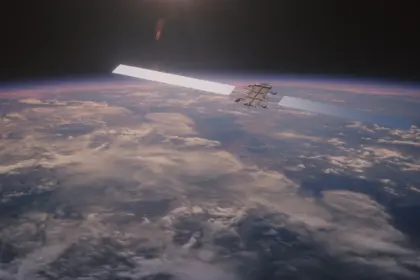
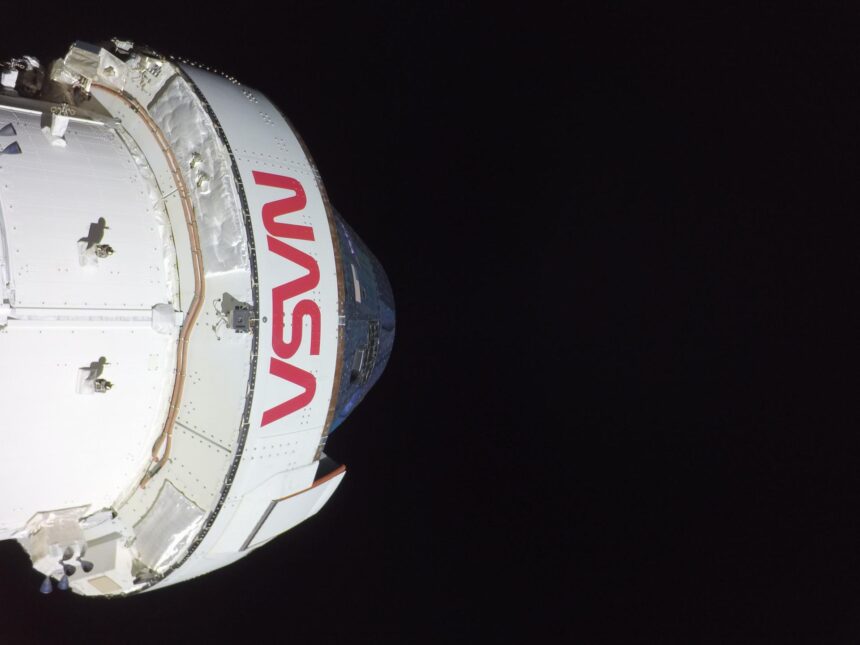
Starship’s part in Artemis III will be short, at least duration-wise. In a NASA briefing at Kennedy Space Center on Oct. 23, the agency said the 14-day crewed mission in low Earth orbit remains on track for summer 2027. A NASA mission slide shows Orion docked to Starship for two hours, with no crew entry.
That is much shorter than the plan NASA described earlier this year, which had Orion spending about a day attached to Starship. NASA Administrator Jared Isaacman, Associate Administrator Amit Kshatriya and Artemis program manager Jeremy Parsons led the briefing.
The Artemis III Mission Sequence
Per the slide, Blue Origin’s Blue Moon test lander launches first. NASA’s own SLS then sends the four-person crew up in Orion, which docks with Blue Moon on Flight Day 3 and undocks on Flight Day 6. Starship launches after that, and Orion docks to it on Flight Day 8 for two hours before undocking and heading home for a Pacific splashdown.
The Blue Moon stop is the longer, hands-on one. NASA said in July that two astronauts will board the lander to test its life support, avionics and how the two spacecraft work together. The mission needs three heavy rockets, SLS, New Glenn and Starship, launching from separate pads at Kennedy and Cape Canaveral in a tight window. SpaceX is building Starship pads at Kennedy’s LC-39A and the Cape’s SLC-37, and has not said which one will launch the Artemis III ship.
Artemis III slide. 14 day mission.
Blue Moon launches first. SLS as ready as possible at that time. SLS/Orion launches. Orion docks to Blue Moon Lander, Flight Day 3.
Undocks on Flight 6. Starship launches.
Orion docks to Starship on Flight Day 8. Two hours, no entry into Starship. Undocks.
— NSF – NASASpaceflight.com (@NASASpaceflight) October 23, 2026SpaceX plans to fly a modified V3 Starship upper stage with a docking system and no crew cabin. Orion and Starship will test communications and manoeuvring between the two vehicles. NASASpaceflight also reported that two Starlink terminals are installed on the Artemis III Orion.
Artemis III is a rehearsal mission. The first crewed landing isn’t planned until Artemis IV in 2028. NASA says it will pick Starship or Blue Moon for that mission based on lander readiness. Our rundown of NASA’s 2027 HLS checklist covers what SpaceX still has to prove before then.
How Many Refuelling Flights?
Getting Starship to the Moon means filling it with propellant in orbit from tanker flights first. The number of those flights is now in dispute.
On an Aerospace Safety Advisory Panel call on Oct. 22, panel member Charlie Precourt said the latest estimate of refuelling launches needed to support a Starship Moon landing is “around 22.” NASA had previously estimated at least 15 refuelling launches for Artemis IV. The panel, NASA’s independent safety advisers, also raised concerns about how mature the lunar landing plans are.
Musk disagreed within hours, replying that the estimate was “way too high” and that the “actual number will be more like 6 to 8.”
@SciGuySpace That’s way too high. Actual number will be more like 6 to 8.
— Elon Musk (@elonmusk) October 22, 2026SpaceX has not published its own breakdown, and neither figure has been tested in flight. Transferring and storing cryogenic propellant in orbit is still a capability both Starship and Blue Moon have to demonstrate before a crewed landing. At NASA’s Oct. 23 briefing, Parsons said efficiency gains should bring the tanker count “closer to the high single digits,” TeslaNorth reported.