The Grid FinThe Grid FinThe Grid Fin
  • Rockets
  • Starlink
  • xAI
  • Tech and Patents
Search
Reading: Space Force Gives SpaceX Design Latitude on $2.3B Space Data Network
Share
Font ResizerAa
The Grid FinThe Grid Fin
Font ResizerAa
  • Home
  • Rockets
  • Starlink
  • xAI
  • Tech & Patents
Search
  • Rockets
  • Starlink
  • xAI
  • Tech and Patents
Follow US
The Grid Fin > Rockets > Space Force Gives SpaceX Design Latitude on $2.3B Space Data Network
RocketsTech & Patents

Space Force Gives SpaceX Design Latitude on $2.3B Space Data Network

By
Kevin Y - Lead Writer
Published: 19 September 2026
3 Min Read
SHARE

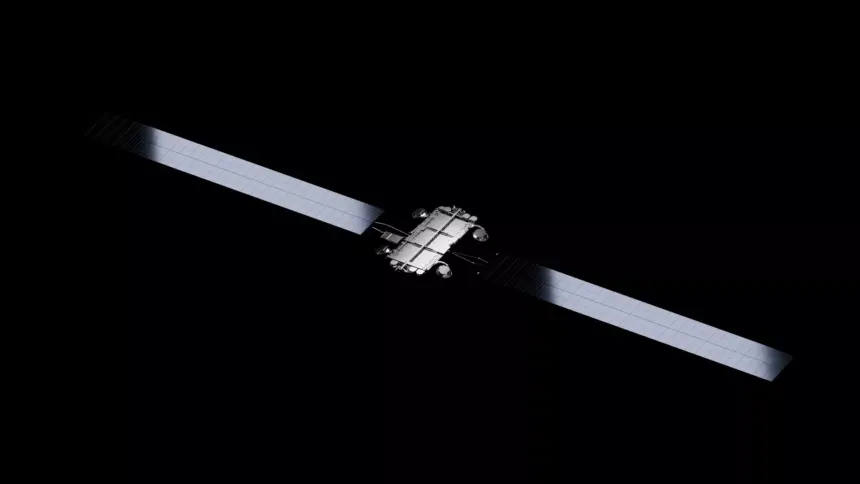
Contrary to expectations, the U.S. Space Force is giving SpaceX latitude to design its secure next-generation low-Earth orbit satellite network, the Space Data Network. SpaceX will be responsible to look after the performance floors for coverage, capacity, and throughput, rather than simply prescribing how many spacecraft must fly or how they’re configured. SpaceNews reported the approach from National Harbor, Maryland, on 16 September 2026, framing the network at about $2.3 billion.

Contents
  • Performance Floors, Not A Prescribed Fleet
  • Same Multi-Billion SDN Effort

For a defence program, this is a considerable amount of free design latitude, as these types of programs are usually tightly controlled to prevent cost overruns and ensure that capabilities meet government or military design specifications.

Performance Floors, Not A Prescribed Fleet

For anyone following SpaceX’s defence constellation work, the flexibility in the design architecture is the difference here. Instead of flying a government-designed and built spacecraft, SpaceX can now size and configure the SDN LEO network to hit the stated performance requirements that the U.S. Space Force has requested.

This essentially means that the Space Force sets the line on what coverage, capacity, and throughput they need, and SpaceX designs the entire constellation from scratch. Essentially, the government is now asking for the requirements, and letting the contractor fill them on their own, rather than leaning into the details.

At this time, all of that information on what the Space Force requires or has requested is firmly a confidential matter, just like most defence-focused space news. SpaceX, however, will be working closely with the Space Force on the design and satellite count. After all, a multi-billion-dollar LEO data system can be built out several different ways, and SpaceX’s proposals will be analyzed and approved before they’re given the go-ahead to build and launch.

One of the biggest aspects to this is that the design can define the launch cadence, and that’s true for any satellite constellation. If SpaceX wants, they could design the new satellites to fit in Starship, rather than in Falcon 9 or Falcon Heavy. The freedom to do so is exactly what this change in contract now permits.

Same Multi-Billion SDN Effort

SpaceX previously won a $2.29 billion Space Force contract in May 2026 for the SDN Backbone, which is built around providing the Space Force the sensor capabilities it needs to support military actions. Today’s $2.3 billion SDN also sits on that same program family, rather than replacing it with a new dollar figure from scratch.

This really means that this is a contract amendment, and not another multi-billion-dollar contract ontop of another, pre-existing one. SpaceX has been working closely with the Department of Defence on their Starshield program, as well as providing Grok through SpaceXAI for government and military use.


SpaceX To Enable Voice and Data via Starlink Mobile in Japan
What is Falcon 9?
SpaceX Secures FCC International Carrier Authority for Starlink Mobile
How Starlink’s Laser Links Work
What is Falcon Heavy?
TAGGED:Elon MuskSpaceX
Share This Article
Facebook Copy Link Print
Share
ByKevin Y
Lead Writer
Follow:
Kevin Y writes and edits for The Grid Fin, with a distinct focus on SpaceX. He's loved space his entire life, and covering SpaceX is a perfect fit. His work emphasizes sourcing and practical contexts for all the rocketry and satellite knowledge readers would want to learn about.
Previous Article SpaceXAI Ships Grok Voice Transcribe 2.0
Next Article Grok Bot Adds Voice, Voice Notes, and Token Optimization This Week

Latest Articles

Crew 13 Lifts Off, Crew Dragon Grace en-route to ISS
Falcon 9 Rockets
SpaceX Wins Starlink Router Beam Patent; Array Self-Cal App Publishes
Starlink Tech & Patents
Google’s First Orbital AI Chip Test Flies on SpaceX Transporter-18 Tomorrow
Falcon 9 Rockets Tech & Patents
Why SpaceX Doesn’t Like Launching Falcon Heavy
Falcon Heavy Rockets

Popular This Week

  • Google’s First Orbital AI Chip Test Flies on SpaceX Transporter-18 Tomorrow

    30 September 20261 views
  • Why SpaceX Doesn't Like Launching Falcon Heavy

    30 September 20261 views
  • Crew 13 Lifts Off, Crew Dragon Grace en-route to ISS

    1 October 20260 views
  • SpaceX Wins Starlink Router Beam Patent; Array Self-Cal App Publishes

    1 October 20260 views
  • Starship Reaches Orbit for the First Time, Deploys 26 Starlink V3 Satellites

    29 September 20260 views

You Might also Like

Falcon 9Rockets

SpaceX Targets USSF-153 for Thursday from Vandenberg

Karan Singh
3 Min Read
Official Starlink satellite illustration over Earth
Starlink

Starlink Mobile to Launch in Hungary and Albania with 4iG

Karan Singh
4 Min Read
Tech & Patents

SpaceX Patent: How Starlink Handoffs Keep You Connected

Karan Singh
5 Min Read

Independent news and analysis covering SpaceX, Starlink, xAI, rockets, artificial intelligence, and the technologies shaping what comes next.

About Us

  • Contact Us
  • How to Buy Starlink | Referral Code
  • Terms of Service
    • Advertise
    • Privacy Policy
    • Editorial Standards
    • Disclaimer
    • Affiliate and Referral Disclosure
  • About

Categories

  • Rockets
  • Starlink
  • xAI
  • Tech and Patents

More Categories

  • Falcon 9
  • Falcon Heavy
  • Starship
  • Super Heavy Booster
  • Software Updates
  • Grok
Follow US
© The Grid Fin, 2026