The Grid FinThe Grid FinThe Grid Fin
  • Rockets
  • Starlink
  • xAI
  • Tech and Patents
Search
Reading: Musk Says Starlink V5 Terminal Is in Production
Share
Font ResizerAa
The Grid FinThe Grid Fin
Font ResizerAa
  • Home
  • Rockets
  • Starlink
  • xAI
  • Tech & Patents
Search
  • Rockets
  • Starlink
  • xAI
  • Tech and Patents
Follow US
The Grid Fin > Starlink > Musk Says Starlink V5 Terminal Is in Production
Starlink

Musk Says Starlink V5 Terminal Is in Production

By
Karan Singh - Owner | Editor
Published: 20 September 2026
4 Min Read
SHARE

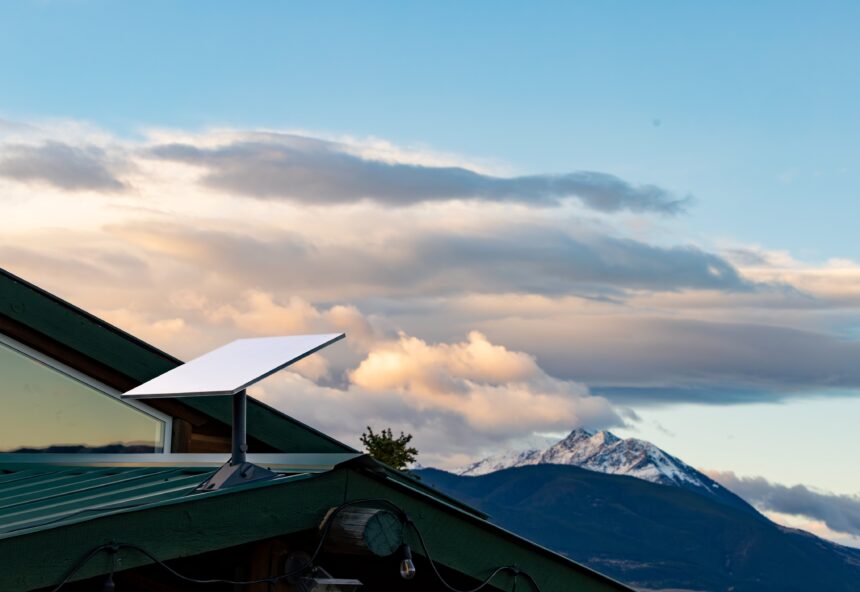
Starlink’s next generation V5 residential terminal is in production. Elon Musk confirmed the manufacturing milestone on 17 September 2026, quoting an earlier hardware announcement that first introduced the smaller, lighter, and more power-efficient home internet kit.

Contents
  • What V5 Brings
  • Production Versus Rollout

Starlink V5 terminal is in production https://t.co/PaEiao3Tlw

— Elon Musk (@elonmusk) September 17, 2026

What V5 Brings

SpaceX’s fifth generation Starlink terminal is quite a step forward in most regards to V4, but it also has some very particular regressions.

Starlink V5 shares several similarities with the Starlink Mini, adopting a compact form factor and lightweight design. The terminal weighs approximately 1.1 kg (2.4 lb) and consumes between 35 and 50 watts, reducing the power requirements compared to V4’s average power draw of 75 to 100 watts.

The next generation Starlink V5 has a smaller form factor and lightweight design with greater power efficiency.

With speeds up to 375+ Mbps, Starlink V5 delivers reliable home internet for streaming, video calling, gaming and more.

Available in select areas.

— Starlink (@Starlink) September 10, 2026

Despite its smaller footprint, Starlink advertises speeds of 375+ Mbps, supporting streaming, video calls, gaming, and other everyday internet activities. The combination of a lightweight design and lower power consumption makes V5 an alternative for homeowners who want a simpler installation without giving up the performance needed for typical household use.

The reduced size also lowers structural load requirements, potentially making installation easier in locations where a larger terminal would be less convenient. For customers with specific mounting limitations, the smaller hardware could provide additional flexibility.

However, one of the largest limitations with V5 is its lack of support of connectivity on the move. In particular, V5 does not support Starlink Roam, so you can’t mount a V5 dish to your vehicle, RV, or boat. Instead, you’ll either need to jump up to a Starlink Performance dish, or step down to a Starlink Mini, once V4 stops being available.

Currently, the full-size V4 offers the best of all the worlds, without the limit of lacking Roam functionality, so if you want faster-than-Mini speeds without Performance pricing, now is your chance to get one.

Production Versus Rollout

Starlink has staggered the rollout of its V5 terminal since its introduction in mid-2026, with the kit initially available only in select areas. Musk’s confirmation really means that SpaceX has finished transitioning most production from the previous-gen V4, to the new V5. But it doesn’t mean that the V5 terminal will be immediately available to customers worldwide.

Manufacturing is one part of the process. Starlink must still distribute the hardware and expand availability across its service regions. The company has not provided a detailed deployment schedule, so it remains unclear when V5 will reach additional markets.

The production update also reinforces the direction of Starlink’s residential hardware, with a focus on reducing size and power consumption while maintaining performance. As production progresses, the smaller terminal could become an option for more customers looking for a lightweight installation.

For existing Starlink V4 users, V5 does not represent a direct performance upgrade based on the current network specifications. Instead, it offers an alternative for homeowners who prioritize a lighter, more compact terminal and lower power requirements.
Starlink V3 Explained: More Capacity, Beams and Bandwidth
Google’s First Orbital AI Chip Test Flies on SpaceX Transporter-18 Tomorrow
SpaceX Begins Starship’s Journey Home
Starlink V3: Inside the Hardware
Starship Flight 14: What to Expect From SpaceX’s Next Test
TAGGED:Elon MuskSpaceXstarlink
Share This Article
Facebook Copy Link Print
Share
ByKaran Singh
Owner | Editor
Follow:
Hey, I'm Karan! I'm the owner and editor of The Grid Fin, which focuses on SpaceX, Starlink, and xAI. I've previously been the lead writer over at NotATeslaApp and RivianWave, and write professionally elsewhere as well. I also run The Stator, an EV-focused weekly news recap available on YouTube and X.
Previous Article Cathie Wood’s $10 Trillion Starship Bet is Endorsed by Elon Musk
Next Article SpaceX Launches USSF-385 From Vandenberg; B1100 Completes 10th Landing on OCISLY

Latest Articles

Crew 13 Lifts Off, Crew Dragon Grace en-route to ISS
Falcon 9 Rockets
SpaceX Wins Starlink Router Beam Patent; Array Self-Cal App Publishes
Starlink Tech & Patents
Why SpaceX Doesn’t Like Launching Falcon Heavy
Falcon Heavy Rockets
Starship Reaches Orbit for the First Time, Deploys 26 Starlink V3 Satellites
Rockets Starlink Starship Super Heavy Booster

Popular This Week

  • Google’s First Orbital AI Chip Test Flies on SpaceX Transporter-18 Tomorrow

    30 September 20261 views
  • Why SpaceX Doesn't Like Launching Falcon Heavy

    30 September 20261 views
  • Crew 13 Lifts Off, Crew Dragon Grace en-route to ISS

    1 October 20260 views
  • SpaceX Wins Starlink Router Beam Patent; Array Self-Cal App Publishes

    1 October 20260 views
  • Starship Reaches Orbit for the First Time, Deploys 26 Starlink V3 Satellites

    29 September 20260 views

You Might also Like

General News

What is Dragon?

Kevin Y
7 Min Read
GrokxAI

Musk Says Grok 4.7 Needs a Few More Days to Cook

Karan Singh
3 Min Read
Starlink

How to Choose a Starlink Vehicle Mount

Kevin Y
4 Min Read

Independent news and analysis covering SpaceX, Starlink, xAI, rockets, artificial intelligence, and the technologies shaping what comes next.

About Us

  • Contact Us
  • How to Buy Starlink | Referral Code
  • Terms of Service
    • Advertise
    • Privacy Policy
    • Editorial Standards
    • Disclaimer
    • Affiliate and Referral Disclosure
  • About

Categories

  • Rockets
  • Starlink
  • xAI
  • Tech and Patents

More Categories

  • Falcon 9
  • Falcon Heavy
  • Starship
  • Super Heavy Booster
  • Software Updates
  • Grok
Follow US
© The Grid Fin, 2026