“One particular new market that we’re going to go explore together is putting data centers out in space,” Nvidia CEO Jensen Huang said of SpaceX on the BG2 podcast. “So our two engineering teams are working super closely together to create a new type of server, a new type of architecture that might be super good… in space and on Earth.”
Huang made the remarks in an episode with Brad Gerstner and Clark Tang released Oct. 15. Neither company has issued a formal announcement yet on the partnership.
What Huang Said
🛰️ @elonmusk wants 10 gigawatts of compute by the end of 2027. @JensenHuang says Nvidia now counts @SpaceX alongside its cloud provider customers, and the two companies' engineers are designing a server for space:
"In the two parts of our chart, Elon used to be under enterprise.… pic.twitter.com/0H3ysOWuvf
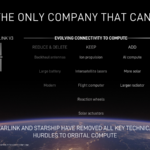
— bg2clips (@bg2clips) October 15, 2026Huang also said Nvidia now groups Musk’s business with its cloud service providers (CSPs), the category that includes the big cloud platforms, instead of enterprise.
In the two parts of our chart, Elon used to be under enterprise. That’s the way we reported the numbers. Now he’s part of our CSPs… They’re massive.
He described three ways Musk uses Nvidia hardware: “He’s using our technology for his own AI in training models and such, deploying models, of course… And the demand for Grok Bot, the consumption for Grok Bot is really skyrocketing. And then, of course, he rents it.”
What Musk Says About Starmind
Musk responded the same day. The “Star Mind computer being co-engineered by SpaceX and Nvidia is far better than almost anyone expects and will reach volume production next year,” he posted. Elon Musk is looking to potentially deploy more than 10GW of compute by 2027.
Earlier, Musk said SpaceX and Nvidia had designed a space-optimized Vera Rubin NVL72 system for launch to orbit in Q4 2027, with significant scale in 2028. Nvidia has described the first-generation Starmind satellite as based on an optimized Vera Rubin NVL72.
Where Starmind Stands
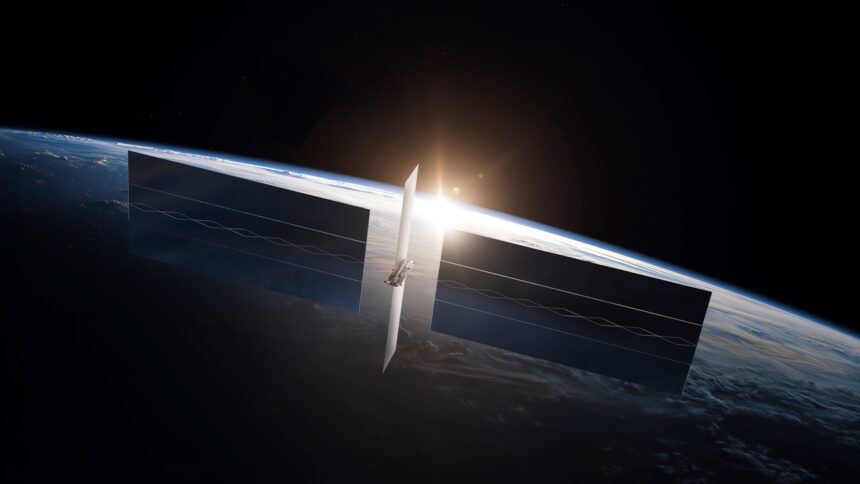
Starmind is SpaceX’s plan for satellites that carry AI compute in orbit. SpaceX says its Gigasat Factory in Bastrop, Texas, is planned to produce thousands of AI satellites starting as soon as late 2027, and it is counting on Starship to launch them.
The Financial Times has reported that SpaceX is seeking about $40 billion in Apollo-led debt to finance Nvidia chips. Launch cost, power and heat rejection are still the hard engineering problems for any data centre in orbit, and nothing Huang or Musk said this week addressed them in detail.