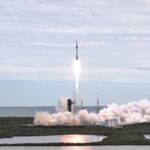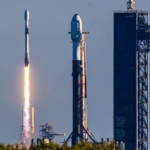
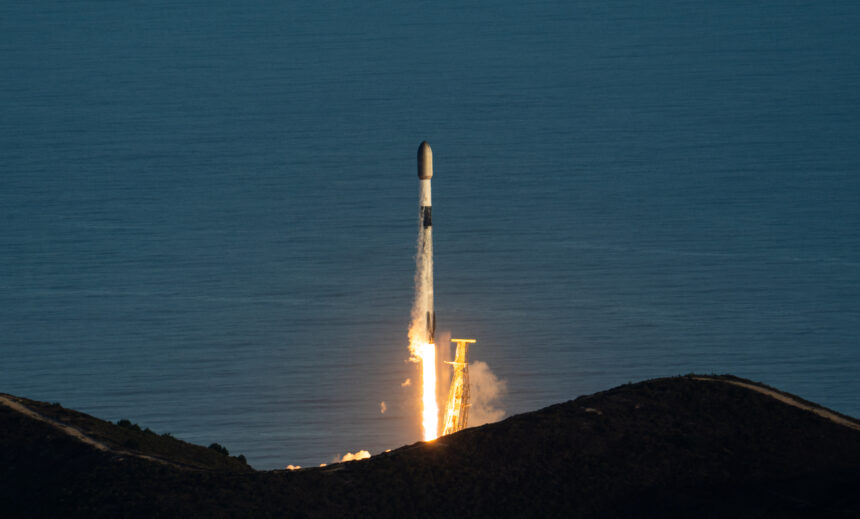
SpaceX’s Falcon 9 launched the classified USSF-385 mission from Space Launch Complex 4E at Vandenberg Space Force Base on Saturday, 26 September 2026. Liftoff came at 14:00:54 UTC (7:00 a.m. PT / 10:00 a.m. EDT), inside the three-hour window SpaceX had posted for Saturday. The Sunday backup never came into play.
SpaceX confirmed the droneship landing on X after touchdown. As with other national-security missions from this pad, the public webcast ended once the first stage was down — a standard cut for classified West Coast flights rather than a full second-stage show.
USSF-385 is a U.S. Space Force payload under the National Security Space Launch program. Space Force has not publicly identified what flew. That matches the classified format of USSF-153 on 10 September and USSF-259 on 16 September — making this the third Space Force Falcon 9 from Vandenberg this month. Secondary stories have floated Starshield or R-series labels for the stack; treat those as tracker inference until an official ID appears.
These West Coast national-security flights are a steady Falcon 9 use case even as Starlink work shifts toward Starship. September’s Vandenberg string shows how often Space Force is already using that lane.
Tenth Landing for B1100
About eight and a half minutes after liftoff, Falcon 9 booster B1100 landed on Of Course I Still Love You in the Pacific. SpaceX’s USSF-385 mission page had already framed this flight as the booster’s tenth; the droneship recovery closes that loop. Pre-launch coverage from Spaceflight Now also tracked B1100 for this launch, which is the ID we use here over older conflicting booster numbers in some wire copy.
For readers who followed the earlier September West Coast string, the pattern held: SLC-4E for the climb, OCISLY for the landing, and no public payload brief from Space Force after the fact. Neighbours in Santa Barbara, San Luis Obispo, and Ventura counties may have heard sonic booms on the way up or down, depending on weather — a note SpaceX repeats on these Pacific recoveries.
Unlike USSF-259, which needed a second try after a Tuesday scrub before fueling, USSF-385 cleared the pad on the first Saturday attempt. SpaceX had called viewers to the webcast from pad 4E ahead of the window; once B1100 was on the deck, the public feed stopped in the usual national-security style.
What Flew Before on This Booster
SpaceX lists prior flights for this first stage as NROL-95 plus eight Starlink missions before USSF-385. Tracker pages such as Next Spaceflight pointed to the same Saturday Vandenberg slot. Space.com and other outlets covered the mystery-payload framing; named orbit or constellation guesses stay secondary until Space Force says otherwise.
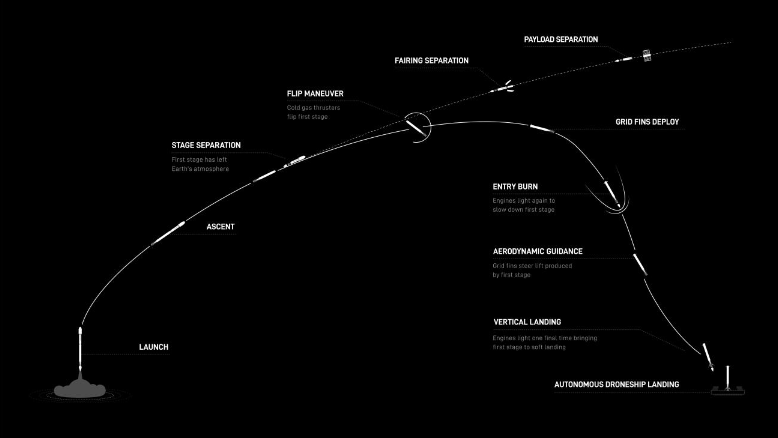
The flight followed a standard Falcon 9 profile: liftoff from SLC-4E, stage separation a few minutes later, then the first-stage flip and landing burn onto OCISLY while the upper stage continued the classified second-stage work off-camera.
With Saturday’s window closed by liftoff, USSF-385 joins USSF-153 and USSF-259 as another completed classified Falcon 9 climb from SLC-4E in September. The useful next question is cadence — how many more national-security flights Vandenberg stacks before the month turns over, and whether the same booster-recovery pattern holds on the next Lane-style ticket.