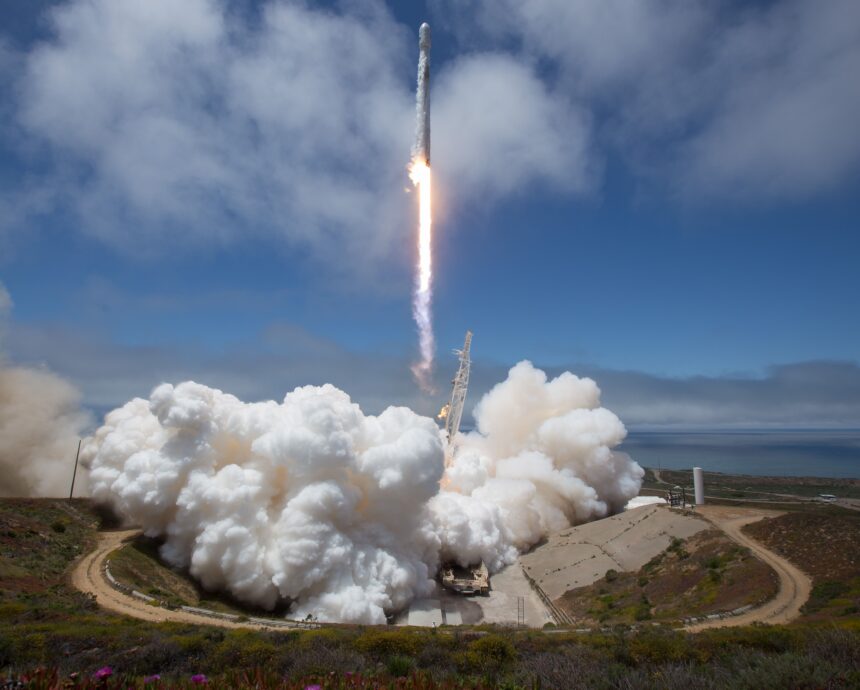
Since its debut in 2010, Falcon 9 has grown from an ambitious new launch vehicle into the world’s most frequently flown orbital rocket. Developed by SpaceX, Falcon 9 has fundamentally changed how rockets are designed and operated, proving that orbital boosters can be recovered, refurbished, and flown again.
Today, Falcon 9 is the backbone of SpaceX’s launch business. It deploys Starlink satellites, transports cargo and astronauts to the International Space Station (ISS), launches scientific missions for NASA, and delivers commercial and national security payloads into orbit. Its combination of reliability, affordability, and rapid reusability has made it one of the most influential rockets ever built.
Built on the lessons learned from the Falcon 1 program, Falcon 9 entered service with a much more mature design. Unlike its predecessor, which required multiple attempts before reaching orbit, Falcon 9 established a strong reliability record from the beginning and has continued to improve through constant iteration.
Designed Differently
Most launch vehicles are designed around maximizing payload performance. Falcon 9 took a different approach by prioritizing operational efficiency, simplicity, and reusability.
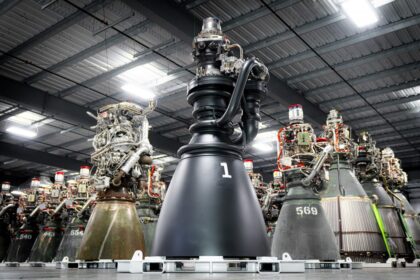
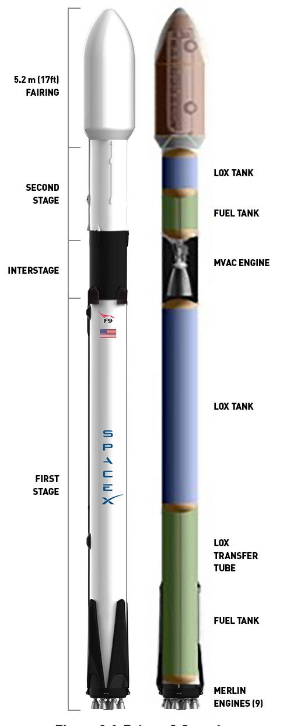
Both stages of the rocket are powered by variants of the same Merlin engine. The first stage uses nine Merlin engines arranged in SpaceX’s signature Octaweb configuration, while the second stage uses a single vacuum optimized Merlin engine. Using a common engine family simplified manufacturing, reduced maintenance requirements, and improved reliability.
This philosophy of continuous refinement has allowed Falcon 9 to evolve through several major versions including 1.0, 1.1, Full Thrust, Block 4, and today’s Block 5.
Reusability That Changed the Industry
Falcon 9’s defining feature is its reusable first stage.
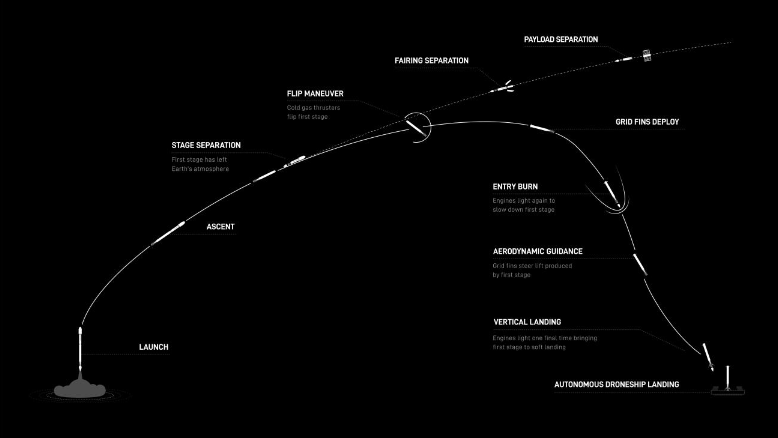
Instead of discarding the booster after launch, SpaceX developed a system that allows it to autonomously return to Earth after separating from the second stage. Depending on the mission, the booster either lands at a dedicated landing zone near the launch site or on one of SpaceX’s autonomous drone ships.
Although Falcon 9 was originally designed with parachute assisted recovery in mind, SpaceX ultimately abandoned that approach in favor of powered vertical landings. The first successful booster landing took place in December 2015, marking a turning point in commercial spaceflight.
Today, recovering a booster has become routine. Many first stage boosters have flown repeatedly, with some flying more than 25 missions, dramatically reducing launch costs while allowing SpaceX to achieve an unprecedented launch cadence.
Recovery extends beyond the booster as well. SpaceX also retrieves and refurbishes Falcon 9’s payload fairings, further reducing the cost of each mission.
Constant Evolution
Unlike many launch vehicles that remain largely unchanged throughout their service lives, Falcon 9 has continuously evolved without requiring an entirely new design. Since its maiden flight in 2010, nearly every major component of the rocket has been refined, allowing SpaceX to steadily improve performance, reliability, and reusability, all while maintaining the same core architecture.
The original Falcon 9 1.0 stood 55 meters (180 ft) tall and could deliver 6,800 kilograms to Low Earth Orbit (LEO). Today the Falcon 9 Block 5 configuration has grown to 70 meters (229.6 ft), or 75.2 meters (246.7 ft) when equipped with the extended payload fairing, while its payload capacity has more than tripled to 22,800 kilograms. Over the same period, the rocket has received more powerful Merlin engines, upgraded avionics, stronger structures, and significantly more capable recovery systems.
Early Falcon 9 variants also had more limited flight capabilities. While the original Falcon 9 1.0 only featured engine restart capability on the second stage, Falcon 9 Block 5 supports multiple engine restarts and precise throttle control on both stages. These improvements have expanded the types of missions Falcon 9 can perform while increasing overall mission flexibility.
Although Falcon 9 1.0 completed just five successful missions before being retired, each successive version built upon the last. Falcon 9 1.1 introduced the more efficient Octaweb engine arrangement and higher performance Merlin 1D engines. The Falcon 9 Full Thrust (Version 1.2) featured further performance improvements, but most importantly the first successful booster landing in December 2015. That milestone proved routine booster recovery was possible and established the foundation for every Falcon 9.
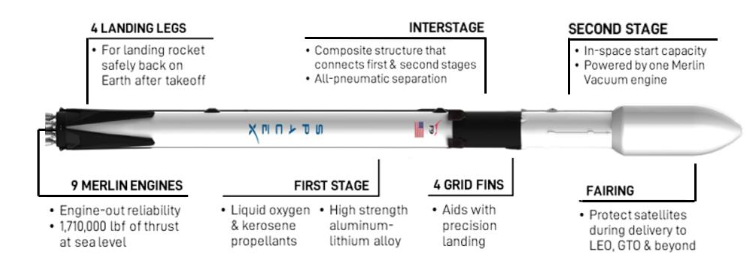
The current Falcon 9 Block 5 represents the culmination of nearly a decade of refinement. Introduced in 2018, it incorporates dozens of upgrades aimed at rapid reuse, including titanium grid fins that require virtually no refurbishment, stronger landing legs, improved thermal protection, and a more durable first stage structure. With the Falcon 9 Block 5 achieving NASA certification for crewed flights, SpaceX has continued making smaller improvements within the Block 5 design, allowing the rocket to become increasingly reliable.
Launch Operations
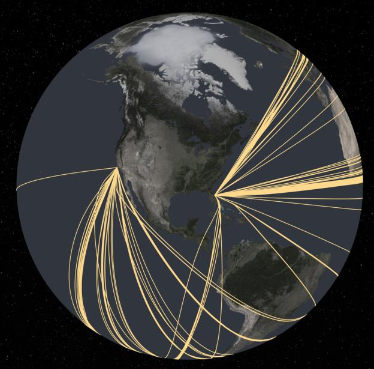
Falcon 9 launches from three launch sites across the United States on both the East and West Coast. Both Cape Canaveral Space Force Station (CCSFS) and Kennendy Space Center (KSC) are referred to as the Eastern Range, while Vandenberg Space Force Base (VSFB) is referred to as the Western Range. These launch sites allow SpaceX to support missions toward a wide variety of orbital inclinations throughout the year. These launch profiles range from Low Earth Orbit(LEO), to Geostationary Transfer Orbit(GTO) or Geosynchronous Orbit, or even Solar Orbit.
Beyond the launch itself, SpaceX provides comprehensive mission support for customers throughout the entire campaign. According to the Falcon User’s Guide, a typical commercial mission begins approximately 24 months before launch, and extends to flight reports 8 weeks after. This support covers mission planning, payload integration, testing, vehicle production, and launch preparation.
Once a spacecraft arrives at the launch site, missions are typically ready for launch within approximately four weeks, assuming weather and range availability.
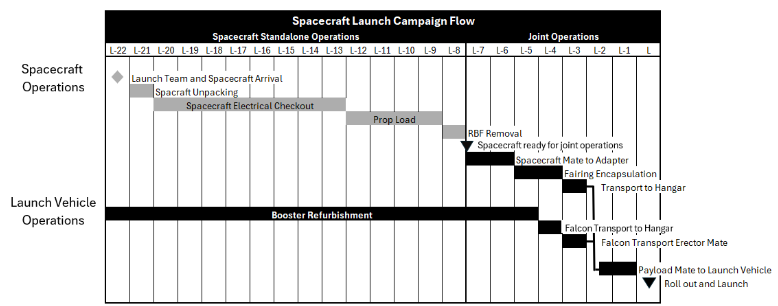
SpaceX also simplifies the customer experience by assigning each mission a dedicated mission manager who serves as the primary point of contact throughout the entire process. This streamlined approach helps coordinate engineering, payload integration, documentation, testing, and launch operations under a single management structure.
Missions
Falcon 9 has supported an incredibly diverse range of missions since entering service.
For NASA, it became the first privately developed rocket to launch both cargo and astronauts to the International Space Station. Beginning in 2012, Falcon 9 launched Cargo Dragon resupply missions, followed by Crew Dragon missions carrying astronauts beginning in 2020.
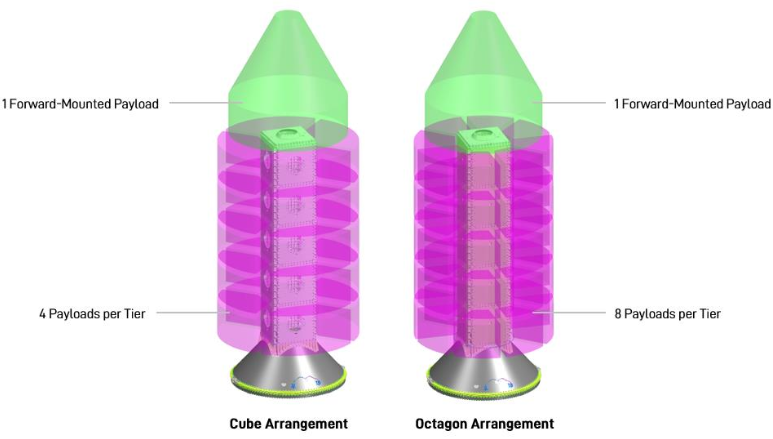
The rocket is also responsible for deploying SpaceX’s Starlink constellation, now its most frequent mission. Depending on the mission profile, Falcon 9 can deploy either 21 satellites in a cube arrangement or up to 41 satellites in an octagon arrangement. This enables SpaceX to rapidly expand the world’s largest satellite internet network.
Government agencies, commercial satellite operators, and scientific organizations also rely heavily on Falcon 9. Through SpaceX’s rideshare program, consumers can purchase launch capacity for as little as $7,000 per kilogram, making access to orbit more affordable than ever before.
Looking Ahead
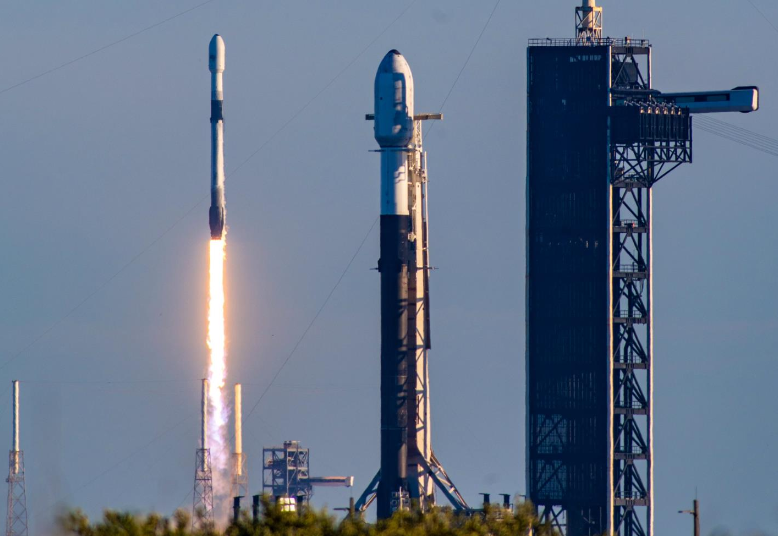
While SpaceX continues developing Starship as its fully reusable next generation launch system, Falcon 9 remains the company’s workhorse.
With hundreds of successful launches, routine booster recovery, and one of the highest flight rates in aerospace history, Falcon 9 has redefined what an orbital launch vehicle can achieve. Its proven reliability, reusable architecture, and continuous evolution have not only lowered the cost of access to space but have also established a new standard for the global launch industry.
Even as Starship moves toward operational service, Falcon 9 is expected to continue launching astronauts, satellites, cargo, and national security missions for years to come, cementing its legacy as one of the most successful rockets ever built.



![Falcon 9 to Launch SDA Tranche 1 Transport Layer A [Scrubbed]](https://thegridfin.com/wp-content/uploads/2026/07/SpaceX_SLC_4E_01-150x150.jpg)