Starlink currently offers several versions of its hardware, with each model designed around a different balance of size, power consumption, performance, and durability. With the introduction of the Standard V5 in July 2026, the consumer lineup now includes the Starlink Mini, Standard V4, Standard V5, and Performance Gen 3.
- Mini: Built to Travel
- Standard V4: The Established Home Option
- Standard V5: Smaller and More Efficient
- Performance: Built for Demanding Environments
- Weatherproofing Is More Than an IP Rating
- Power Consumption Can Be a Major Factor
- Plans Matter Too
- Which Starlink Hardware Fits Your Use Case?
- Starlink Hardware Comparison
- Our Referral Code
At a high level, the Mini is designed for portability and lower power consumption, while the Standard models are intended primarily for fixed residential installations. The Performance Gen 3 sits at the other end of the lineup, using a larger and more rugged antenna designed for demanding environments and professional applications.
The differences go beyond the physical size of the dishes. Power requirements, environmental ratings, field of view, snow-melt capability, and networking options can all affect which Starlink makes the most sense for a particular installation.
Mini: Built to Travel
The Starlink Mini is the smallest and most portable option in the lineup. By combining the satellite antenna and Wi-Fi router into a single compact unit, Starlink designed the Mini to be easy to transport and set up without the separate equipment required by the larger Standard systems.

The Mini weighs just 1.1 kg (2.4 lb) and measures 298.5 x 259 x 38.5 mm (11.75 x 10.2 x 1.45 in). That makes it substantially smaller and lighter than the Standard V4 and Performance Gen 3.
Power consumption is another major advantage. The Mini typically uses around 25 to 40 watts, and the hardware supports both AC and DC power. This makes it particularly useful for applications where electrical power is limited, including camping, RVs, remote work locations, boats, and battery or solar-powered installations.
The integrated router simplifies the setup, but it also means the Mini is designed around a smaller footprint rather than maximum Wi-Fi coverage. Additional networking hardware can be connected when a larger network is required.
Starlink also offers configurations such as the Mini X with an additional Router Mini, providing another option for users who want the smaller antenna without relying entirely on the integrated networking hardware.
Standard V4: The Established Home Option
The Standard V4 remains the larger, traditional Starlink option for fixed installations.

Its 594 x 383 x 39.7 mm (23.4 x 15.1 x 1.5 in) antenna is considerably larger than both the Mini and Standard V5. The dish weighs approximately 2.9 kg (6.4 lb), while average power consumption is around 75 to 100 watts.
Unlike the Mini, Standard V4 uses a separate indoor Wi-Fi router. This provides more flexibility when setting up a larger home network and allows the router to be positioned independently from the outdoor antenna. The 4X version offers an upgraded Router 3 rather than the Router Mini.
That separation can be useful in larger homes where Wi-Fi coverage is just as important as the satellite connection itself. Users can also integrate additional networking equipment depending on the requirements of the installation.
Standard V5: Smaller and More Efficient
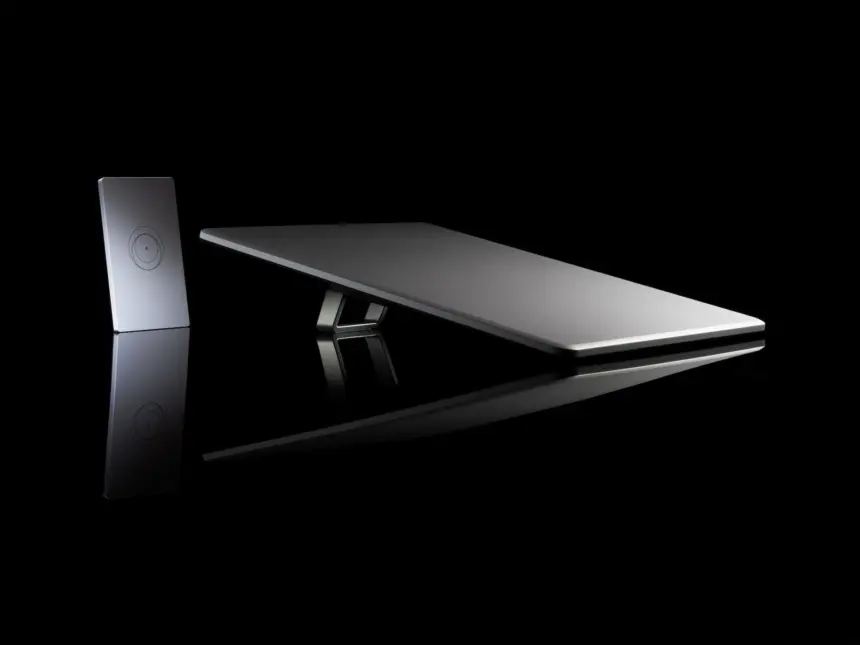
The Standard V5 represents a significant change in the physical design of Starlink’s traditional home hardware.
At 384 x 306 x 34 mm (15.1 x 12 x 1.3 in), the V5 antenna is much smaller than the Standard V4 while still retaining the general role of a fixed installation Starlink system. The dish weighs only 1.1 kg (2.4 lb), putting it in the same weight class as the Mini. Power consumption is also substantially lower than V4, averaging approximately 35 to 50 watts.
That combination makes V5 an interesting middle ground. It is considerably more compact and power efficient than the previous Standard hardware, but it remains a dedicated residential antenna rather than the all-in-one portable design of the Mini.
For users comparing V4 and V5, the physical difference is one of the most noticeable changes. The V5 is much easier to handle during installation and places significantly less demand on an off-grid power system.
Performance: Built for Demanding Environments
Starlink Performance is designed for situations where environmental durability and installation flexibility are more important than minimizing hardware size or power consumption.
It is the largest and heaviest antenna in the current lineup, measuring 609 x 396 x 40 mm (24 x 15.6 x 1.6 in) and weighing approximately 5.2 kg (11.5 lb). The Performance also has a 140-degree field of view, compared with 110 degrees on the Mini and Standard models. Its average power consumption is approximately 75 to 100 watts.
Where Performance separates itself most clearly is environmental durability. The antenna has an IP69K rating with cables installed, compared with IP67 on the Mini and Standard models. Its operating temperature range extends from -40C to 60C (-40F to 140F), and it is designed to withstand wind speeds above 280 kph (174 mph). Snow-melt capability is also significantly higher, reaching up to 85 mm per hour.
These specifications make the Performance Gen 3 better suited to demanding installations where the antenna may be exposed to extreme weather, vibration, or other conditions beyond a typical residential setup.
This can include professional mobile applications, remote infrastructure, commercial installations, and locations where replacing or repairing equipment is particularly difficult. It is important to separate durability from network performance, however. The Performance model does not automatically provide faster internet simply because it uses a larger or more rugged antenna. Actual Starlink speeds depend on factors including network capacity, congestion, location, obstructions, and the service plan.
Weatherproofing Is More Than an IP Rating
Weather resistance is an important difference between the Starlink models, particularly for permanent outdoor installations.
The Mini, Standard V4, and Standard V5 antennas carry an IP67 rating. The first number, 6, indicates protection against dust, while the second number, 7, indicates protection against temporary immersion in water under standardized testing conditions of up to 1m (3.3ft) of water for up to 30 minutes.
The Standard models also carry a NEMA (National Electrical Manufacturers Association) Type 4 enclosure rating, while the Mini’s Type 4 rating applies with Starlink accessories. The Type 4 rating describes the device as suitable for either indoor or outdoor use, with protection against dust, dirt, and hose directed water.
The Performance Gen 3 goes further with an IP69K rating when cables are installed and IP68 protection without cables. IP69K testing involves exposure to high-pressure, high-temperature water jets, making it particularly relevant to equipment that may face aggressive cleaning or severe environmental exposure.
The differences are also visible in the temperature and wind specifications. Performance is rated for a wider range of operating temperatures and can withstand significantly greater wind speeds.
That does not mean the Standard models cannot operate in difficult weather. Rather, Performance provides additional environmental headroom for installations where those conditions are expected.
Power Consumption Can Be a Major Factor
Power consumption is easy to overlook when comparing Starlink hardware, but it can become one of the most important specifications for mobile and off-grid users.
The Mini averages 25 to 40 watts, while Standard V5 uses approximately 35 to 50 watts. Standard V4 and Performance Gen 3 are rated around 75 to 100 watts.
For a home connected to the electrical grid, the difference may have little practical impact. For an RV, boat, remote cabin, or solar-powered installation, however, every additional watt increases the size of the battery and generation system required to keep Starlink running.
This is one reason the Mini and V5 occupy an important place in the lineup. Their lower power requirements can make continuous operation easier when electricity is limited.
Plans Matter Too
Choosing the hardware is only part of the Starlink decision. The service plan determines where and how the system can be used.
Residential service is generally intended for fixed locations, while Roaming plans are designed for customers who move their equipment between locations. Other plans and regional offerings can provide different levels of mobility, data access, or in-motion connectivity.
Plan availability and requirements vary by country, so the hardware should not be selected independently of the service plan.
The installation itself also matters. Every Starlink antenna needs a sufficiently clear view of the sky, and obstructions such as trees, buildings, and other structures can interrupt the satellite connection regardless of which antenna is being used.
Mounting is another consideration. A permanent roof installation requires appropriate anchoring and weather sealing, while mobile users may prioritize a setup that can be removed quickly.
Which Starlink Hardware Fits Your Use Case?
The Starlink Mini is primarily about portability and power efficiency. Its compact size, integrated router, low power consumption, and DC support make it well suited to RVs, camping, remote work, and other mobile applications.
Standard V4 is the larger, established residential option. Its separate router and larger antenna make it well suited to permanent home installations, particularly where additional Wi-Fi coverage and networking flexibility are useful.
Standard V5 moves the traditional Starlink experience into a much smaller and more efficient package. Its 1.1 kg antenna and 35 to 50 watt average power consumption make it substantially easier to handle and more attractive for installations where size and electricity consumption matter.
Performance Gen 3 takes a different approach. Its larger antenna, wider field of view, higher environmental ratings, stronger wind resistance, and significantly greater snow-melt capability make it better suited to demanding professional and mobile environments.
Ultimately, there is no single Starlink antenna that fits every installation. The right hardware depends on whether the priority is portability, power consumption, residential networking, or environmental durability.
For most buyers, the decision can be narrowed down quickly by considering three questions: Where will the dish be installed, how much power is available, and what conditions will the hardware need to withstand? Those factors will usually matter more than simply choosing the largest or newest Starlink antenna.
Starlink Hardware Comparison
| Specification | Mini | Standard V4 | Standard V5 | Performance Gen 3 |
| Dimensions | 298.5 x 259 x 38.5 mm | 594 x 383 x 39.7 mm | 384 x 306 x 34 mm | 609 x 396 x 40 mm |
| Dish weight | 1.1 kg | 2.9 kg | 1.1 kg | 5.2 kg |
| Field of view | 110° | 110° | 110° | 140° |
| Environmental rating | IP67 Type 4* | IP67 Type 4 | IP67 Type 4 | IP69K with cables |
| Operating temperature | -30C to 50C | -30C to 50C | -30C to 50C | -40C to 60C |
| Wind resistance | 96 kph+ | 96 kph+ | 265 kph | 280 kph+ |
| Snow melt | Up to 25 mm/hr | Up to 40 mm/hr | Up to 40 mm/hr | Up to 85 mm/hr |
| Average power | 25–40W | 75–100W | 35–50W | 75–100W |
| Power Compatibility | AC/DC | AC | AC | AC/DC |
Our Referral Code
If you’re here looking for a referral code, don’t worry, we have you covered. You can sign up to Starlink anywhere in the world and take advantage of a free month using our Starlink Referral Code right here.