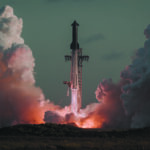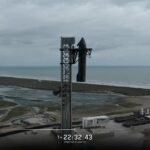
On Nov. 12, SpaceX said two supercompute campuses represent more than $74 billion in planned American investment. That includes more than $24 billion at Starbase in the Rio Grande Valley and a roughly $50 billion site in Cochise County, Arizona. The company says the sites will train its frontier intelligence systems and help test technologies for space-based computing.
The Starbase City Commission will still consider a Chapter 312 property-tax abatement and a related Chapter 380 economic development agreement on Wednesday, Dec. 9, at 7 p.m. CT (8 p.m. ET) at 48491 State Highway 4. A city public-hearing notice says Space Exploration Technologies Corp. “proposes to construct, own, and operate a gas-fired power plant and super-compute facility” on about 444 acres inside city limits. The notice is not an approval. Interested residents can attend and speak.
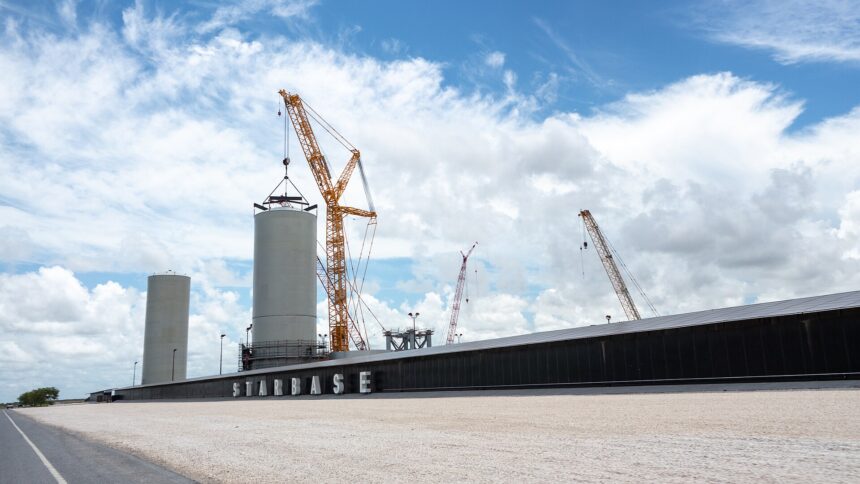
The Starbase Site
The tract sits just east of Brownsville, between Boca Chica Boulevard and the Port of Brownsville. It is inside the Cameron County Enterprise Zone, which Texas tax law treats as a reinvestment zone for a Chapter 312 abatement. SpaceX says the City of Brownsville disannexed those same 444 acres to the City of Starbase as part of a water-infrastructure agreement, and that it is cleaning up unauthorized dumping on the land dating back to the 1960s, including scrap metal and thousands of tires.
SpaceX now puts the Texas investment at more than $24 billion. This comes alongside the $15 billion already spent on Starship and related infrastructure at Starbase. It says the project has already generated more than 3,000 construction jobs and should support more than 500 permanent jobs, and that the facility “will generate its own electricity without drawing power from the public grid.”
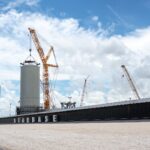
The Rio Grande Valley Business Journal reported that Trinity Consultants filed a Texas Commission on Environmental Quality air-permit application for SpaceX describing 35 natural-gas turbines capable of producing 748 MW. Doosan has already shipped the first 380 MW DGT6-300H S2 gas turbine to SpaceXSI, which will likely form the basis for this new power plant.
Water for Brownsville
Alongside the campus in Brownsville, SpaceX has committed $220 million to expand water and wastewater infrastructure for Brownsville and Cameron County, which it calls “the largest private contribution to Brownsville’s water future in the city’s history,” and has already provided $40 million to the Brownsville Public Utilities Board to start the work.
The money is meant to close a funding gap on projects that would add about 20 million gallons a day from sources independent of the Rio Grande, split between potable reuse and expanded brackish-groundwater treatment. SpaceX says traditional financing could have cost local residents more than $370 million over 25 years, including interest.
The city and the Brownsville Public Utilities Board would keep full ownership. SpaceX says it is not acquiring water rights, prepaying rates or getting preferential access, and that it and the City of Starbase will pay standard rates and face the same conservation rules as other customers.
The Arizona Campus
On a new official site page, SpaceX has now committed to invest $50 billion there. It says there will be no gas turbines and no on-site power plant or fuel yard, with standby generation limited to about 10 MW of pipeline-fed natural-gas generators per building for critical loads.
The campus is planned around nine single-storey compute buildings and up to 24 GWh of battery storage, which SpaceX calls the largest such system in the United States, with about 5,500 construction jobs at peak and 1,000 permanent jobs.
SpaceX says that, subject to final negotiations with Sulphur Springs Valley Electric Cooperative and Arizona Electric Power Cooperative, the project would provide up to $260 million a year to SSVEC. That additional funding could be diverted to residential bill relief and new capital credits, enabling further energy generation in the region. SpaceX also says it will transfer $3.6 billion in grid upgrades to AEPCO at no cost to members.
The Cochise site projects a 10–40% decrease in electricity bills for all SSVEC members for the life of the project. The project could potentially reduce electricity bills for cooperative members by up to 20%, as per SpaceX.