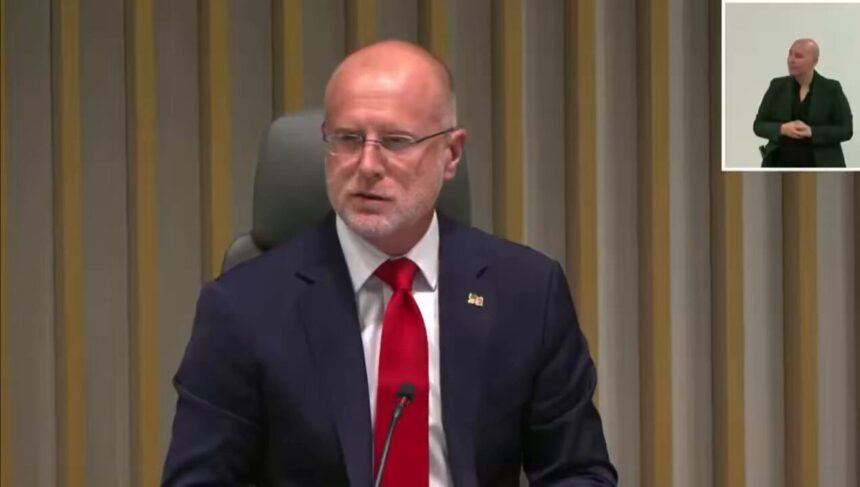
The FCC voted 3-0 on Oct. 29 to propose opening up to 482 MHz more spectrum for satellite-to-phone service. The plan would take Supplemental Coverage from Space (SCS) from five bands to 13. It is a proposal, not a grant: no company, SpaceX included, gets new spectrum from it.
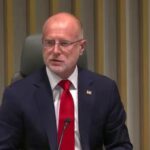
Chairman Brendan Carr and Commissioners Anna Gomez and Olivia Trusty all approved the Notice of Proposed Rulemaking, FCC 26-71, in GN Dockets 26-281 and 23-65. The same day, SpaceX accused T-Mobile of trying to “harm a competitor” in a separate filing.
https://x.com/FCC/status/2115825671783985191
What the Proposal Would Change
SCS lets satellite operators use spectrum that carriers already hold for phones. It is the framework behind most U.S. direct-to-device service, and Carr said those rules, adopted two years ago, are already out of date. According to the FCC fact sheet, the notice would:
- Add eight bands to the five where SCS is allowed, for up to 482 MHz more.
- Replace the requirement to cover a whole geographically independent area, such as the contiguous U.S., with custom licence areas covering only the places to be served.
- Replace the leasing requirement with a certification: the satellite operator either has coexistence agreements with the carriers in that area or holds the terrestrial licences itself.
- Extend licence-by-rule to all phones and other end-user devices using the new SCS rules and bands.
- Ask whether mobile-satellite service bands should stay exclusive, and what performance requirements direct-to-device service should meet.
The FCC’s draft notice calls the current rule “burdensome”: satellite operators must sign leases with the terrestrial licensees holding all co-channel licences throughout a geographically independent area, such as the contiguous U.S.
A companion item proposes auction rules for 25 MHz at 1675–1695 MHz and 2020–2025 MHz. Those licences could be used for terrestrial, satellite or hybrid networks.
Carr said the item looks to open “nearly 500 megahertz” for satellite providers through commercial deals such as leases. He pointed to “over $45 billion in D2D deal flow in the past year,” including SpaceX buying EchoStar’s spectrum “for over $19 billion” and Amazon’s Leo buying Globalstar’s for over $11 billion.
https://x.com/FCC/status/2115845691067269372
The Carriers’ Fight
The FCC hasn’t released the adopted text, so it isn’t yet clear whether any bands changed before the vote. The carriers wanted some removed. AT&T, Verizon and T-Mobile, through industry group CTIA, asked the FCC to drop the 2.5 GHz and 3.45 GHz bands, which account for about 290 MHz of the proposed new spectrum, Teslarati and SatNews report. T-Mobile argued that satellite interference could wipe out up to 96% of a cell site’s uplink coverage area. SpaceX asked the FCC to go the other way and add 902–928 MHz. According to the FCC’s draft, the 482 MHz is spread across the eight bands the notice would add, on top of the 344 MHz already in the SCS framework.
For background, see our report on SpaceX eyeing 80,000 U.S. cell towers.
SpaceX vs. T-Mobile
SpaceX’s separate filing concerns agenda item 1.13 at the 2027 World Radiocommunication Conference, which covers spectrum for satellite service to phones, PCMag reports. It answers T-Mobile’s Oct. 13 recommendation that the FCC push for interference protection for cell sites near borders.
SpaceX says T-Mobile’s limits would create buffers “of more than 400 kilometers around base stations, disenfranchising millions from direct-to-cell service in the countries where the limit is applied.” It wrote that “the misplaced desire to harm a competitor has led many incumbents to oppose modernized rules that would bring direct-to-cell service to underserved border communities.” The filing also calls AFTRCC, a group representing aerospace flight-test users, “purely a lobbying organization.” On Oct. 6, SpaceX called every protection criterion under consideration “outdated and overly conservative.”
https://x.com/SawyerMerritt/status/2115879303489462625
What Happens Next
Comments are due 60 days after the notice appears in the Federal Register, followed by replies. The FCC would then need a second vote to adopt final rules. Until then, nothing changes for SCS. That includes Starlink Mobile, which already runs under the existing rules; see the FCC grant for its 15,000-satellite constellation. Teslarati reports that SpaceX President Gwynne Shotwell is targeting early 2028 for service on SpaceX’s own spectrum.