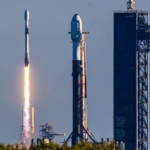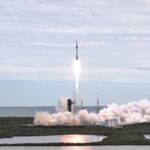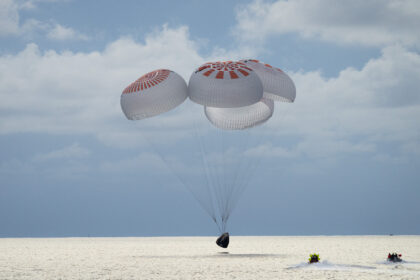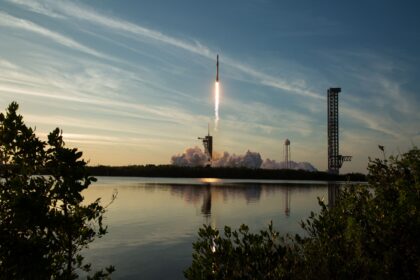
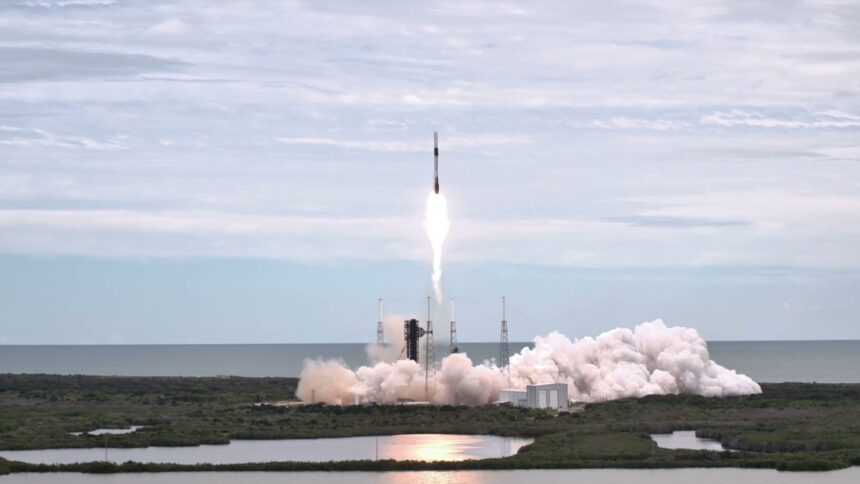
NASA’s SpaceX Crew-13 lifted off on time at 11:10 a.m. EDT on Thursday, Oct. 1, 2026, from Space Launch Complex 40 at Cape Canaveral Space Force Station. Falcon 9 sent Crew Dragon Grace toward the International Space Station with four people aboard.
Liftoff of Crew-13! pic.twitter.com/vteT0DXMTh
— SpaceX (@SpaceX) October 1, 2026NASA said Dragon reached orbit, separated from the Falcon 9 second stage, and opened its nosecone, all exactly as planned. The second-stage burn lasted about six minutes, and Grace released about a minute later, on its arc towards the ISS.
Commander Jessica Watkins told Mission Control, “Thanks for an amazing ride.”
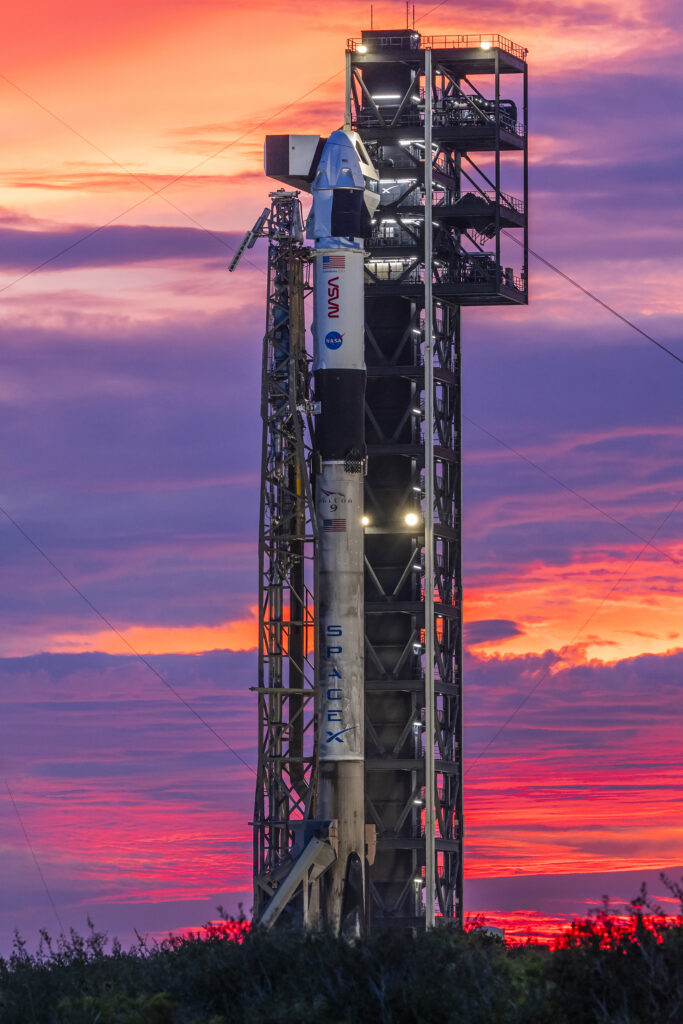
They say that courage is grace under pressure, and the incredible teams that got us to orbit today truly embody that. Thank you for your hard work, perseverance, and courageous commitment to ensuring Grace was ready and safe to fly. We carry with us on this journey all of you who have supported us along the way, and we hope to make you proud.
— Jessica Watkins, Crew-13 commander
Who Is Aboard
Commander Jessica Watkins is the commanding officer of the mission, with NASA astronaut Luke Delaney as the primary pilot. Canadian Space Agency astronaut Joshua Kutryk and Roscosmos cosmonaut Sergey Teteryatnikov are also aboard as mission specialists. Delaney, Kutryk, and Teteryatnikov are each on their first spaceflight. Commander Watkins has flown before, on Crew-4 in 2022. This is her second mission, and she is the first NASA astronaut to launch on a Crew Dragon a second time.
Meanwhile, Crew Dragon Grace has already visited the station, on the private Axion-4 mission. This is Grace’s second launch, and it is the fifth and final Crew Dragon that SpaceX intends on building.
Launch Delays
Crew 13 was pushed back previously to today’s launch due to an oxidizer leak in Grace’s propulsion system. The issue was found back in August, and that pushed the flight off from a mid-September target to October 1st. Lori Glaze, associate administrator for NASA’s Human Spaceflight Mission Directorate, said it took “a lot of effort, time, [and] many, many hours in determined troubleshooting” to get the crew onto a launch path.
First Stage Returns Safely
NASA confirmed that the Falcon 9 first stage, Booster B1101, completed its landing at LZ40, at Cape Canaveral Space Force Station. The touchdown occurred at approximately T+7m40s.
This is Booster B1101’s third launch and recovery, marking another success for a relatively young booster.
Falcon 9 lands at LZ-40! pic.twitter.com/BSygjZ47oZ
— SpaceX (@SpaceX) October 1, 2026Docking Is Still Ahead
While B1101 is safely back on the ground, Crew-13 and Grace are in for an approximately 7-hour, 50-minute journey. They will be docking at approximately 7 p.m. EDT, at the space-facing Harmony port on the ISS. If the plan continues on pace, this will be the fastest launch-to-docking in the history of the ISS.
The usual time it takes for a SpaceX Dragon to arrive at the ISS is between 15 to 24 hours, so this trip should easily beat the record. The ISS hatch opening is scheduled for 8:25 p.m. EDT, and handover from Crew-12 will follow the arrival. Crew-12 will return and splash down off the coast of Southern California next week.
As currently planned, Crew-13 will spend about six months in space, and be replaced by Crew-14 in February or March 2027.