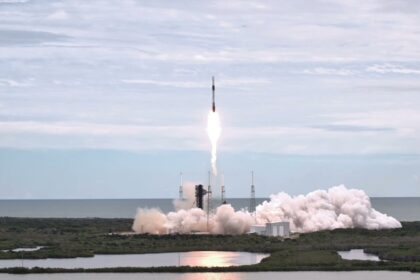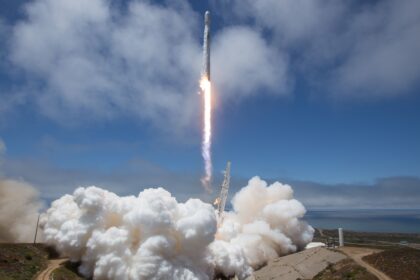
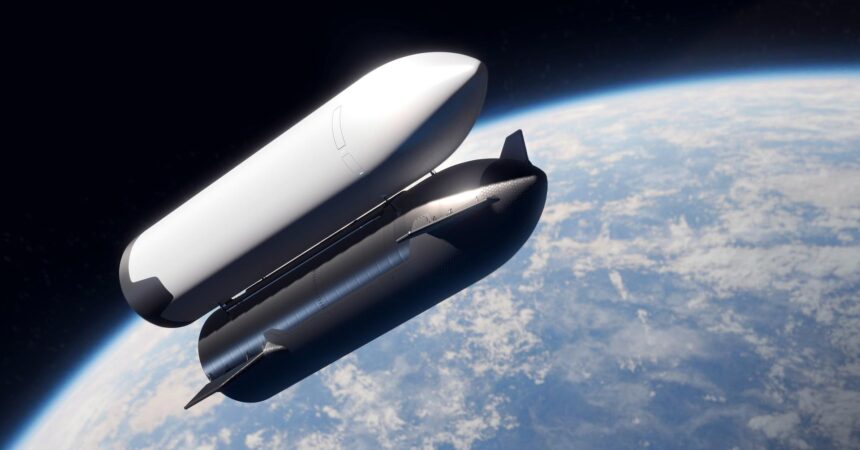
Starship has proven it can reach orbit and return to Earth under its own power. However, reaching orbit is only part of the journey. Most of Starship’s propellant is consumed overcoming Earth’s gravity and accelerating to orbital speed, leaving little fuel for the journey ahead. For many of SpaceX’s missions, that is enough. A lunar landing or a trip to Mars, however, requires hundreds of tonnes of additional propellant.
Orbital refuelling is how SpaceX plans to bridge that gap. Tanker Starships will carry additional propellant into orbit and transfer it to a waiting spacecraft, allowing it to continue its journey. The technology is essential to NASA’s Artemis lunar lander and SpaceX’s plans for Mars. However, large-scale cryogenic propellant transfer between two spacecraft has never been demonstrated in orbit.
Why Starship Arrives Empty
Getting a vehicle the size of Starship into orbit consumes most of the propellant loaded before launch. Super Heavy provides the initial thrust before returning to Earth, while Starship’s six Raptor engines carry the spacecraft the rest of the way to orbit. By the time it arrives, Starship has its payload bay available but relatively little propellant left for the next stage of its mission.
That is enough for missions that deploy Starlink satellites into low Earth orbit before returning to Earth. It is not enough to reach the Moon. A lunar mission requires substantial changes in velocity to leave Earth orbit, travel to the Moon and manoeuvre into position for landing. Without additional propellant, Starship cannot complete the journey.
SpaceX’s solution is to launch the spacecraft and its additional propellant separately. The mission Starship launches first, followed by tanker Starships carrying additional propellant. Once in orbit, the tankers transfer their propellant to the waiting spacecraft, giving it the supply needed to continue its journey.
Tankers and Depots
SpaceX’s refuelling architecture involves two specialised Starship roles. Tankers carry additional propellant into orbit, while a depot stores propellant delivered by multiple tankers. Rather than coordinating multiple transfers with individual tankers, a mission Starship can dock with the depot once enough propellant has accumulated.
For NASA’s Artemis missions, the process begins with a depot launching into orbit. Tankers then launch in succession, transferring their propellant to the depot. Once enough propellant has accumulated, Starship’s Human Landing System (HLS) launches, docks with the depot and takes on propellant before departing for the Moon.
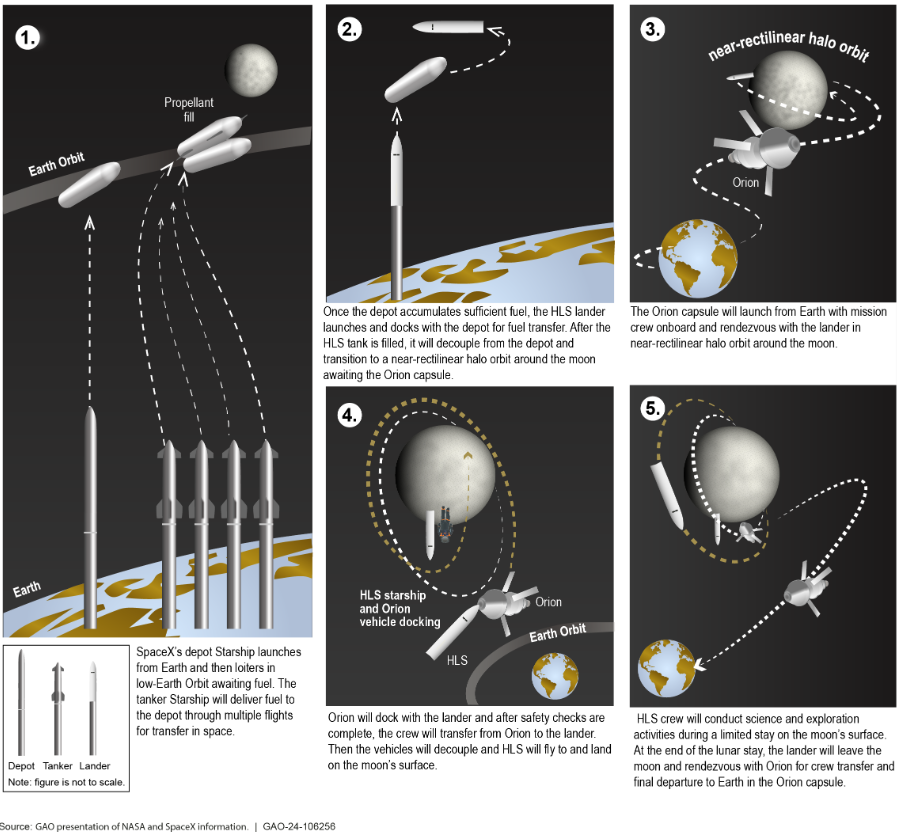
The lander will carry astronauts from lunar orbit to the surface and back. Refuelling it in Earth orbit is essential to making the mission possible.
The number of tanker flights required remains uncertain. In April 2024, NASA exploration official Amit Kshatriya described SpaceX’s planning figure as approximately 10 tanker launches per lunar landing, while acknowledging that the actual number could be higher or lower. The final figure will depend on how much propellant each tanker delivers and how much is lost during storage and transfer.
That uncertainty makes launch cadence critical. If tanker flights are spread over several months, cryogenic propellant has more time to warm up and boil away. Launching them within a shorter window would reduce storage time but require multiple Starships, boosters and launch facilities to be ready in rapid succession.
Super Heavy’s planned recovery and rapid reuse are therefore more than separate goals. They are essential to making orbital refuelling practical at scale.
What Flight 3 Proved
SpaceX has already demonstrated one part of the process. During Starship’s third flight test on March 14, 2024, the spacecraft transferred liquid oxygen from a header tank to its main tank while coasting in space. Conducted under a NASA technology development contract, the test demonstrated cryogenic propellant transfer between tanks on the same vehicle.
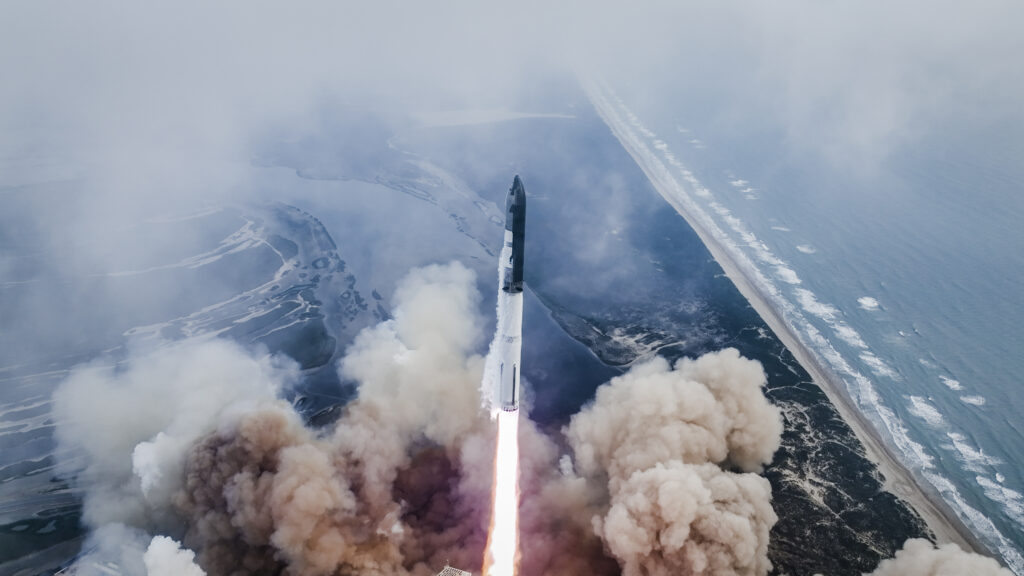
It was an important milestone, showing that super-cold liquid oxygen could be transferred between tanks in microgravity. But it was only the first step. Transferring propellant between two Starships introduces additional challenges, including rendezvous, docking, establishing a sealed connection and managing the flow between two independent vehicles.
A successful internal transfer does not guarantee that ship-to-ship refuelling will work. However, it provides SpaceX and NASA with valuable flight data to build on.
Why Moving Cold Liquid in Space Is Hard
On Earth, gravity keeps liquid propellant at the bottom of a tank, near its outlet. In orbit, that changes. Liquids can cling to tank walls or form floating masses, making it harder to ensure that liquid rather than gas enters a transfer line.
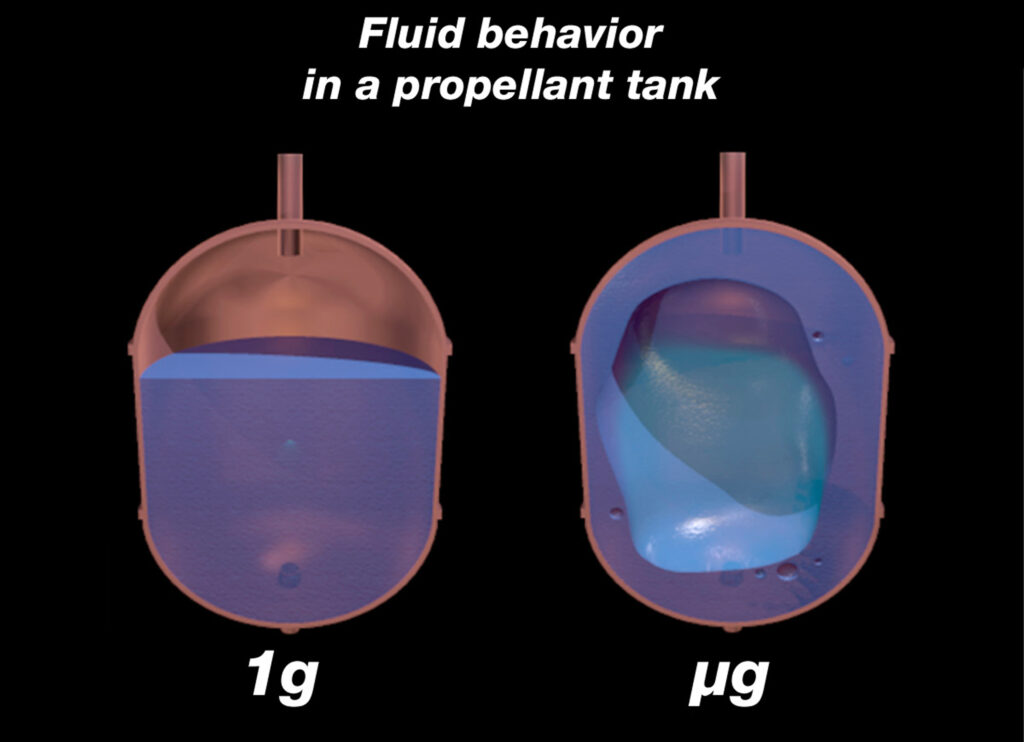
Before transferring propellant, a spacecraft must gently accelerate to settle the liquid toward the outlet. Engineers must then manage the flow to prevent gas from entering the receiving tank.
Temperature presents another challenge. Liquid oxygen boils at approximately −183°C, while liquid methane boils at around −162°C at standard atmospheric pressure. Both must be kept extremely cold, and heat entering the tanks causes some of the propellant to boil away. This reduces the available supply and raises tank pressure, which must be managed.
For a depot that waits in orbit while multiple tankers arrive, limiting these losses is essential. Insulation, thermal management and launch cadence will all affect how much usable propellant remains when the mission Starship arrives.
Then there is the connection itself. Two Starships must rendezvous, dock and establish a sealed path for transferring cryogenic fluids. NASA’s previously described architecture uses a tail-to-tail docking arrangement, with connections related to the quick-disconnect hardware used to fuel Starship on the launch pad. The transfer relies on a pressure difference between the tanks rather than large pumps.
The underlying principles are well understood. Spacecraft have transferred storable propellants in orbit for decades, while cargo vehicles such as SpaceX’s Dragon routinely resupply the International Space Station. But transferring cryogenic methane and oxygen between two spacecraft the size of Starship, at the scale required for lunar missions, remains an unproven capability.
The Ship-to-Ship Demonstration
The next major milestone is a dedicated ship-to-ship propellant transfer demonstration.
Two Starships will launch from Starbase. One will reach orbit and serve as the target, while the second follows as the tanker. The two vehicles must rendezvous and dock before transferring propellant between their tanks. The demonstration will test the systems and procedures needed to scale up orbital refuelling for operational missions.
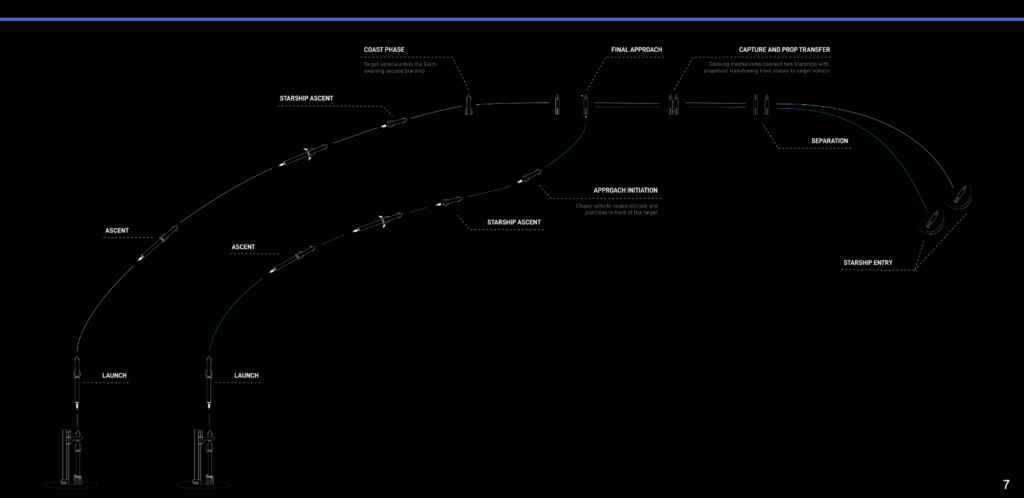
NASA considers the demonstration a critical step in developing and validating Starship HLS for Artemis. The agency needs evidence that the spacecraft can transfer and store cryogenic propellant in orbit before relying on the technology for a crewed lunar mission.
The schedule has slipped repeatedly. NASA originally expected the demonstration around March 2025. In March 2026, the agency’s Office of Inspector General reported that the milestone had been delayed to March 2026. That target has also passed. As of October 2026, SpaceX is targeting the demonstration for 2026, although the exact timing depends on the progress of upcoming Starship V3 flight tests.
Starship’s recent flights have established some of the capabilities needed for the mission. On September 28, 2026, Flight 14 reached orbit and deployed 26 Starlink V3 satellites before returning to Earth after approximately three hours. The flight marked a major milestone, but it did not test the long-duration orbital operations or propellant transfer required for lunar missions.
Reaching orbit is only the beginning. SpaceX must demonstrate that Starship can operate reliably in space and transfer cryogenic propellant between two vehicles. That final capability is what will allow the spacecraft to carry enough propellant for missions to the Moon and, eventually, Mars.
What Rides on It
NASA’s Artemis program is the most immediate beneficiary. Starship HLS must be refuelled in Earth orbit before travelling to the Moon, where it will carry astronauts between lunar orbit and the surface. The lander must also complete further testing, including an uncrewed lunar landing, before NASA can rely on it for a crewed mission.
Each milestone builds on the previous one, meaning delays to the refuelling demonstration could affect the wider Artemis schedule.
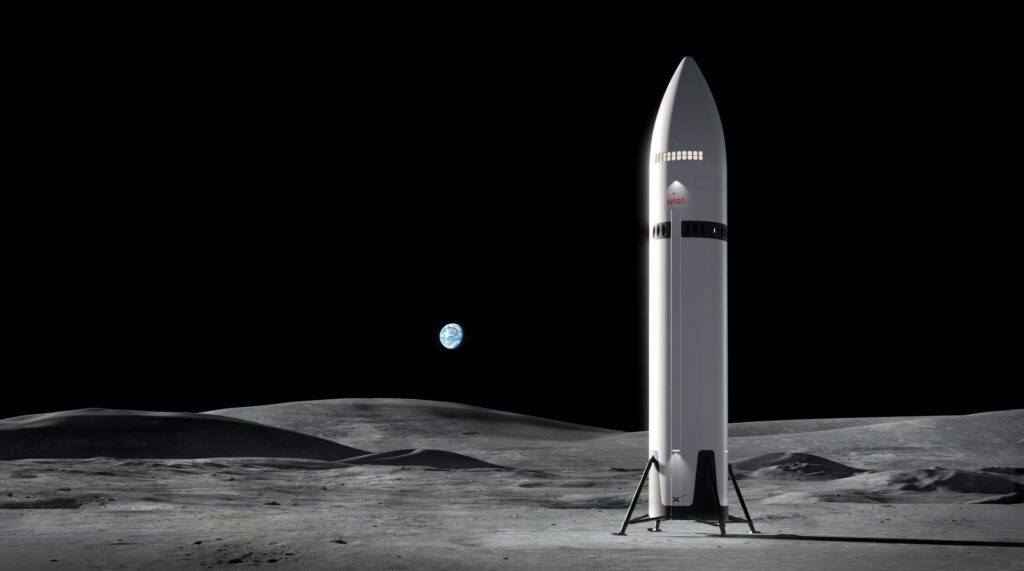
Mars makes orbital refuelling even more important. A Starship travelling to Mars must carry enough propellant for the journey and the manoeuvres required to land. SpaceX plans to refuel the spacecraft in Earth orbit before departure rather than carry the entire propellant supply from the launch pad.
The longer-term plan is to produce propellant on Mars using locally sourced resources, including carbon dioxide and water ice. This could eventually allow a spacecraft to refuel for the return journey, but it depends on Starship first delivering the necessary equipment and cargo to the planet.
Orbital refuelling could also expand Starship’s commercial capabilities. A fully fuelled spacecraft could deliver payloads to destinations beyond the reach of a single launch, including higher orbits and deep space. Combined with reusability, this could change how SpaceX approaches missions that currently require multiple vehicles or specialised launch systems.
The next step is clear. SpaceX must demonstrate that two Starships can dock in orbit and transfer substantial quantities of cryogenic propellant between them. Until then, the refuelling architecture underpinning SpaceX’s plans for the Moon and Mars remains unproven.