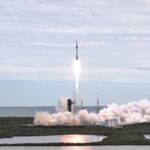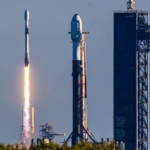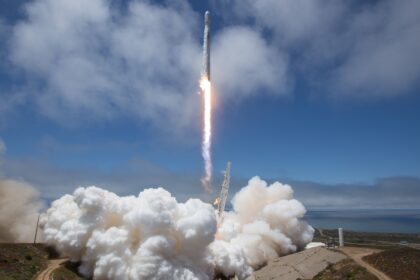
Google confirmed on 24 September 2026 that Project Suncatcher will fly its first in-orbit test of Tensor Processing Units on a prototype satellite built with Planet Labs. Project Suncatcher will catch a ride on SpaceX’s Transporter-18, a dedicated sun-synchronous rideshare flight from pad SLC-4E at Vandenberg Space Force Base.
The goal of this flight is hardware survival and testing in low Earth orbit. That includes testing how the load handles the stress of launch, radiation in space, and cooling capabilities of the vacuum. This isn’t quite yet an operational orbital datacenter, and we’re still many months away from SpaceX’s own Starmind or Google or Amazon’s equivalent constellations.
Transporter-18 is scheduled for Thursday, 1 October 2026, with liftoff around 18:18 GMT and a window open through 19:16 GMT, based on open-source trackers. Exact T-0 and webcast information will follow as usual closer to the actual launch day.
What Suncatcher Is Testing
After years of research, Project Suncatcher is scheduled to embark on its first test in orbit, launching a prototype satellite to evaluate how Google Tensor Processing Units (TPUs) perform in space.
Travis Beals, Google’s senior director for Paradigms of Intelligence, framed the Transporter-18 ride as a partnership with Planet Labs to gather in-orbit data on how the TPUs handle flight stress and the radiation and thermal extremes of space. A low-Earth-orbit climb lasts about 10 minutes, with the spacecraft seeing sustained loads up to about 10 G. Individual parts, including the TPU chips, can see forces up to about 50 to 100 Gs, based on Google’s own vibration testing simulations in the labs.
On radiation, Google noted that the Trillium TPUs held up in proton-beam testing at UC Davis’s Crocker Nuclear Laboratory while running AI workloads and can survive a total ionizing dose greater than a five-year LEO mission.
Cooling in a vacuum can be a challenge, and with no airflow to dump heat to, the team is using heat pipes and radiators to bleed waste heat. Learning how that holds up in-orbit is one of the key goals for Project Suncatcher.
Project Suncatcher
The four Trillium TPUs are sitting inside a fridge-sized compute bus, with about 1 kW of solar power to run the whole satellite package. Planet Labs expects operations to measure in the months to about one year, with AI compute workloads happening in 15 minute bursts. These high-intensity bursts will fully thermally soak the radiators, and some time needs to be spent before another workload can be run to radiate off waste heat.
Next Milestone Is 2027
This first launch is about seeing what works, identifying points of failure, and applying those findings to future missions.
Beals’s stated next step is a two-satellite high-bandwidth laser interconnect flight targeted for 2027. Google itself hasn’t planned any specific dates or time estimates for when their own commercial orbital datacenters will begin flying, but instead notes that there will be several years of R&D ahead of it.