Elon Musk has warned new rocket companies against trying to replicate SpaceX’s Raptor 3 engine after a newly unveiled Chinese design drew comparisons to the hardware powering Starship. The discussion began after Space Pioneer’s Tianhuo-21 engine was presented alongside Raptor 3, with both targeting similar sea-level performance.
- Berger Highlights Space Pioneer’s Engine Ambitions
- Tianhuo-21 Draws Comparisons to Raptor 3
- Why Rocket Companies Are Moving Toward Methalox
- Raptor 3’s Compact Design Masks Its Complexity
- Musk Explains the Challenges of Building Raptor 3
- Starship Shows the Complexity of Reusable Rockets
- The Difference Between Copying and Competing
The online comparison quickly gained attention when Ars Technica’s Eric Berger highlighted Space Pioneer’s substantial funding and its apparent pursuit of a lookalike Raptor engine. Musk responded by pointing to the manufacturing challenges hidden beneath Raptor 3’s relatively simple exterior.
“I would recommend against a new company trying to make Raptor 3,” Musk wrote on X. He explained that while the engine appears simple from the outside, its internal geometry is extremely complex and requires highly modified 3D metal printing to manufacture.
Berger Highlights Space Pioneer’s Engine Ambitions
Berger noted that Chinese private investors are investing heavily in their domestic launch industry, pointing to Space Pioneer’s nearly $1 billion in investor funding. He drew attention to the closely matched sea-level performance figures and appearance of the two propulsion systems.
This comparison places Space Pioneer’s work within the global drive toward reusable heavy-lift launch vehicles. However, matching a published performance target on paper does not mean two engines are at the same stage of development.
A rocket engine’s true capabilities depend on its underlying design, manufacturing process, testing history, and proven ability to support repeated launches.
Tianhuo-21 Draws Comparisons to Raptor 3
On September 16, 2026, industry outlet CNSpaceflight shared specifications for the Tianhuo-21, a Methalox (LCH4 and LOX) engine listed with a sea-level thrust of 2,450 kN and a specific impulse of 332 seconds. Graphic mockups showcased the engine alongside Raptor 3, highlighting their visual similarities.
According to these specifications, Tianhuo-21 is designed around a full-flow staged combustion cycle, the same general architecture used by SpaceX’s Raptor 3. However, the figures represent stated design targets rather than independently verified operational performance.
The announcement coincides with Landspace’s ongoing BF-20 rocket engine testing, illustrating a broader wave of Chinese space development aimed at reusable launch platforms.
Why Rocket Companies Are Moving Toward Methalox
Methalox (LCH4 and LOX) has become an increasingly common choice for next-generation launch vehicles. Compared with Kerolox, used on rockets like Falcon 9, Methalox supports higher engine performance while burning relatively cleanly. This leaves fewer carbon deposits, simplifying post-flight inspections and refurbishment.
Compared with the more efficient Hydrolox (LH2 and LOX), Methalox offers advantages in propellant storage and vehicle integration. While hydrogen provides higher specific impulse, its extremely low density requires substantially larger tank volumes and demanding thermal management. For reference, liquid methane boils at approximately -161°C, compared with liquid hydrogen at -253°C. Methane offers increased performance over Kerolox without the storage challenges associated with Hydrolox.
SpaceX has made Methalox central to Raptor and Starship. While the approach is not exclusive to SpaceX, Raptor has become one of the most visible large-scale examples of its application.
Raptor 3’s Compact Design Masks Its Complexity
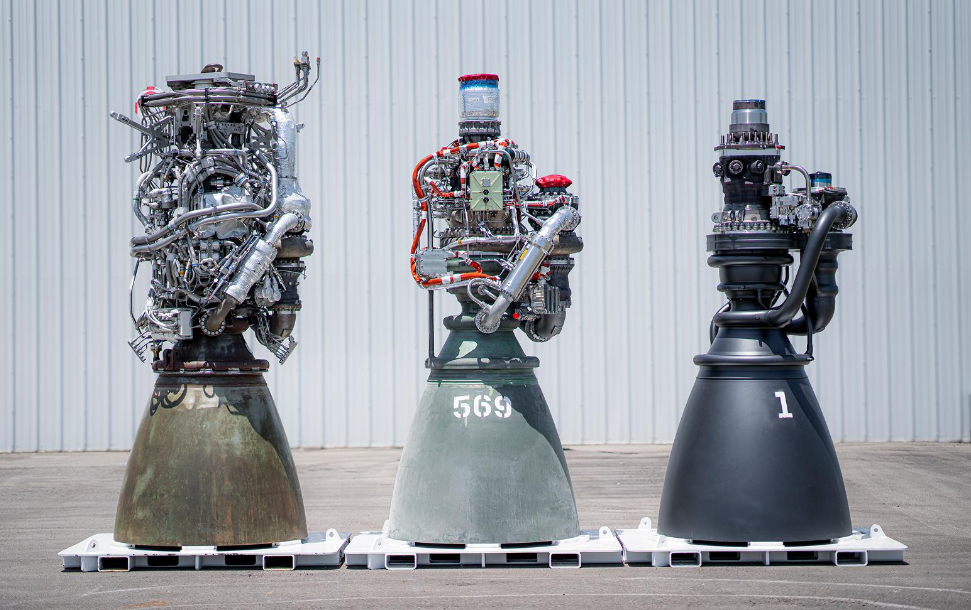
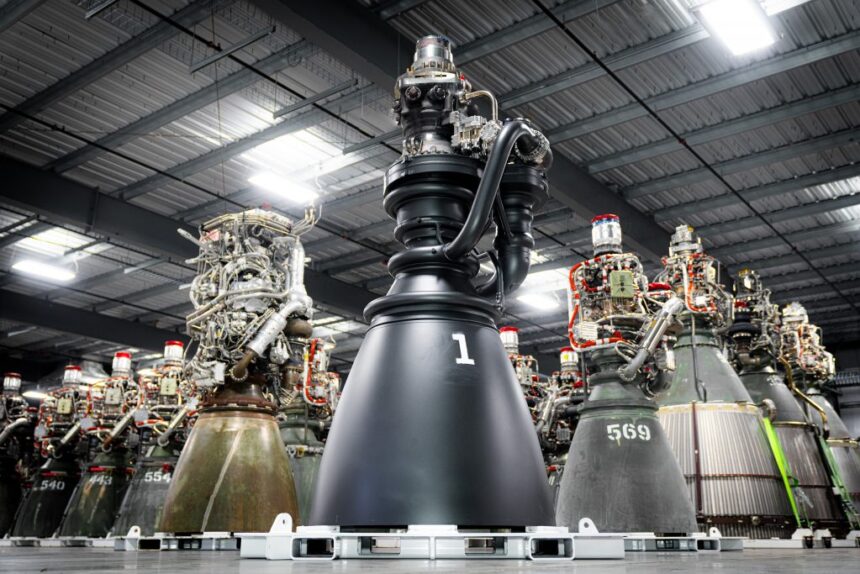
At first glance, Raptor 3 looks simple compared with both previous iterations and most rocket engines in general. SpaceX worked to eliminate external plumbing and consolidate hardware, integrating sensors and controllers directly beneath thermal protection. While this creates a compact appearance, it does not mean the underlying design is less complicated.
Raptor 3 uses a full-flow staged combustion cycle, routing both propellant streams through separate preburners before entering the main combustion chamber. This enables high performance but introduces demanding requirements for combustion stability, cooling, pressure management, and component integration.
The engine’s internal passages must manage hot gases under extreme operating conditions while accounting for thermal expansion and operational stresses. Raptor 3 builds on years of iterative testing, resulting in a streamlined exterior that belies its internal complexity.
Musk Explains the Challenges of Building Raptor 3
Musk’s warning focused specifically on the difficulty of reproducing the complex internal geometry of Raptor 3. He noted that while a clean exterior is necessary to survive reentry heat without a dedicated heat shield, the internal components can only be manufactured by using highly modified 3D metal printing.
This comment highlights a critical distinction between designing an engine and manufacturing one. Producing integrated internal passages requires specialized manufacturing equipment, custom alloy processes, and extensive quality control to ensure components can handle extreme heat and pressure.
Starship Shows the Complexity of Reusable Rockets
Starship’s development further illustrates why designing an engine is only one part of building a launch system. Despite SpaceX’s successful experience with Falcon 9, Starship has required a lengthy development process involving repeated flight tests, engine revisions, and launch infrastructure changes.
A rocket engine must operate reliably within a larger vehicle, withstand repeated operating cycles, and integrate seamlessly with tanks, avionics, and thermal protection.
For a reusable orbital launch system, recovery is only the beginning. The logistical network needed to support hardware recovery, inspection, and refurbishment is essential to reusable spaceflight.
The Difference Between Copying and Competing
Musk’s response was directed at the idea of a new company attempting to replicate Raptor 3 specifically, rather than a warning against developing Methalox rocket engines or entering the reusable launch market. While Tianhuo-21’s published specifications put it in a similar weight class, visual similarities do not guarantee operational success.
The next important milestones for Space Pioneer will be the disclosure of verified technical data and evidence of physical hardware testing.
For SpaceX, Raptor 3 represents years of iterative work on an engine designed around Starship’s exact operational profile. Its central lesson is that competitors should consider the engineering behind the hardware, not just the published specifications and visual appearance.