Ambitious Beginnings
Founded in 2002, SpaceX entered an aerospace industry dominated by established launch providers. Traditional rocket development was expensive and slow, with costs ballooned from government cost plus contracts. This disincentivized competing interests and resulted in stagnation.
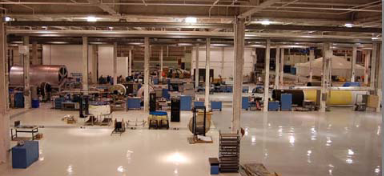
Elon Musk saw this as an opportunity despite the large barrier to entry. SpaceX aimed to reduce launch costs through simplified engineering, modern manufacturing techniques, and extensive vertical integration. Instead of relying heavily on external suppliers, the company developed many critical systems internally, including engines, avionics, software, and vehicle structures.
The objective was straightforward: build a reliable, affordable small-lift launch vehicle.
The result was Falcon 1, a two-stage rocket designed to deliver small payloads into low Earth orbit. SpaceX advertised launch costs of approximately $6 million, significantly below competing vehicles such as Orbital Sciences’ Pegasus XL, which cost upwards of $25 million per launch.
The timing was favorable. During the 1990s, NASA promoted the “Faster, Better, Cheaper” philosophy, encouraging smaller spacecraft developed with reduced budgets and shorter schedules. Although several high profile mission failures exposed the risks of aggressive cost reduction, the approach helped create demand for lower cost launch services from organizations such as NASA and DARPA.
The vast majority of launch vehicle failures in the past two decades can be attributed to three causes: engine, avionics and stage separation failures. An analysis by Aerospace Corporation showed that 91% of known failures can be attributed to those subsystems.
Falcon 1 would quickly overcome these failures and pave the road for the SpaceX of today.
The Rocket Itself
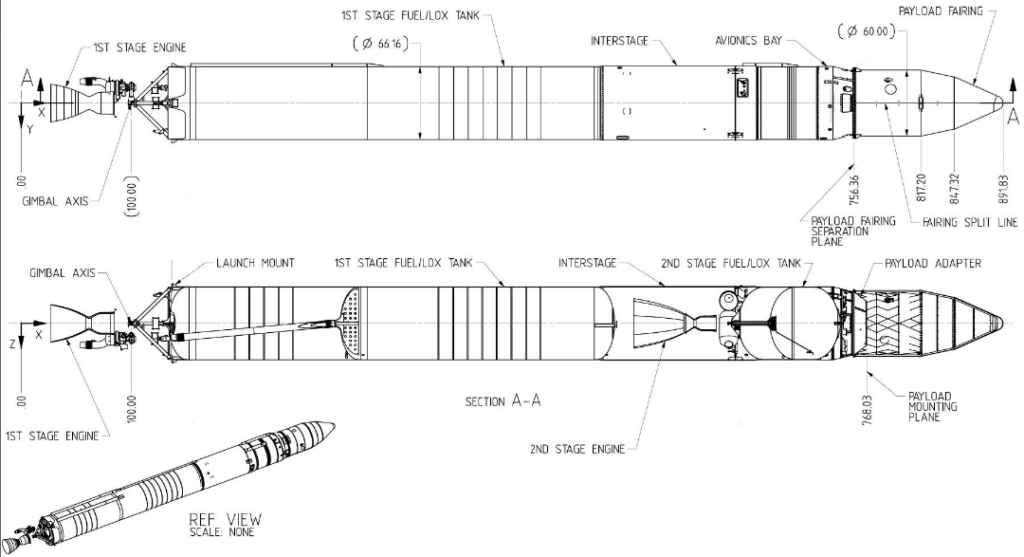
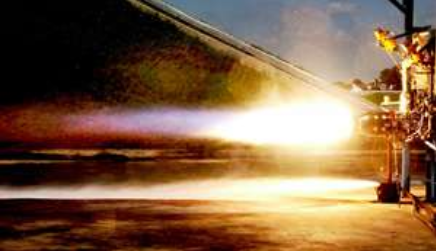
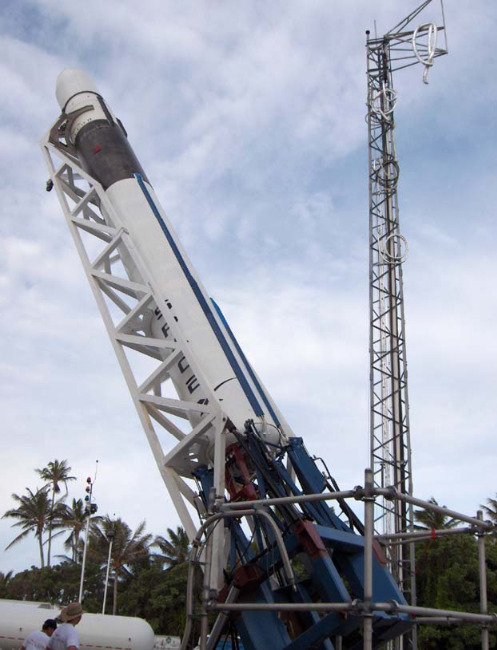
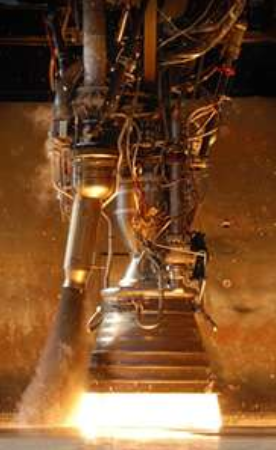
Falcon 1 was designed around simplicity. The vehicle used a two-stage architecture powered by kerosene and liquid oxygen, commonly known as Kerolox (RP-1/LOX). The first stage used the pump fed Merlin engine, while the second stage relied on the pressure-fed Kestrel engine. Though never used, the Falcon 1 was designed and built with parachutes for first stage recovery.
Specifications
- Height: 21.3 m (70 ft)
- Diameter: 1.7 m (5.5 ft)
- Liftoff mass: 27,670 kg (61,000 lb)
- Liftoff thrust: 347 kN (78,000 lbf)
Although small compared with later SpaceX vehicles, Falcon 1 introduced several technologies that would become foundational to future rockets. The Merlin engine architecture, in-house avionics, and vertically integrated manufacturing approach would later scale into Falcon 9.
Trial by Fire
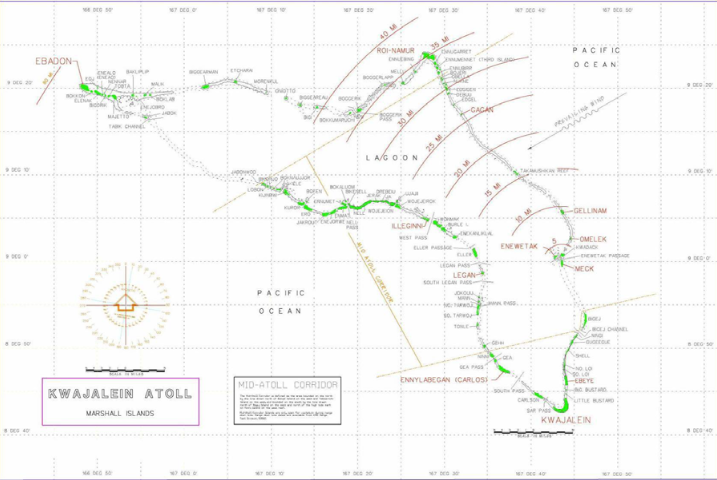
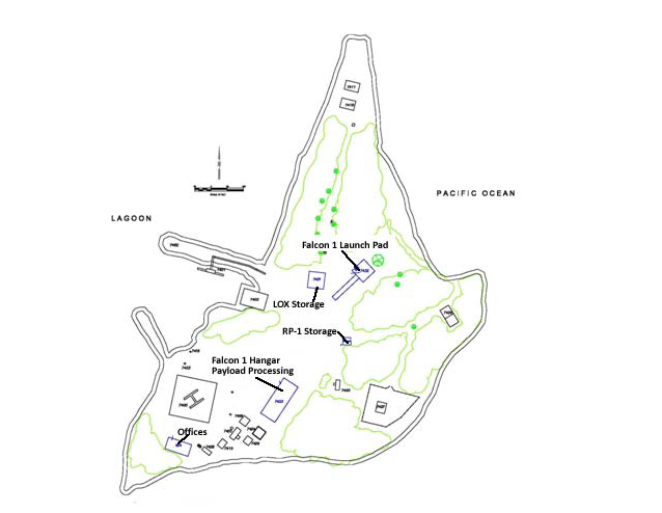
Falcon 1’s first launch was originally scheduled for October 2005 at Vandenberg AFB but ultimately took place on March 24, 2006, from Omelek Island at the Reagan Test Site in the Kwajalein Atoll of the Marshall Islands. The change in location had effectively resulted in the forfeiture of investment at Vandenberg AFB, to the tune of $7 million. Kwajalein was not SpaceX’s preferred launch location, but regulatory delays and logistical constraints left few alternatives. The remote location of Kwajalein however would impose its own challenges to the Falcon 1.
The mission carried FalconSAT-2, a technology demonstration satellite developed for the U.S. Air Force Academy under a DARPA program. The 19.5 kg (43 lb) spacecraft was intended to enter a 450 km orbit inclined at 39 degrees.
The launch failed approximately 25 seconds after liftoff, when a fire developed inside the first-stage engine compartment. Corrosion had weakened an aluminum B-nut in the fuel system, allowing fuel to leak and ignite. Engineers determined that the combination of aluminum hardware and the marine environment of Kwajalein contributed to the failure. The solution extended beyond replacing a single component. Quality control was improved through step-by-step inspections and procedures, alongside replacing select aluminum components with stainless steel.
Although the launch was officially a failure, it was a success in verifying that SpaceX had laid the correct groundwork and more importantly a lesson in the value of quality control.
Learning Through Failure
Falcon 1’s second launch occurred on March 21, 2007. The mission had two objectives, the primary objective of collecting flight data, and a secondary objective attempting to place a mass simulator payload into orbit.
The first stage performed successfully. Stage separation also occurred as planned, allowing Falcon 1 to become the first privately developed liquid-fueled rocket to reach space.
The second stage encountered a different problem. Fuel sloshing caused the vehicle to enter an uncontrolled spin, reaching approximately 60 rpm. The rotation eventually caused the Kestrel engine to flame out before orbital velocity was achieved.
Although the payload did not reach orbit, it eliminated several major sources of uncertainty. The Merlin engine had performed successfully, avionics functioned correctly, and stage separation had been demonstrated. Falcon 1 had cleared the major hurdles of launch vehicle failures.
On the Brink
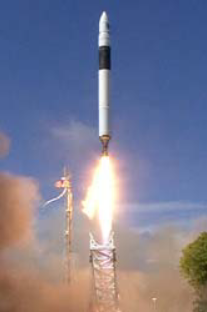
By the time of Falcon 1’s third launch on August 3, 2008, SpaceX expected the vehicle to succeed. The rocket was upgraded with the Merlin 1C engine and carried three satellites with a combined mass of approximately 170 kg.
The mission failed shortly after stage separation. The new engine design introduced an unexpected problem. Residual thrust from the first stage continued after shutdown, causing the spent booster to re-contact the second stage, sending the rocket off course irrecoverably. This was especially devastating because it was preventable, much like the first launch.
Technically, the failure was relatively minor. Financially, it was critical. Since Falcon 1 was privately funded and developed, the third consecutive failure led to uncertainty about both the rocket and the company’s future. SpaceX reportedly had enough funding for only one more launch attempt. Outlook was bleak and future funding was uncertain.
Success at Last
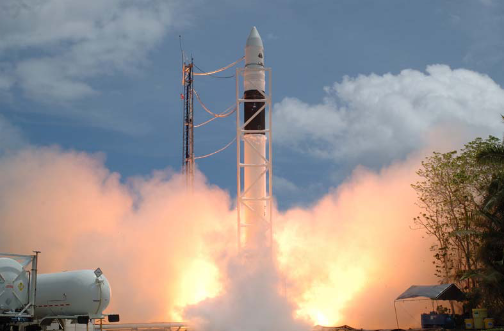
On September 28, 2008, SpaceX became the first company to have placed a privately funded and developed liquid-fuel rocket into orbit. Falcon 1’s fourth launch had successfully deployed RatSat, an aluminum mass simulator in orbit.
The launch demonstrated that a startup could design, manufacture, and operate an orbital-class launch vehicle. NASA had already selected SpaceX for the Commercial Orbital Transportation Services (COTS) program in 2006. Falcon 1’s successful flight strengthened confidence that SpaceX could deliver on the program’s objectives. This had solved SpaceX’s uncertain financial outlook and ensured the future of the company.
Falcon 1 flew for a fifth and final time in July 2009, successfully deploying Malaysia’s RazakSAT satellite. It became the vehicle’s only commercial launch. The repeated success demonstrated that Falcon 1 had matured beyond a development prototype.
Pivot to Heavyweights
Despite reaching operational success, Falcon 1 had limited commercial potential. The market favored launch vehicles capable of carrying larger payloads. Falcon 9 offered greater performance and better economics through increased payload capacity and economies of scale.
Thus SpaceX redirected its engineering resources toward Falcon 9. The lessons learned from Falcon 1 directly influenced the larger vehicle’s development, including engine design, manufacturing processes, avionics, software, and launch operations. Falcon 1 became the development path for the rocket family that followed.
Lasting Legacy
Falcon 1 was not a financial success by traditional measures. The program generated approximately $25 million in launch revenue against development and production costs estimated near $100 million.
Its importance, however, was measured elsewhere. Falcon 1 proved that a privately funded company could develop an orbital launch vehicle from the ground up. It established SpaceX as a credible launch provider, helped secure NASA’s confidence, and provided the technical foundation for Falcon 9, Dragon, reusable boosters, and later Starship development.
The rocket itself was small, but its impact was not. Falcon 1 was the vehicle that transformed SpaceX from an ambitious startup into a company capable of reshaping the launch industry.


![Falcon 9 to Launch SDA Tranche 1 Transport Layer A [Scrubbed]](https://thegridfin.com/wp-content/uploads/2026/07/SpaceX_SLC_4E_01-150x150.jpg)