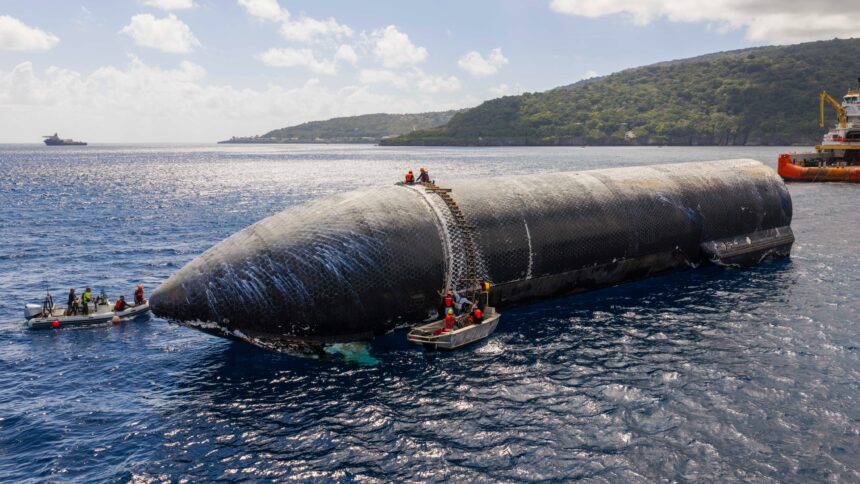
SpaceX has completed its initial post-flight inspection of Starship Ship 40 following IFT-13, giving engineers their first opportunity to examine an intact Starship after returning from space.
Unlike previous Starship flights, where the vehicle was destroyed during reentry or landing, IFT-13 ended with Ship 40 making a controlled and intact splashdown in the Indian Ocean. The vehicle remained afloat for weeks before recovery teams towed it to calmer waters off Christmas Island.
Post-Flight Analysis
With Ship 40 safely positioned off Christmas Island, SpaceX engineers spent several days inspecting the vehicle directly. The company says the teams collected heatshield samples and gained valuable insight into how the vehicle performed during reentry.
This is particularly important for Starship’s thermal protection system. Ship 40 endured the extreme heating and aerodynamic forces of atmospheric reentry before completing its controlled landing burn, giving SpaceX physical hardware that can now be examined alongside the vehicle’s flight data and imagery.
The inspection should provide a much clearer picture of how the heatshield performed in an actual flight environment. Rather than relying solely on telemetry and cameras, engineers can now examine the materials themselves to identify areas that performed as expected, as well as areas requiring further improvement.
SpaceX says improvements identified through the inspection are already planned for future vehicles. The company’s vertically integrated approach allows those changes to move quickly from analysis into hardware development, testing, and flight.
The Journey Home
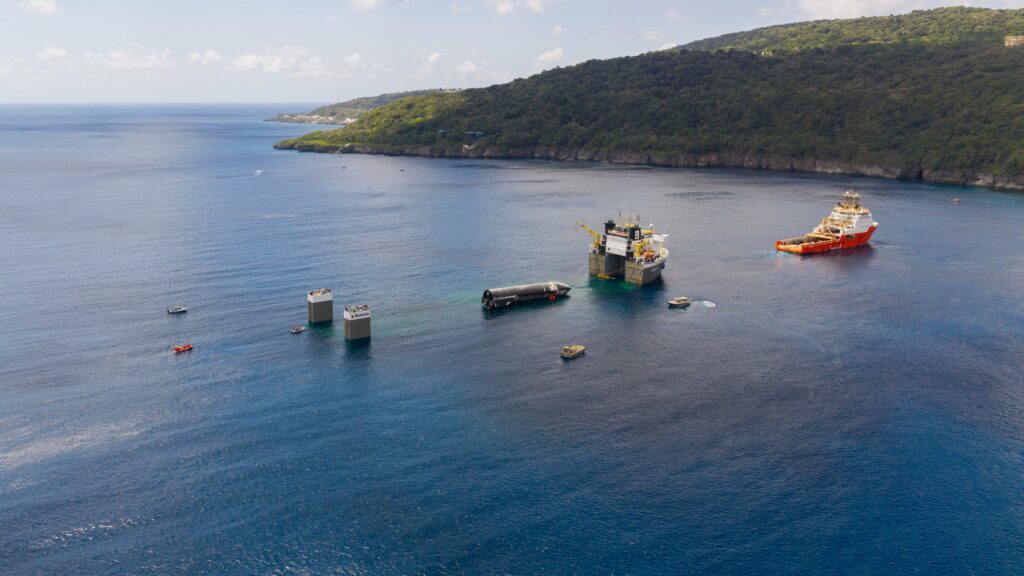
With the initial inspection complete, SpaceX has moved to the next phase of the recovery operation.
Starship has been loaded onto the semi-submersible cargo vessel Forte, which will carry the Starship on the long journey back to Starbase. The specialized vessel can partially submerge its deck, allowing the floating Starship to be positioned over it before the deck is raised beneath the vehicle. This provides greater stability and helps ensure Starship returns home safely.
Once Ship 40 reaches Starbase, SpaceX will have access to considerably more resources for a detailed examination of the vehicle. Engineers will be able to inspect its structure, propulsion hardware, heatshield, and other components in a controlled environment.
The recovery represents an important extension of Flight 13’s test campaign. SpaceX is not simply bringing Ship 40 home for display. Instead, the vehicle provides a rare opportunity to study a flown Starship in detail and use what is learned to improve the next generation of vehicles.
For a program built around rapid iteration, Ship 40’s return could prove almost as valuable as the flight itself.