SpaceX reported its third quarter 2026 results on October 20, 2026, and held its earnings webcast that afternoon with Elon Musk, Gwynne Shotwell and CFO Bret Johnsen.
We’ve summarized the whole Earnings Call into an easy-to-read set of notes in case you missed it, including all the forward-looking statements, financial information, and even the Q&A. You can read the full Q3 2026 results release here.
Musk opened the call by saying “we are in an inflection moment for SpaceX across launch, connectivity and superintelligence.”
The release renames the AI segment “Super Intelligence (SI)”, following the US executive order on September 29.
Space and Launch Operations
- Space revenue was $1.767 billion, up 84% sequentially and 6% year over year. This included $1.130 billion from launch services and $637 million from launch and development.
- The segment posted a $7 million operating loss, down from a $542 million loss in Q2, and generated $357 million in adjusted EBITDA.
- Space R&D spending reached $1.225 billion, up from $1.076 billion in Q2 and $849 million a year earlier.
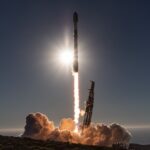
- SpaceX completed 35 launches in Q3, including 21 Starlink missions on Falcon 9, two Starship flights, one Falcon Heavy flight, and 11 other customer missions. These included the Falcon Heavy launch of NASA’s Roman Space Telescope into deep space.
- SpaceX carried 476 metric tons to orbit in Q3, comprising 119 metric tons for customers and 358 metric tons for internal use. The company carried 1,517 metric tons through the first nine months of the year.
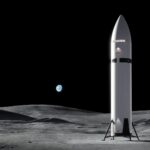
- New business included three additional NASA crew missions to the International Space Station, 18 National Security Space Launch (NSSL) missions, three commercial Starfall missions, and a contract to deliver a payload to the lunar surface using Starship.
- SpaceX announced Starbase, Louisiana, a planned spaceport designed to support thousands of Starship flights annually, with the first launch targeted for 2029.
Starship
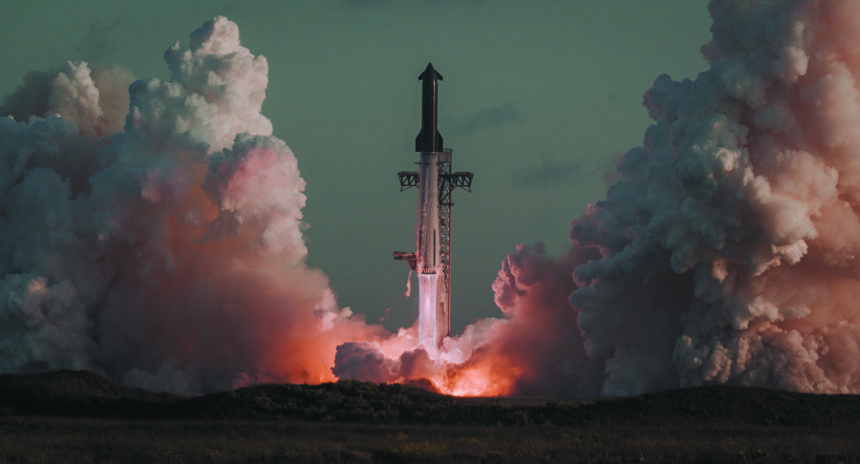
- Flight 14 marked Starship’s first orbital flight and its first revenue-generating mission. It deployed 26 Starlink V3 satellites, adding roughly 10 times the downlink capacity of a Falcon 9 Starlink launch. The payload used about half of Starship’s capacity.
- Musk said Flight 15, planned for next month, will attempt to catch both the booster and the ship. If successful, this would mark the first time an orbital launch vehicle has been fully recovered following a launch.
- Musk expects Starship to fly weekly at some point in the first half of 2027. Launch cadence is expected to increase dramatically as SpaceX solves the challenges of rapid and complete reusability.
- SpaceX plans to attempt on-orbit refuelling with Starship in early 2027. The vehicle is also expected to begin launching Mobile V2 and Starmind satellites in 2027.
Starlink and Connectivity
- Connectivity revenue was $5.248 billion, up 22% sequentially and 69% year over year.
- Consumer revenue was $3.121 billion, up 26% QoQ and 57% YoY. Enterprise and government revenue reached $2.127 billion, up 18% QoQ and 91% YoY.
- Connectivity operating income was $2.367 billion, up 99% YoY, while adjusted EBITDA reached $3.499 billion, up 82% YoY.
- Starlink reached 13.6 million consumer subscribers, adding 1.6 million during the quarter, compared with 7.2 million a year earlier. The company attributed the growth to “developed markets.” Starlink also has hundreds of thousands of enterprise subscribers.
- The subscriber metric was renamed from “Starlink Subscribers” and now excludes managed enterprise and government contracts.
- Consumer ARPU (average revenue per user) was $69 per month, up 5% from $66 in Q2, but down from $83 in Q3 2025.
- Starlink was active in 174 markets by the end of Q3, including newly launched markets in Vietnam and Uganda.
- SpaceX ramped up production of V5 Starlink kits and prioritized deliveries ahead of the holiday season, setting the stage for an expected increase in activations in Q4.
- The company redefined “Total Satellites in Orbit” to include satellites approved for deorbit.
Starlink Aviation and Mobile
- Starlink Mobile surpassed 22 million monthly users at the end of Q3, up 37% QoQ.
- Starlink received FCC approval to launch 15,000 Mobile V2 satellites and announced an agreement to acquire a portfolio of low-band spectrum.
- After the quarter, SpaceX agreed to acquire a nationwide portfolio of up to 14 MHz of paired 800 MHz spectrum. The deal is expected to close in the first half of 2027, subject to regulatory approval.
- Starlink Mobile V2 satellite launches will ramp up aboard Starship starting in 2027.
- SpaceX expects to use the new satellites to expand its direct-to-cell service and establish itself as a major mobile carrier.
- More than 3,800 aircraft were equipped with Starlink as of September 30.
- Starlink is now contracted to serve roughly 12,000 aircraft.
- SpaceX has quadrupled its Starlink aviation production rate since the beginning of the year and expects to double it again by year-end.
SI, Grok, and Cursor
- SI revenue was $7.560 billion, up 195% sequentially and 830% year over year. This included $7.022 billion from SI solutions and infrastructure and $538 million from advertising, up 19% from $454 million a year earlier.
- SI operating income was $431 million after $1.217 billion in share-based compensation tied to the Cursor acquisition. Adjusted EBITDA reached $4.953 billion, up from $1.146 billion in Q2.
- The Cursor acquisition closed on August 14 at an implied equity value of $60 billion. GAAP purchase consideration was $42.5 billion, with $23.4 billion in equity awards tied to post-acquisition service.
- Cursor contributed $608 million in revenue between August 14 and September 30.
- Weekly paid users reached 800,000 in early October 2026, more than doubling over the previous month.
- The number of Grok Enterprise customers generating more than $1 million in annualized run-rate revenue increased 50% QoQ, including Cursor.
- SpaceX introduced Grok Bot as “our always-on agentic SI system.” The system will be deployed at scale for enterprise customers, with broader deployment expected in the following weeks.
- Nameplate compute capacity reached 1.7 GW as of September 30, up from 1.4 GW in Q2 and 0.6 GW a year earlier, as the COLOSSUS II buildout continued.
- SpaceX plans to bring its most powerful training cluster online, with 440,000 Vera Rubin computers expected to be operational by the end of Q2.
Financials
- Revenue was $14.575 billion, up 161% from $5.576 billion a year earlier and 87% from $7.814 billion in Q2.
- Net income was $4.404 billion, compared with a $1.054 billion loss a year earlier. Diluted earnings per share (EPS) were $0.35, while basic EPS was $0.37.
- Operating income was $2.791 billion, compared with a $143 million loss in Q2 and a $273 million loss a year earlier.
- Adjusted EBITDA reached $8.809 billion, up 306% year over year.
- Below operating income, SpaceX recorded $873 million in interest income, $1.025 billion in other income, and a $390 million tax benefit.
- Capital expenditures (capex) totaled $19.593 billion: $16.444 billion for SI, $1.606 billion for Space, and $1.543 billion for Connectivity. Nine-month capex reached $48.069 billion.
- Nine-month operating cash flow was $13.097 billion.
- As of September 30, SpaceX held $51.294 billion in cash and $38.561 billion in marketable securities. Debt and finance lease obligations totaled $2.698 billion in current liabilities and $36.146 billion in long-term liabilities.
- Reuters reported that analyst estimates compiled by LSEG put revenue at $12.72 billion and net income at $1.57 billion. SpaceX shares rose 2.5% in extended trading, according to the report.

Analyst Q&A
Has SpaceX placed orders for EUV machines? If so, when are they expected to arrive?
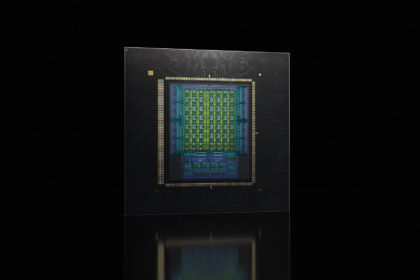
SpaceX is still working through the chip fabrication process, with an internal goal of producing a functional test chip by Q2 2027. The initial chip would likely be an SRAM chip fabricated at its Austin research fab. SpaceX aims to reach volume production at Terafab in Gibbons Creek by Q3 2028.
Where does SpaceX see opportunities to improve on traditional semiconductor manufacturing supply chains?
Elon Musk sees significant potential for breakthroughs but declined to elaborate during the earnings call.
How is SpaceX addressing power, cooling, and infrastructure constraints as it targets 13 GW of nameplate capacity by the end of 2027?
Musk expects SpaceX to reach approximately 3 GW of nameplate capacity within the next few months. The pace of infrastructure deployment continues to accelerate, with SpaceX currently deploying 20,000 GB300 GPUs per month.
SpaceX also has the capability to manufacture natural gas turbine blades and vanes, which Musk identified as a primary bottleneck. He expects the company to produce turbines on schedule.
How does SpaceX plan to fund its projected expansion in compute capacity?
SpaceX benefits from its investment-grade status and strong balance sheet. Musk said the infrastructure investment can fund itself through a short payback period, supported by the capital efficiency demonstrated across SpaceX’s operations.
What is the potential for a merger between SpaceX and Tesla, and what are the advantages and disadvantages of such a combination?
Musk said he is a conflicted party and cannot participate in discussions by the special committees considering a potential merger. Although he believes a combination could be a good idea, the committees have not reached an agreement on the terms of a transaction. Musk also highlighted the potential relevance of the broader SI field.
How much coverage can Starlink Mobile provide through its satellite network, given the uncertainty surrounding its spectrum portfolio?
The S-band spectrum is expected to carry most of the workload, while the 800 MHz spectrum would help signals penetrate buildings.
How will SpaceX combine satellite and terrestrial infrastructure to deliver a 5G experience?
SpaceX plans to leverage the existing infrastructure footprint created by Starlink installations, alongside other terrestrial towers, to support its network.
How does SpaceX plan to balance internal compute usage with external customers?
SpaceX aims to split its compute capacity roughly 50-50, using half internally and renting the other half to external customers.
How does SpaceX plan to monetize its compute capacity?
SpaceX’s approach remains flexible, but it currently favors renting out compute at spot-market rates rather than committing to long-term deals. The company expects the value of compute per watt to increase over time and believes demand for its compute capacity currently exceeds supply.
Investor Q&A
When will Starlink V3 satellites deliver meaningful improvements in speeds and latency for users?
Users will likely need a few hundred Starlink V3 satellites in orbit before they begin to feel a meaningful difference in speeds and latency. SpaceX could reach that milestone by mid-2027.
What is the latest on Starbase Louisiana, and when is the first Starship launch from the site expected?
SpaceX is internally targeting the first Starship launch from Starbase Louisiana in 2028, roughly two years from now. However, 2029 is considered a highly likely timeline, with launches expected to ramp up significantly that year.
Watch the Broadcast, Read the Deck
You can read the full Q3 2026 results release here, and watch the replay below.