The Grid FinThe Grid FinThe Grid Fin
  • Rockets
  • Starlink
  • xAI
  • Tech and Patents
Search
Reading: Starship V3 Explained: What Changed for Flight 12
Share
Font ResizerAa
The Grid FinThe Grid Fin
Font ResizerAa
  • Home
  • Rockets
  • Starlink
  • xAI
  • Tech & Patents
Search
  • Rockets
  • Starlink
  • xAI
  • Tech and Patents
Follow US
The Grid Fin > Rockets > Starship > Starship V3 Explained: What Changed for Flight 12
RocketsStarship

Starship V3 Explained: What Changed for Flight 12

By
Kevin Y - Lead Writer
Published: 29 August 2026
5 Min Read
Starship V3 Explained: What Changed for Flight 12
SHARE

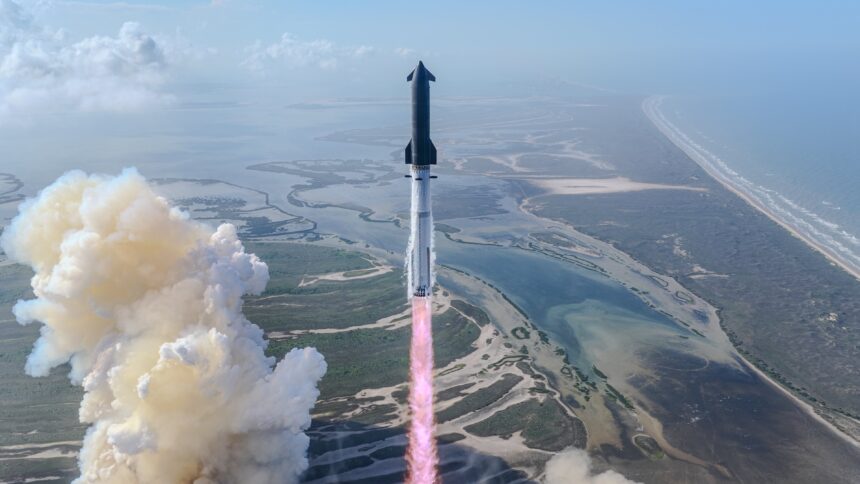
Starship IFT-12, launched on May 22, 2026, marked the first flight of SpaceX’s redesigned V3 Starship and Super Heavy stack. The vehicle introduced next-generation Raptor 3 engines and launched from Starbase’s newly completed second orbital launch pad.

Contents
  • Building Around Raptor 3
  • A Redesigned Hot-Stage
  • Building for a Higher Cadence
  • What Flight 12 Proved

IFT-12 was more than the debut of a new Starship. It gave SpaceX its first opportunity to test how the redesigned vehicle performed as an integrated system. The changes made to Starship V3 were largely focused on simplifying engineering, increasing performance, and increasing reusability.

Building Around Raptor 3

Full duration and full thrust 33-engine static fire with Super Heavy V3 pic.twitter.com/vUJTqoHEZy

— SpaceX (@SpaceX) May 7, 2026

Raptor 3 is at the centre of the V3 redesign.

While the engine continues to use liquid methane and liquid oxygen, SpaceX significantly redesigned its internal and external architecture. Much of the plumbing and supporting hardware that previously sat around the engine is now integrated directly into the engine itself.

The result is a cleaner and more compact installation. This is particularly important on Super Heavy, where 33 engines are packed into a relatively small engine bay.

The upper stage uses six Raptor 3 engines, with three sea-level engines and three vacuum-optimized engines. Together, the new engines provide higher performance while also reducing the amount of supporting hardware required around them.

For SpaceX, that means Raptor 3 is not simply a more powerful engine. It is also an important part of making the entire Starship system simpler to manufacture and integrate.

A Redesigned Hot-Stage

Starship continues to use hot-staging to separate the two stages. During the maneuver, the upper stage starts its engines while Super Heavy is still attached. The exhaust is directed through an expendable vented interstage in the booster’s forward section as the stages separate. V3 takes a more integrated approach to protecting the booster from the extreme conditions created during this maneuver.

SpaceX relocated sensitive hardware lower on Super Heavy and redesigned the hot-stage area, integrating the formerly expendable vented interstage. This reduces the amount of additional hardware needed to protect the vehicle during separation while increasing reusability.

Hot-staging itself is not new to Starship, but V3 further incorporates the system into the overall vehicle design.

Building for a Higher Cadence

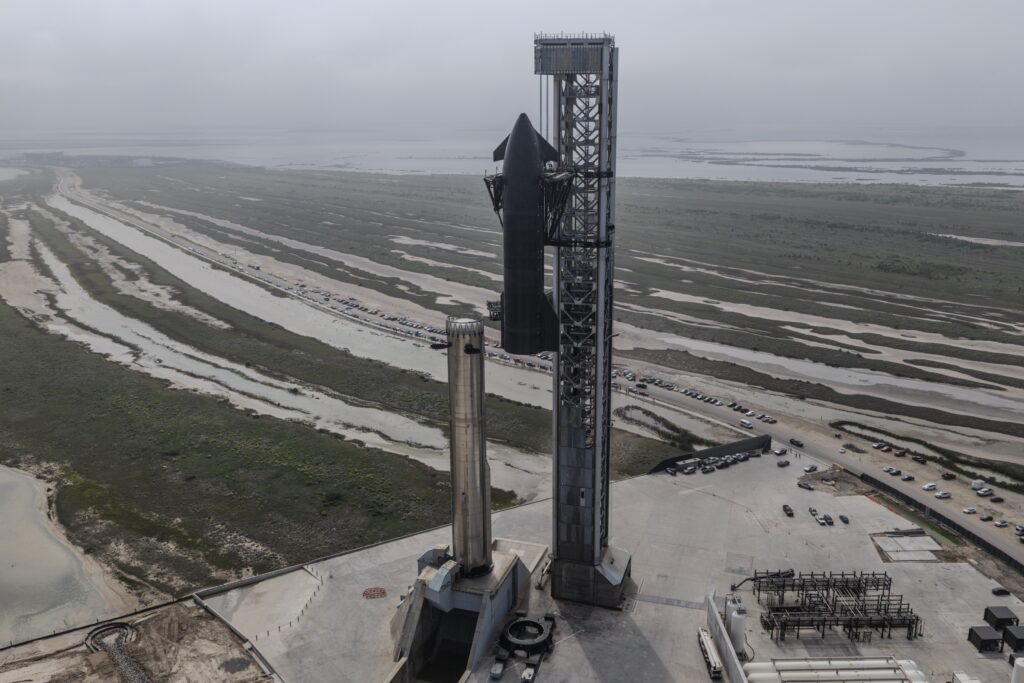
IFT-12 also marked the debut of Starbase’s second orbital launch pad.
Starship V3 Explained: What Changed for Flight 12

Pad 2 was built using lessons learned from the original launch site and provides SpaceX with additional infrastructure for Starship operations. Its systems were designed better accommodate the large amounts of methane and liquid oxygen required by the vehicle while handling the extreme conditions produced during launch.

The biggest advantage that Pad 2 provides is redundancy. With two orbital launch pads, SpaceX does not have to rely entirely on a single facility. Maintenance, repairs, or upgrades at one pad can be carried out without necessarily stopping Starship launches altogether. The construction of infrastructure marks another step towards SpaceX’s ambitions of a higher launch cadence.

What Flight 12 Proved

IFT-12 demonstrated that the new V3 architecture could fly as an integrated vehicle and provided SpaceX with its first in-flight data on Raptor 3, the redesigned Super Heavy, and the updated hot-staging system.

The flight was not without problems. Super Heavy experienced engine issues late in its flight and did not complete the planned recovery, while Starship completed most of its planned trajectory before making a controlled splashdown in the target area.

That makes IFT-12 best viewed as the starting point for V3 rather than the final version of the vehicle.

Watch Starship's twelfth flight test https://t.co/caRB1thMlg

— SpaceX (@SpaceX) May 22, 2026

The flight gave SpaceX real-world data on a substantially redesigned Starship and helped establish the baseline for subsequent flights. The changes introduced with V3 are ultimately aimed at one larger goal: building a Starship that can fly more often, carry more payload, and be manufactured and reused at a much larger scale.

Flight 12 was not the finished product. It was the beginning of the next generation.

Starship Flight 14: What to Expect From SpaceX’s Next Test
SpaceX Static-Fires All 33 Engines on Booster 21 for Flight 14
Starlink Offers $100 USD in Cash for Referrals Starting Now
What is Starship?
FCC Opens 1,000 MHz of Satellite Spectrum for SpaceX and Others
SpaceX Completes SES O3b mPOWER Launch Campaign
TAGGED:SpaceXStarshipSuper Heavy Booster
Share This Article
Facebook Copy Link Print
Share
ByKevin Y
Lead Writer
Follow:
Kevin Y writes and edits for The Grid Fin, with a distinct focus on SpaceX. He's loved space his entire life, and covering SpaceX is a perfect fit. His work emphasizes sourcing and practical contexts for all the rocketry and satellite knowledge readers would want to learn about.
Previous Article Grok 4.6 Lands on Microsoft Foundry Grok 4.6 Lands on Microsoft Foundry
Next Article SpaceX Static-Fires All 33 Engines on Booster 21 for Flight 14 SpaceX Static-Fires All 33 Engines on Booster 21 for Flight 14

Latest Articles

Starship and Super Heavy lift off from Starbase on Flight 14 amid billowing exhaust clouds
SpaceX Q3 2026 Earnings: $14.6B Quarter as Starship Reaches Orbit
xAI General News Rockets Starlink
Starship HLS on the lunar surface (artist concept)
Starship Flight 15 Eyes Double Catch; NASA Maps 2027 HLS Checklist
Rockets Starship
SpaceX Raptor 3 engine standing in front of a row of Raptor 2 engines in a factory
Raptor 1 vs 2 vs 3 — How SpaceX’s Methane Engine Evolved
Rockets Starship Super Heavy Booster Tech & Patents
Starlink aviation illustration of a passenger jet seen from the front
Southwest Goes Fleetwide With Starlink; United Launches Tracker
Starlink

Popular This Week

  • Anatel Grants Starlink Half the S-Band It Sought in Brazil

    Anatel Grants Starlink Half the S-Band It Sought in Brazil

    15 October 20264 views
  • SpaceXSI Grok Voice 3.0 announcement graphic

    This Week in Grok: Grok Bot Gets 3x Faster, Reads X Chat; Voice 3.0 Tops Index

    18 October 20262 views
  • Falcon 9 launches the USSF-481 mission from SLC-4E at Vandenberg Space Force Base

    This Week in SpaceX: USSF-481 Flies, CRS-35 Docks, Ship 40 Returns

    18 October 20261 views
  • SpaceX graphic giving an overview of Starship and Starlink technology

    Starmind Explained: SpaceX's Plan to Put AI Compute in Orbit

    16 October 20261 views
  • Starship and Super Heavy lift off from Starbase on Flight 14 amid billowing exhaust clouds

    SpaceX Q3 2026 Earnings: $14.6B Quarter as Starship Reaches Orbit

    21 October 20260 views

You Might also Like

SpaceX Unveils Starbase, Louisiana for High-Cadence Starship
RocketsGeneral News

SpaceX Unveils Starbase, Louisiana for High-Cadence Starship

Karan Singh
7 Min Read
Aerial view of SpaceX's Starbase in South Texas at dusk
RocketsFalcon 9StarlinkStarship

This Week in SpaceX: SDA Flies on 4th Try; Two Airlines Pick Starlink

Karan Singh
8 Min Read
Starlink V3 Explained: More Capacity, Beams and Bandwidth
Starlink

Starlink V3 Explained: More Capacity, Beams and Bandwidth

Kevin Y
5 Min Read

Independent news and analysis covering SpaceX, Starlink, xAI, rockets, artificial intelligence, and the technologies shaping what comes next.

About Us

  • Contact Us
  • How to Buy Starlink | Referral Code
  • Terms of Service
    • Advertise
    • Privacy Policy
    • Editorial Standards
    • Disclaimer
    • Affiliate and Referral Disclosure
  • About

Categories

  • Rockets
  • Starlink
  • xAI
  • Tech and Patents

More Categories

  • Falcon 9
  • Falcon Heavy
  • Starship
  • Super Heavy Booster
  • Software Updates
  • Grok
Follow US
© The Grid Fin, 2026