Two Rockets, Two Missions
Falcon 9 and Starship share the same manufacturer and the same broad idea: recovering expensive rocket hardware can make spaceflight more economical. Beyond that family resemblance, they are fundamentally different systems.
Falcon 9 is SpaceX’s operational medium-lift rocket. It has flown satellites, cargo and astronauts, and its first stages routinely return to landing zones or drone ships. Starship is a much larger, two-stage system being developed for high-capacity missions to Earth orbit and, with specialized versions and in-space refuelling, destinations such as the Moon and Mars.
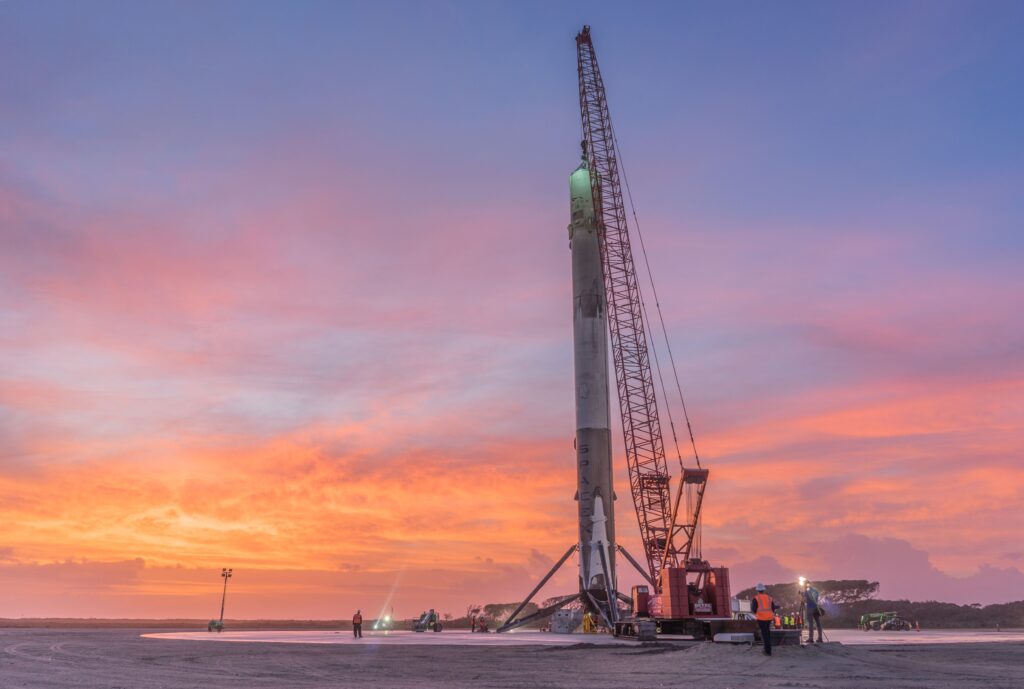
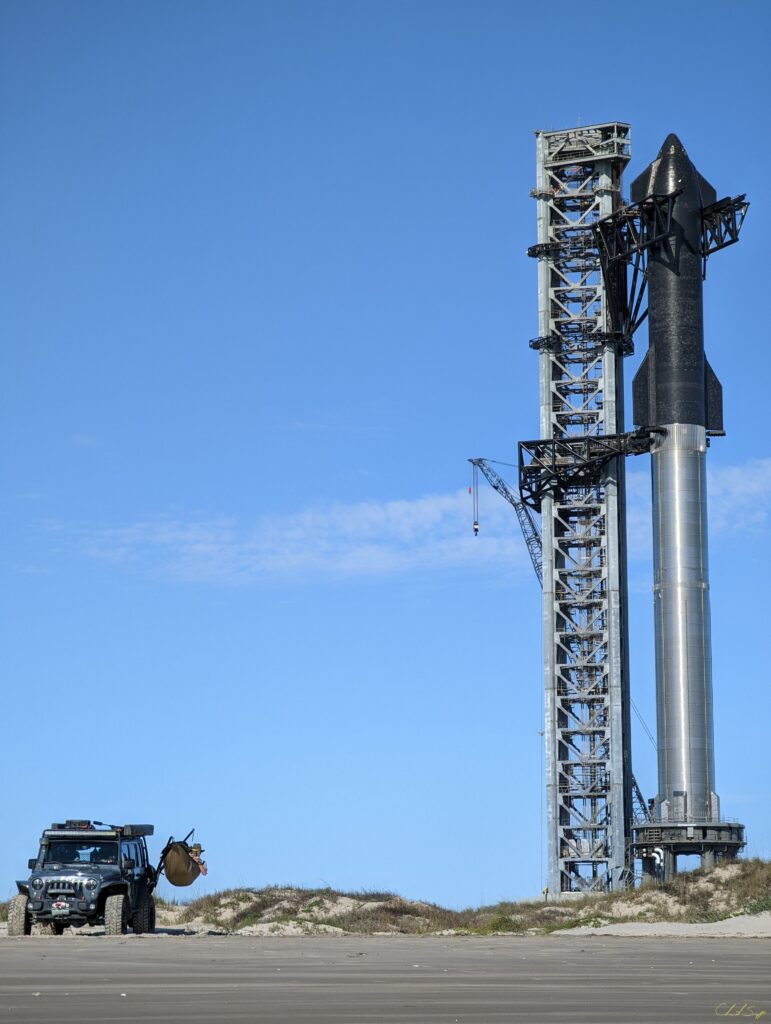
The simplest distinction is that Falcon 9 has made partial reuse routine, while Starship is designed around full and rapid reuse but is still proving that architecture in flight.
Partial Reuse Versus Full Reuse
On Falcon 9, the first-stage booster is recoverable. The second stage continues to orbit and is expended. The payload fairing can also be recovered and reused, but a major powered stage is still lost on every mission.
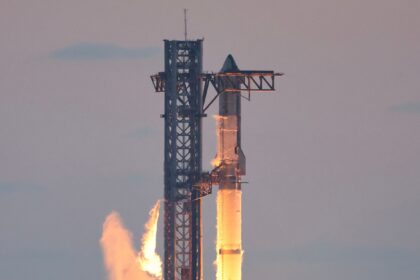
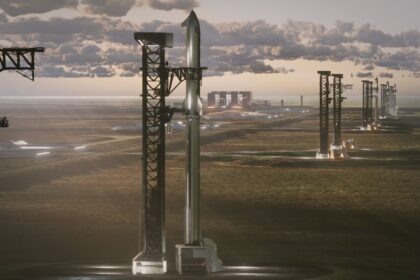
Starship’s goal is to recover both powered stages. Super Heavy is designed to return to the launch area and be caught by the tower. The Starship upper stage is designed to survive atmospheric reentry, control a belly-first descent and land vertically. If both can be turned around quickly, SpaceX could reuse far more of the launch vehicle.
That “if” is important. Falcon 9’s recovery and reflight system is supported by years of missions and operational data. Starship has achieved booster catches, a booster reflight and major ship reentry milestones during testing, but full recovery and rapid reuse of both stages is not yet routine. Design intent and operational maturity are not the same thing.
Different Engines, Materials and Scale
Falcon 9’s Merlin engines burn rocket-grade kerosene, known as RP-1, with liquid oxygen. Starship’s Raptor engines burn liquid methane and liquid oxygen. Methane supports SpaceX’s reusable-engine goals and its long-term concept of producing fuel on Mars, although that off-world supply chain remains a future objective.
The structures differ as well. Falcon 9 uses an aluminium-lithium airframe, while Starship is built primarily from stainless steel. Steel is relatively inexpensive, strong at cryogenic temperatures and tolerant of heat, but it is heavier than some aerospace materials. SpaceX pairs it with a tiled heat shield on the returning ship.
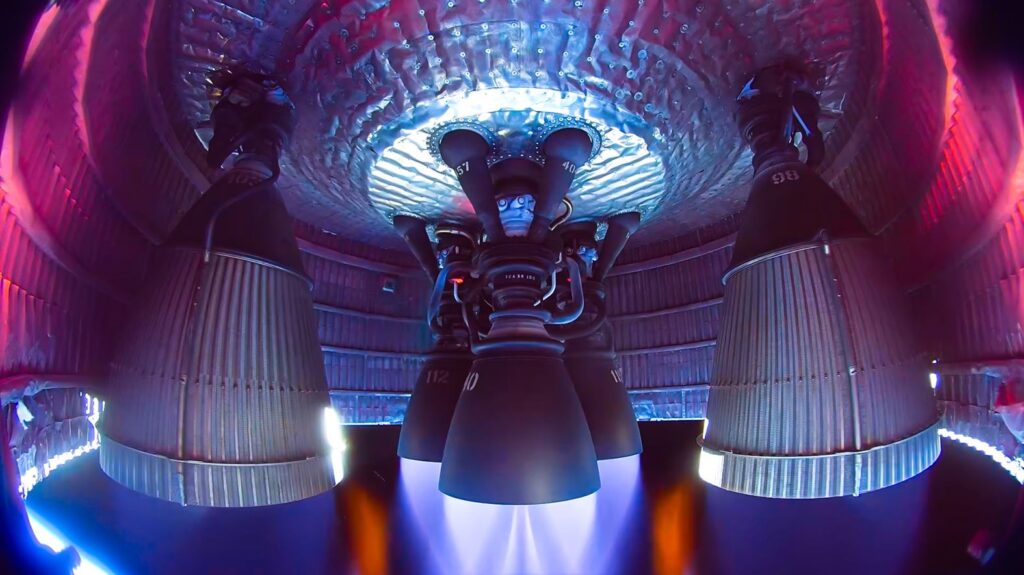
Scale changes the mission possibilities. Falcon 9 is optimized for the payloads and orbits it serves today. Starship is intended to carry far more mass and volume, with performance depending on vehicle generation, destination and recovery profile. In-space refuelling is meant to extend that capacity beyond low-Earth orbit. Readers should treat current Starship payload figures as version-specific projections, not as a mature service record.
Two Very Different Ways to Land
A Falcon 9 booster reenters tail-first, performs one or more engine burns and deploys four landing legs. It can touch down on land or on a drone ship positioned downrange. This flexibility has helped SpaceX recover boosters without requiring every mission to reserve enough performance to fly back to the launch site.
Super Heavy also uses engines and grid fins, but it does not rely on conventional legs. It is designed to fly back beside the launch tower, where mechanical arms catch it. The tower carries equipment that Falcon 9’s booster carries with it.
Starship’s upper stage has no close equivalent on Falcon 9. It must return from much higher energy, endure intense heating behind a thermal-protection system, use flaps during a belly-flop descent and ignite its engines for a final flip and landing. That is why recovering the ship is more difficult than recovering a first-stage booster.
The Dependable Workhorse vs The New Guy
Falcon 9 is the dependable vehicle in this comparison. It has an established manifest, certified crew missions and a large record of booster reflights. Starship is a test program whose hardware and procedures continue to change. It should not be described as an operational replacement simply because its planned capability is larger.
The two rockets may overlap in satellite deployment and other missions, especially if Starship reaches a high flight rate. But Falcon 9 can launch from established pads, land on drone ships and serve customers now. SpaceX has not established a public retirement date that makes it safe to assume Starship will simply replace it.
Starship is better understood as a different transportation architecture. Its combination of full-stage recovery, methane propulsion, huge payload volume, orbital refuelling and beyond-Earth variants is aimed at missions Falcon 9 was never designed to perform. Falcon 9 demonstrates how valuable first-stage reuse can be; Starship asks whether SpaceX can extend reuse to nearly the entire rocket and operate it at a much larger scale.








![Falcon 9 to Launch SDA Tranche 1 Transport Layer A [Scrubbed]](https://thegridfin.com/wp-content/uploads/2026/07/SpaceX_SLC_4E_01-150x150.jpg)