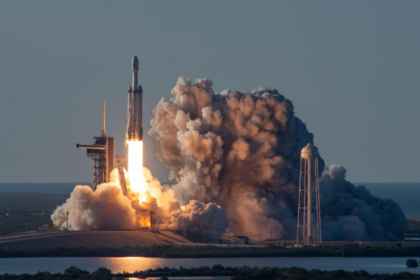
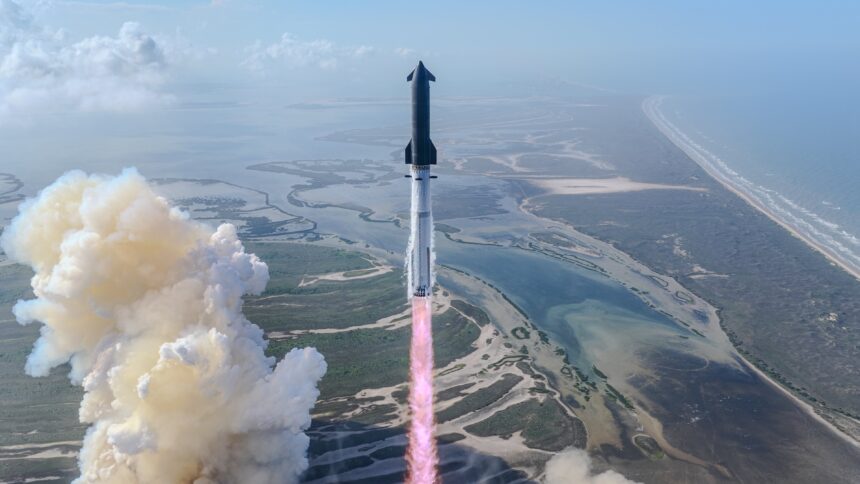
Starship IFT-12, launched on May 22, 2026, marked the first flight of SpaceX’s redesigned V3 Starship and Super Heavy stack. The vehicle introduced next-generation Raptor 3 engines and launched from Starbase’s newly completed second orbital launch pad.
IFT-12 was more than the debut of a new Starship. It gave SpaceX its first opportunity to test how the redesigned vehicle performed as an integrated system. The changes made to Starship V3 were largely focused on simplifying engineering, increasing performance, and increasing reusability.
Building Around Raptor 3
Raptor 3 is at the centre of the V3 redesign.
While the engine continues to use liquid methane and liquid oxygen, SpaceX significantly redesigned its internal and external architecture. Much of the plumbing and supporting hardware that previously sat around the engine is now integrated directly into the engine itself.
The result is a cleaner and more compact installation. This is particularly important on Super Heavy, where 33 engines are packed into a relatively small engine bay.
The upper stage uses six Raptor 3 engines, with three sea-level engines and three vacuum-optimized engines. Together, the new engines provide higher performance while also reducing the amount of supporting hardware required around them.
For SpaceX, that means Raptor 3 is not simply a more powerful engine. It is also an important part of making the entire Starship system simpler to manufacture and integrate.
A Redesigned Hot-Stage
Starship continues to use hot-staging to separate the two stages. During the maneuver, the upper stage starts its engines while Super Heavy is still attached. The exhaust is directed through an expendable vented interstage in the booster’s forward section as the stages separate. V3 takes a more integrated approach to protecting the booster from the extreme conditions created during this maneuver.
SpaceX relocated sensitive hardware lower on Super Heavy and redesigned the hot-stage area, integrating the formerly expendable vented interstage. This reduces the amount of additional hardware needed to protect the vehicle during separation while increasing reusability.
Hot-staging itself is not new to Starship, but V3 further incorporates the system into the overall vehicle design.
Building for a Higher Cadence
IFT-12 also marked the debut of Starbase’s second orbital launch pad.
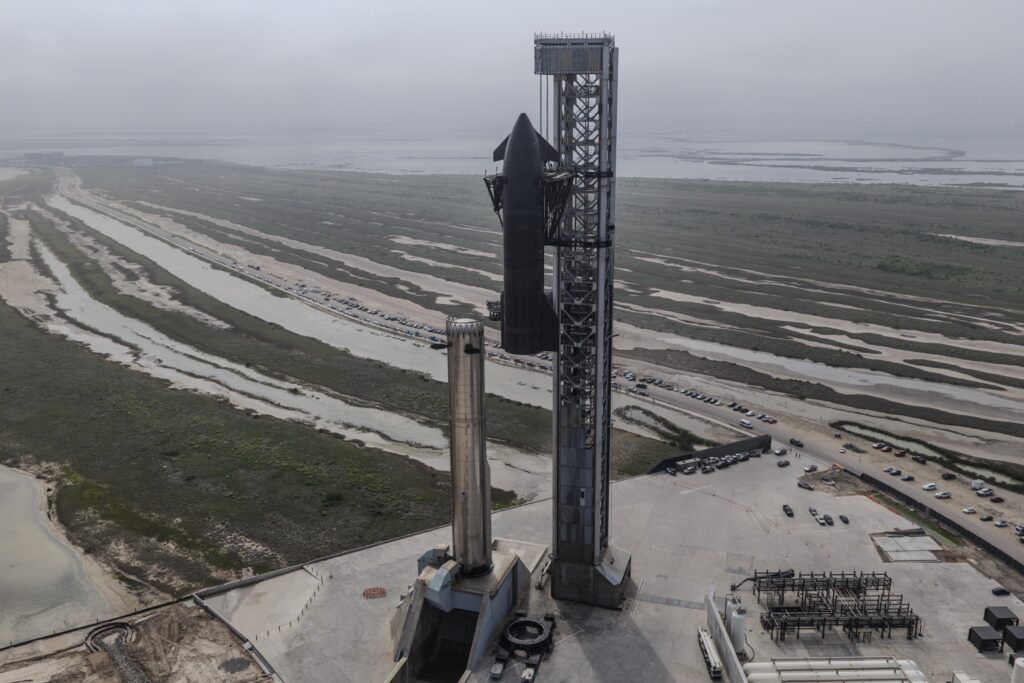
Pad 2 was built using lessons learned from the original launch site and provides SpaceX with additional infrastructure for Starship operations. Its systems were designed better accommodate the large amounts of methane and liquid oxygen required by the vehicle while handling the extreme conditions produced during launch.
The biggest advantage that Pad 2 provides is redundancy. With two orbital launch pads, SpaceX does not have to rely entirely on a single facility. Maintenance, repairs, or upgrades at one pad can be carried out without necessarily stopping Starship launches altogether. The construction of infrastructure marks another step towards SpaceX’s ambitions of a higher launch cadence.
What Flight 12 Proved
IFT-12 demonstrated that the new V3 architecture could fly as an integrated vehicle and provided SpaceX with its first in-flight data on Raptor 3, the redesigned Super Heavy, and the updated hot-staging system.
The flight was not without problems. Super Heavy experienced engine issues late in its flight and did not complete the planned recovery, while Starship completed most of its planned trajectory before making a controlled splashdown in the target area.
That makes IFT-12 best viewed as the starting point for V3 rather than the final version of the vehicle.
The flight gave SpaceX real-world data on a substantially redesigned Starship and helped establish the baseline for subsequent flights. The changes introduced with V3 are ultimately aimed at one larger goal: building a Starship that can fly more often, carry more payload, and be manufactured and reused at a much larger scale.
Flight 12 was not the finished product. It was the beginning of the next generation.