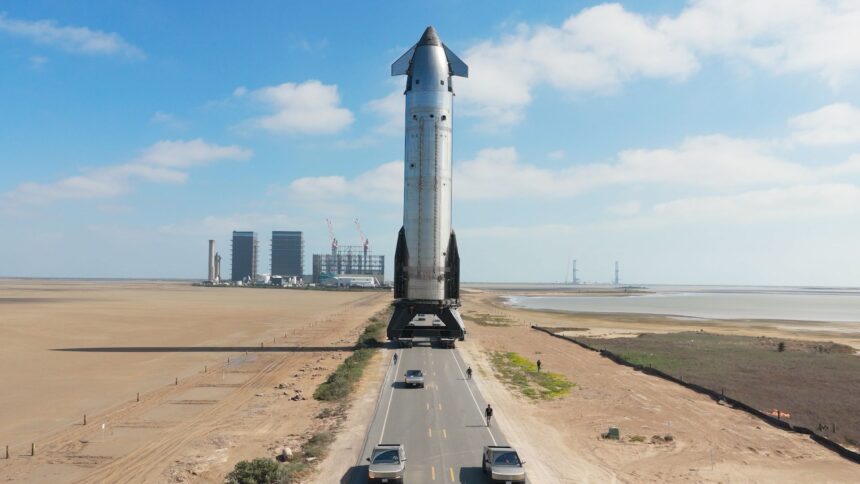
Starship is SpaceX’s ultimate vision of a launch system that can move an enormous amount of mass to orbit, and not be a one-off launch vehicle. The goal, similar to SpaceX’s Falcon 9, is to create a reusable form of transportation.
Starship today is built from stainless steel and powered by dozens of Raptor engines, but the size is just one part of the story. The system is being developed to carry satellites, cargo, and eventually even people to destinations ranging from low-Earth orbit, all the way to the Moon, and even Mars.
Ensuring reusability is key to the vision. Both the giant first-stage booster, known as the Super Heavy Booster, and the second-stage spacecraft, Starship, are meant to return after flight and launch again. That promise is what could make space accessible, and it is also the most difficult part of the program to achieve.
The Starship Launch System
Starship is the name SpaceX uses for both the complete launch system and its upper-stage spacecraft. The full vehicle is a two-stage stack: Super Heavy Booster provides the enormous burst of thrust needed to leave the launch pad, while the Starship spacecraft rides on top and continues toward space after the stages separate.
Together, the two vehicles stand roughly 120 metres tall, comparable to a 40-storey building. Both stages use versions of SpaceX’s methane-fuelled Raptor engine, burning liquid methane with liquid oxygen. The system is still under active development, and its dimensions, engines and performance targets have evolved as SpaceX moves from one vehicle generation to the next.
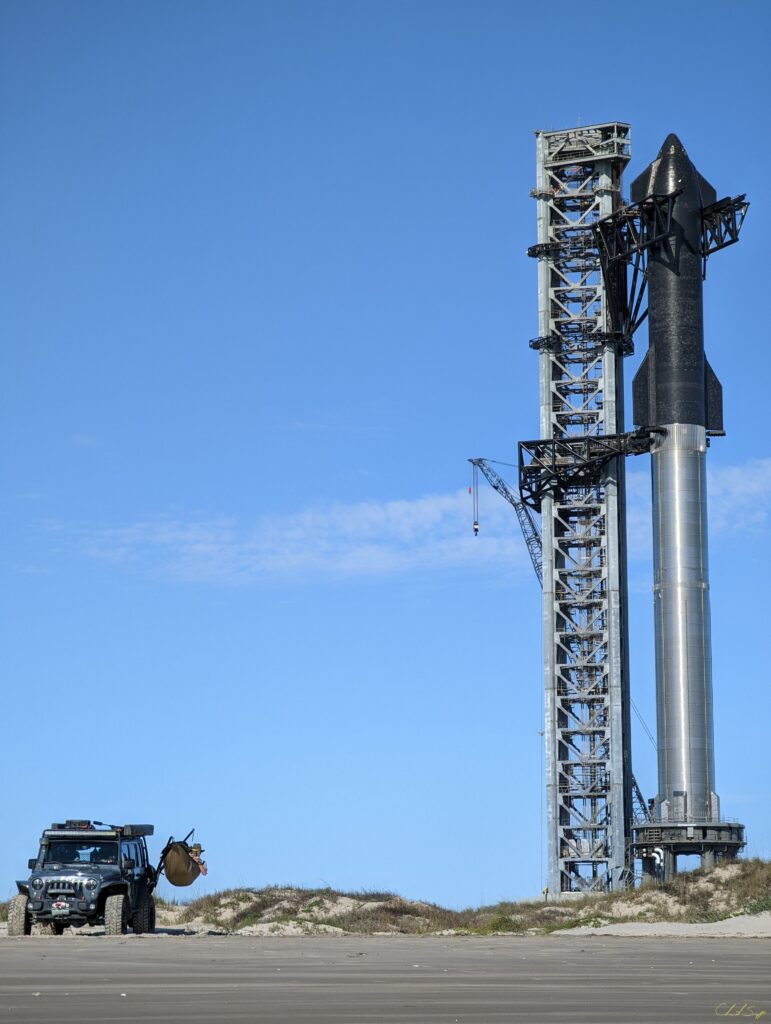
What matters more than any one specification is the architecture. SpaceX is designing both stages to be recovered and flown again. Traditional rockets commonly discard major hardware after a single mission; Starship’s goal is to return the booster and ship while preserving the ability to carry very large payloads. If SpaceX can make that reuse rapid and reliable, the cost of a launch would be driven more by propellant, refurbishment, and operations than by building a new rocket each time.
That goal remains a work in progress. Starship is, for now, a flight-test program, and no commercial loads have been brought to orbit yet. Each test is intended to validate more of the vehicle: propulsion, staging, control in space, atmospheric reentry and recovery.
The Stainless Steel Spaceship
The upper stage is also called Starship, which can make the terminology a bit confusing. When SpaceX refers to the complete launch vehicle, “Starship” usually means the ship and Super Heavy Booster together. When discussing the spacecraft alone, it means the second-stage vehicle that continues towards orbit after stage separation.
Instead of the aluminum-lithium alloys or carbon-fibre structures used by many modern rockets, Starship itself is built primarily from stainless steel. While it is heavier than alternatives, it is strong, comparatively inexpensive, and well-suited to SpaceX’s approach of rapid manufacturing and reusability.
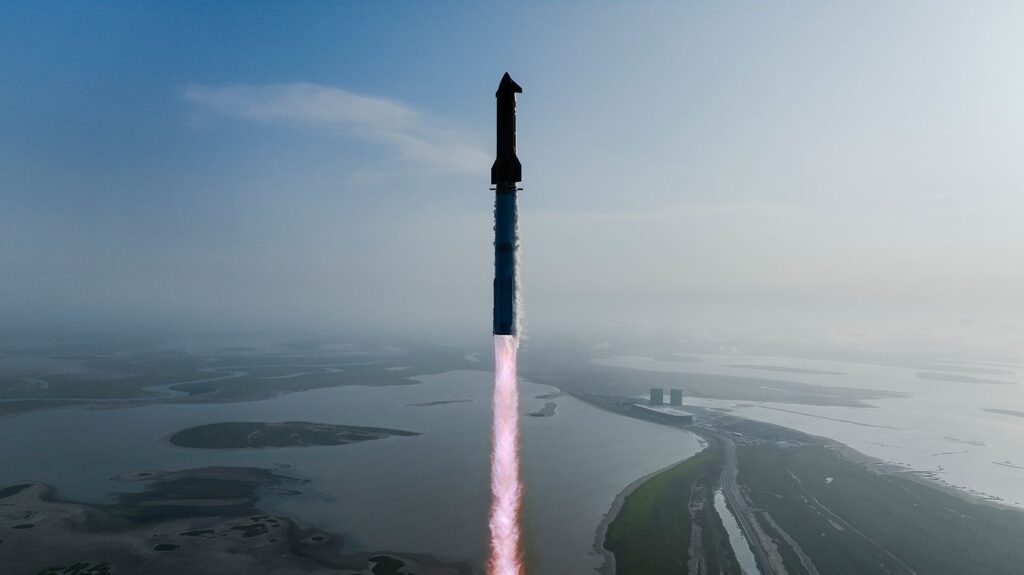
Steel also retains useful strength at extremely low temperatures used for cryogenic fuels, and it tolerates high temperatures better than aluminum. That temperature resistance does not eliminate the hardest part of bringing a spacecraft back from orbit though.
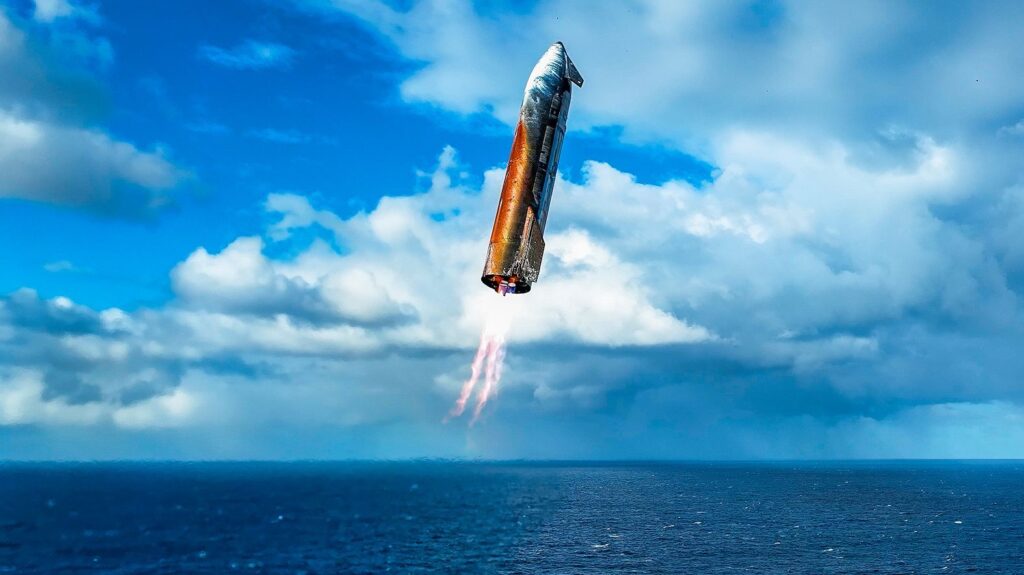
During atmospheric reentry, one side of Starship faces intense heating and is covered with thousands of dark thermal tiles. The stainless steel structure sits beneath that heat shield, and four large flaps, two on the top (forward) and bottom (aft), help to control the attitude and trajectory of the ship during descent.
Inside the vehicle, large propellant tanks occupy most of the structure, while the forward section can be configured for payloads and, one day, crew. The Raptor engines at the base burn methane and liquid oxygen. SpaceX chose that combination partly for performance and partly for reusability. Both methane and oxygen could theoretically be produced from local resources on Mars.
Why SpaceX is Building It
Starship exists because SpaceX’s ambitions extend well beyond providing global internet infrastructure or launching the occasional third-party satellite. Elon Musk’s vision is that of a transportation system that can move large amounts of cargo and people into orbit, over and over again. Once in orbit, those payloads can go on to the Moon and then to Mars.
The near-term demands for Starship as a heavy launch vehicle are already growing quickly. Starship is intended to launch larger Starlink satellites and proposed space-based AI data centres, carry unique commercial and government payloads, and support in-space missions. The massive internal volume of the ship is as important as its lifting power, because payloads that are impossible to carry on today’s rockets would comfortably fit inside Starship.
Landing Humans
NASA is also developing a specialized Starship Human Landing System with SpaceX for the Artemis campaign. Versions of Starship will help to demonstrate lunar-lander operations and then future crewed landings. The final goal is to have Starship travel between lunar orbit and the surface, rather than returning those astronauts directly to Earth.
Mars remains the defining objective. Elon Musk’s vision to expand human consciousness across the solar system isn’t one that will happen overnight. SpaceX’s plan depends on launching ships and propellant tankers at a scale that would be impractical if every flight discarded a booster or ship. Starship still has plenty of major technical and operational milestones ahead of it, but one thing is clear.
If we want to turn access to space from a bespoke mission into a normal, daily activity, Starship will be the key.