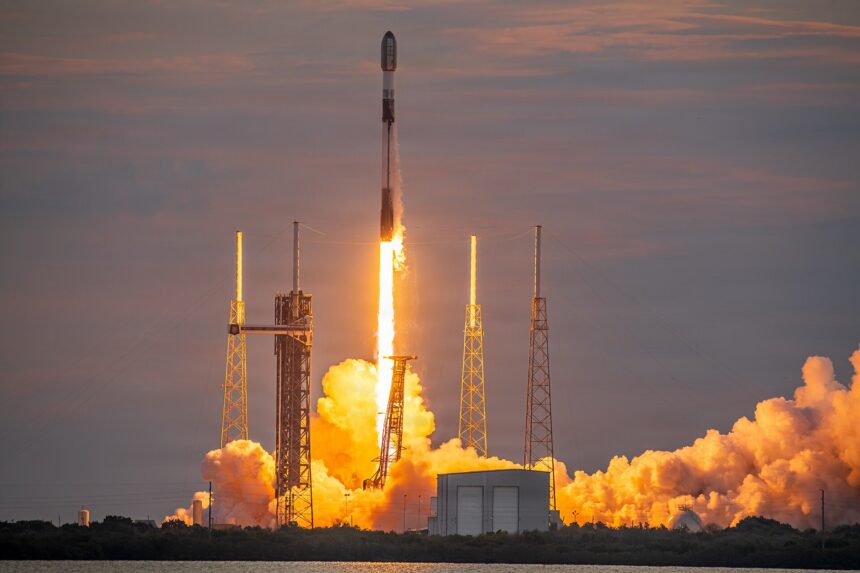
SpaceX has opened Starfall, its returnable capsule, to customers who want to make, grow or test something in orbit. A new product page pitches “affordable, routine access to microgravity” and invites companies and labs to contact SpaceX about flying up to 1,000 kg of payload for weeks at a time, then getting it back on Earth.
Until now, almost everything public about Starfall came from regulatory filings and two quiet demo flights. This is the first public look we’ve gotten at the new program.
What a Customer Gets
The page lists the basics a payload team needs to start planning:
- Payload mass: 1,000 kg
- Payload power: 1 kW
- Data interface: Ethernet
- Connectivity: continuous via Starlink
- Mission duration: “tailorable to payload requirements”
SpaceX also includes continous connectivity to the capsule with Starlink, ensuring that research data is streamed live and at high speed. That means researchers can watch an experiment in real time and see the effects, rather than just the start and end result.
SpaceX frames the time on orbit against what’s available on the ground. “Drop towers and parabolic flights last seconds,” the page says. “Starfall provides weeks of continuous microgravity with mission durations tailored to customer needs.”
Who It’s For
SpaceX names three key focus markets. In biomedical research, it points to growing induced pluripotent stem cell (iPSC) organoids and replacement tissue, building implants and layered biomaterials, and oncology and stem-cell work. “Without gravity, biology accelerates and reorganizes,” the page says.
For drug makers, the pitch is crystals. On Earth, gravity-driven convection and sedimentation degrade crystal quality; in microgravity, SpaceX says, proteins and small-molecule drugs form “smaller, more uniform crystals.” Materials science gets the same logic for semiconductors and next-generation materials, using both microgravity and the vacuum of space.
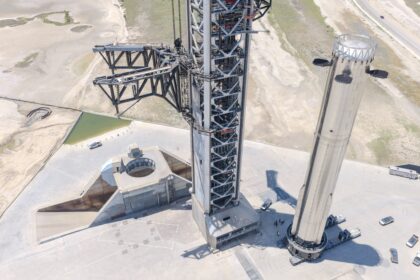
The last argument is cadence. “Microgravity only matters if you can access it regularly and at scale,” SpaceX writes, adding that launching on Starship gives Starfall “a reliable and scalable cadence previously unavailable to the market.” Both Starfall flights so far launched on Falcon 9, so that line describes a future cadence. That is the real bet here: the science of microgravity manufacturing is decades old, but regular, affordable rides have never existed.
The Capsule Behind It
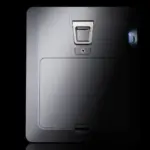
The FAA’s environmental assessment for Starfall describes a cylindrical capsule about 0.75 m (2.5 ft) tall and 3.1 m (10.2 ft) across. It weighs about 2,100 kg empty, carries up to 1,000 kg of payload, and comes in at roughly 3,100 kg total. The heat shield alone is about 700 kg. After reentry, a top plate separates and a drogue, pilot and main parachute bring the capsule down in the Pacific, where it’s recovered much like Dragon.
The same document sets out two goals: point-to-point delivery of critical cargo through space on rapid timelines, and “a self-sustaining commercial in-space manufacturing market” built on access to microgravity, time on orbit and safe return “as a service at scale.”
Flights So Far and Early Customers
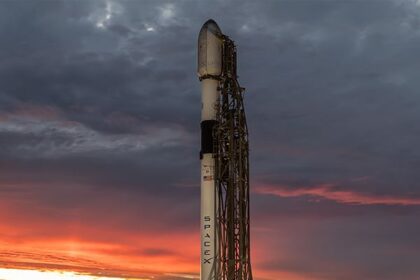
Starfall first flew on June 23 aboard a Falcon 9 from Space Launch Complex 40 at Cape Canaveral, with SpaceX saying little beyond confirming the capsule deployed. A second capsule rode the Bandwagon-5 rideshare in October.
Demand is already showing up. SpaceX said in its third-quarter results that it signed three commercial Starfall missions during the quarter, and Space Cargo Unlimited has booked its BentoBox platform on Starfall with an eye on 2028.
A public spec sheet doesn’t put a capsule on orbit, and Starfall’s pitch leans on Starship flying often. But for researchers who have been rationing seconds on parabolic flights or waiting years for a slot on the space station, SpaceX just put weeks in orbit on the menu.