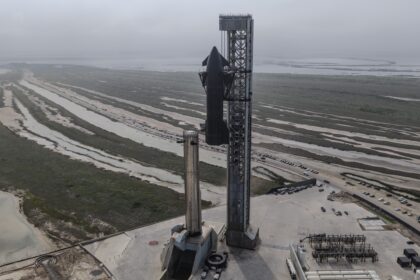
The Raptor engine powers Starship, with 33 engines on the Super Heavy booster and six on the ship. Since its first flight, the engine has gone through three generations, each designed to deliver more thrust, reduce weight, and simplify external plumbing. Raptor 3 represents the biggest change yet, with SpaceX redesigning the engine to eliminate the need for a protective shell around it.
What Makes the Raptor Engine Different
Raptor burns liquid methane (LCH4) and liquid oxygen (LOX), a combination known as methalox. In contrast, Merlin, the engine that powers Falcon 9, burns kerosene. Methane burns cleaner, leaving less soot inside the engine and making it easier to reuse without extensive refurbishment.
Methane and oxygen could also be produced on Mars using local resources, including carbon dioxide and water. This makes methane a practical choice for SpaceX’s long-term goal of establishing a presence on Mars.
The bigger difference between Raptor and Merlin is the engine cycle. Merlin uses a gas-generator cycle, in which a small amount of propellant is burned to produce hot gas that drives the turbopumps. The resulting exhaust is then released overboard rather than fed into the main combustion chamber, wasting some of the propellant’s energy.
Raptor uses a full-flow staged-combustion cycle with two preburners. One burns methane-rich propellant to drive the fuel turbopump, while the other burns oxygen-rich propellant to drive the oxygen turbopump. Both streams then enter the main combustion chamber, where they burn together.
This makes Raptor’s design more complex, but it also allows the engine to use propellant more efficiently by routing all preburner exhaust into the main chamber rather than discarding it. The engine can also operate at very high chamber pressure to produce greater thrust. Notably, Raptor was the first full-flow staged-combustion engine to power a vehicle in flight.
Raptor comes in two versions optimized for sea-level or vacuum operation. The sea-level engine has a shorter nozzle designed to operate in Earth’s atmosphere. Raptor Vacuum, or RVac, uses a much larger nozzle to produce more thrust in space but is not designed to operate at sea level. Super Heavy uses 33 sea-level Raptors, with 13 steerable engines in the centre and 20 around the perimeter. Starship carries three sea-level engines and three vacuum engines.
Raptor 1 vs Raptor 2 vs Raptor 3
SpaceX shared a comparison of its sea-level engines on Aug. 3, 2024.
| Engine | Thrust | Specific impulse | Engine mass | Mass with vehicle-side hardware |
| Raptor 1 | 1,814 kN (185 tf) | 350 s | 2,080 kg | 3,630 kg |
| Raptor 2 | 2,255 kN (230 tf) | 347 s | 1,630 kg | — |
| Raptor 3 | 2,746 kN (280 tf) | 350 s | 1,525 kg | 1,720 kg |
Note: Vehicle-side hardware includes plumbing, wiring, and shielding where applicable.
Specific impulse measures how efficiently an engine uses propellant to produce thrust. While it has remained largely unchanged across the three Raptor generations, thrust has increased significantly as engine mass has decreased. Raptor 3 produces about 50% more thrust than Raptor 1 while weighing roughly 27% less. Including vehicle-side hardware, the total mass drops from 3,630 kg to 1,720 kg, less than half the original figure.
Why Raptor 3 Looks So Simple
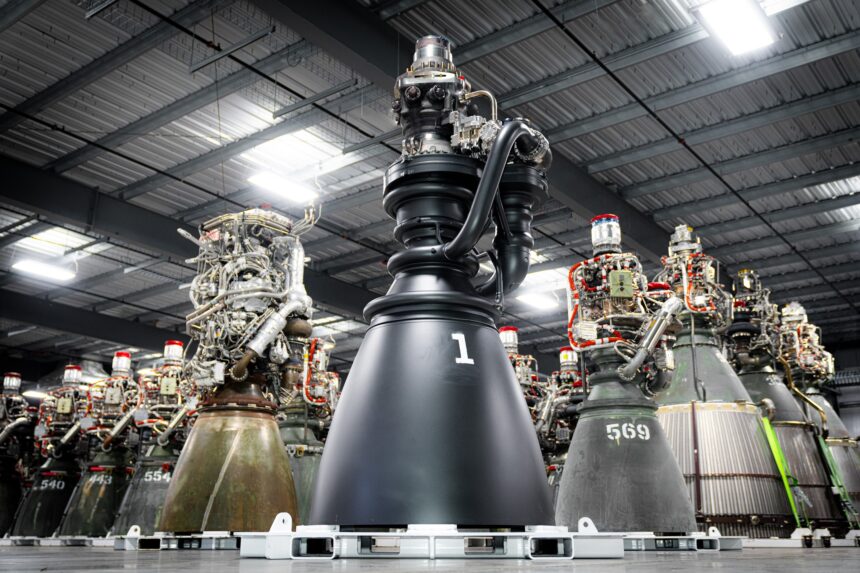
Place a Raptor 2 next to a Raptor 3, and the difference is immediately obvious. Raptor 2 is covered in pipes, sensors, wiring, and flanges, while Raptor 3 has a much cleaner exterior, with much of that hardware eliminated.
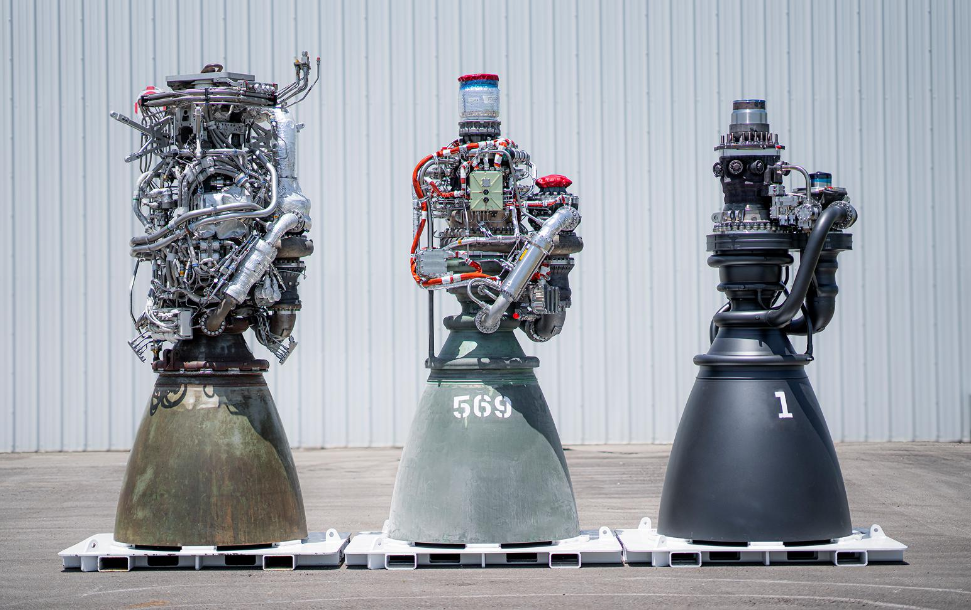
SpaceX integrated more plumbing and instrumentation into the engine’s structure, using advanced metal 3D printing to create complex internal channels. This reduces the number of external connections that could leak and the number of components that need to be inspected between flights.
The redesign also eliminates the need for separate heat shields around the engines. Raptor 2’s exposed hardware required protection from the heat generated by neighbouring engines in the booster. By eliminating much of that external hardware and its protective shielding, Raptor 3 reduces mass and simplifies the entire engine section.
The tradeoff is increased manufacturing complexity. In September 2026, Elon Musk warned against trying to copy Raptor 3, saying he would advise a new company against attempting to reproduce it. Despite its simple exterior, the engine features complex internal geometry that requires heavily modified metal 3D-printing processes.
How Raptor 3 Has Flown
Raptor 3 first flew on Starship IFT-12 on May 22, 2026, marking the debut of the Starship V3 vehicle stack. All 33 booster engines ignited at liftoff, although one shut down during ascent. The ship’s six engines then ignited during hot staging and carried it into space. The booster later struggled to relight its engines for the return, ultimately being destroyed on impact.
Engine restarts have remained a challenge. During IFT-14 on Sept. 28, 2026, one booster engine shut down during ascent, while one of the ship’s vacuum engines cut out early. The ship nevertheless relit a single sea-level Raptor for a 19-second burn, completing Starship’s first orbital flight, and fired the engine again later in the mission.
SpaceX has made a library of Starship flight footage and other media available to the public through its official content page, offering a closer look at the company’s latest developments.
What Comes Next for Raptor
Raptor’s evolution from the first generation to Raptor 3 has focused on increasing thrust while reducing engine mass and simplifying the design. Raptor 3 represents the biggest step yet, eliminating much of the external plumbing and protective shielding that added weight to earlier versions.
The next challenge is reliability. Landing Starship, transferring propellant in orbit, and travelling to the Moon all depend on engines that can restart reliably after extended periods in space. Super Heavy must also relight multiple engines in quick succession for its landing burn. Continued improvements in reliability and reusability will be essential as SpaceX works toward making Starship fully reusable.